Indian Wedding Seating Chart Guide: Reception, Mandap, and Family Hierarchy
 MySeatPlan
·
MySeatPlan
·
Indian wedding seating is layered, deeply tied to family hierarchy, and varies widely across communities and regions. Here's a practical guide to the reception, the ceremony space, and pre-wedding events, with the cultural context that makes the planning easier.
Ready to create your own event seating chart?
Try our free drag-and-drop seating chart builder.
Get Started →An Indian wedding is rarely a single event. It's a multi-day celebration that spans pre-wedding rituals, the ceremony itself, and a reception that often hosts hundreds (sometimes thousands) of guests. Each event has its own seating logic, and the seating decisions carry real weight, because Indian wedding seating reflects family hierarchy, honors elders, and acknowledges the deep cultural significance of who sits where.
This guide walks through how Indian wedding seating typically works at the reception, the ceremony space, and the pre-wedding events, with a practical focus on what you actually need to plan. It's written for couples and families navigating the seating chart for a modern Indian wedding, and it acknowledges upfront that traditions vary significantly across regions, religions, and communities.
A Note on Variance
Before we go further: there is no single "Indian wedding." Customs differ across Hindu, Sikh, Muslim, Christian, Jain, and other traditions. Within each, regional and community variations are significant. A North Indian Punjabi wedding has different seating customs than a South Indian Tamil wedding, which has different customs than a Gujarati wedding, a Bengali wedding, or a Marathi wedding.
This guide covers patterns common to many modern Indian weddings, especially the reception, where seating charts apply most directly. Always defer to your family elders, your priest or officiant, and your specific community's customs for the ceremony itself.
The Quick Overview
| Event | Seating focus |
|---|---|
| Mehendi / Haldi | Casual floor seating, family-focused, smaller guest list |
| Sangeet | Open seating, performance-focused, lounge style |
| Wedding ceremony (mandap, gurdwara, nikah) | Family on either side, elders close, large guest seating |
| Reception | Stage for the couple, banquet-style guest tables, hierarchy-driven |
Why Indian Wedding Seating Is Different
Compared to Western weddings, Indian wedding seating has a few characteristics that change the planning approach:
- Larger guest counts. 300 to 1,000+ guests is common, especially for the reception. Seating charts at this scale require different tools and more planning lead time.
- Multi-day events. The same guests may attend 3 to 5 different events across a week, but the guest lists differ between events. Mehendi might be 50 close family members; the reception might be 600.
- Family hierarchy is structural. Elders, especially grandparents and senior relatives, are seated with explicit honor. Casual seating that ignores hierarchy is considered disrespectful.
- The bride's side and groom's side are clearly defined. Both at the ceremony (where the two families sit on opposite sides of the mandap) and at the reception (where each side typically has its own zone).
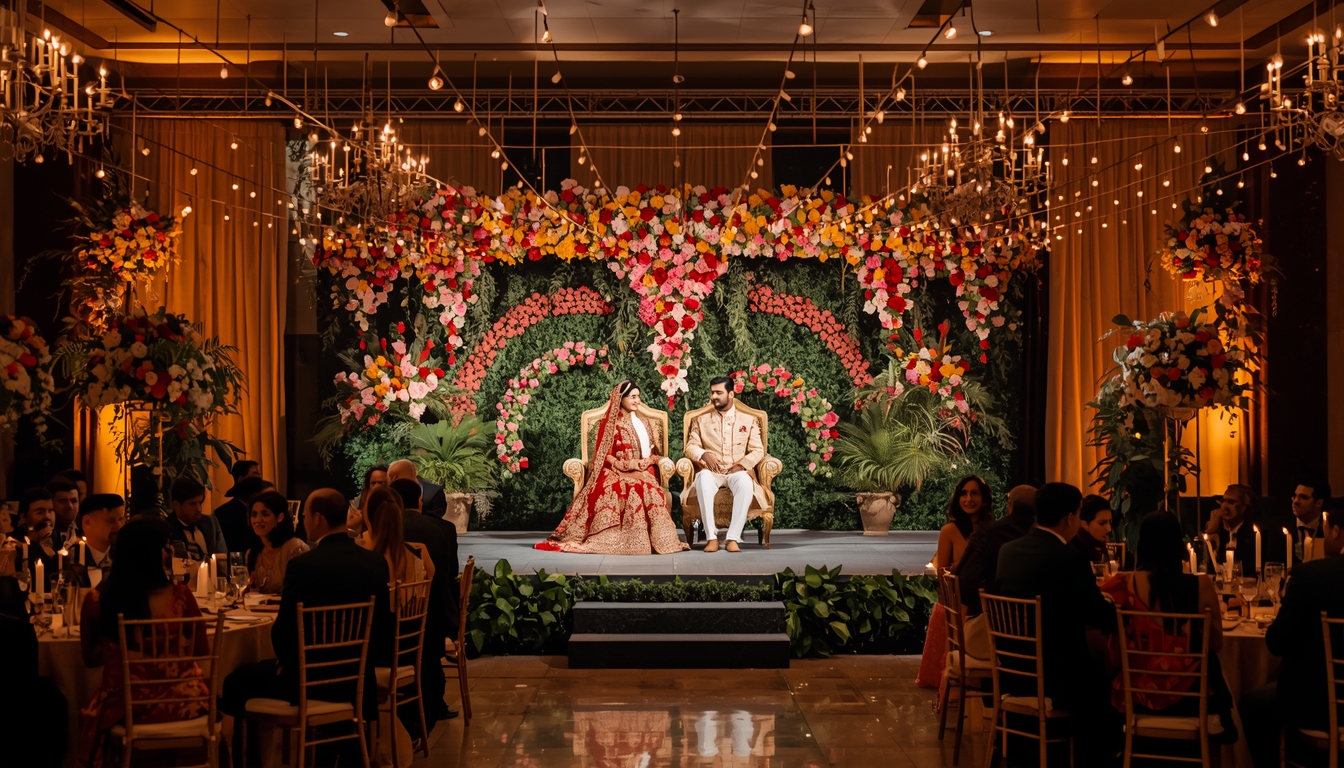
- The couple is on a stage, not a sweetheart table. At most Indian receptions, the bride and groom are seated on an elevated stage so guests can come up to congratulate them, take photos, and offer blessings.
The Mandap (Ceremony Space)
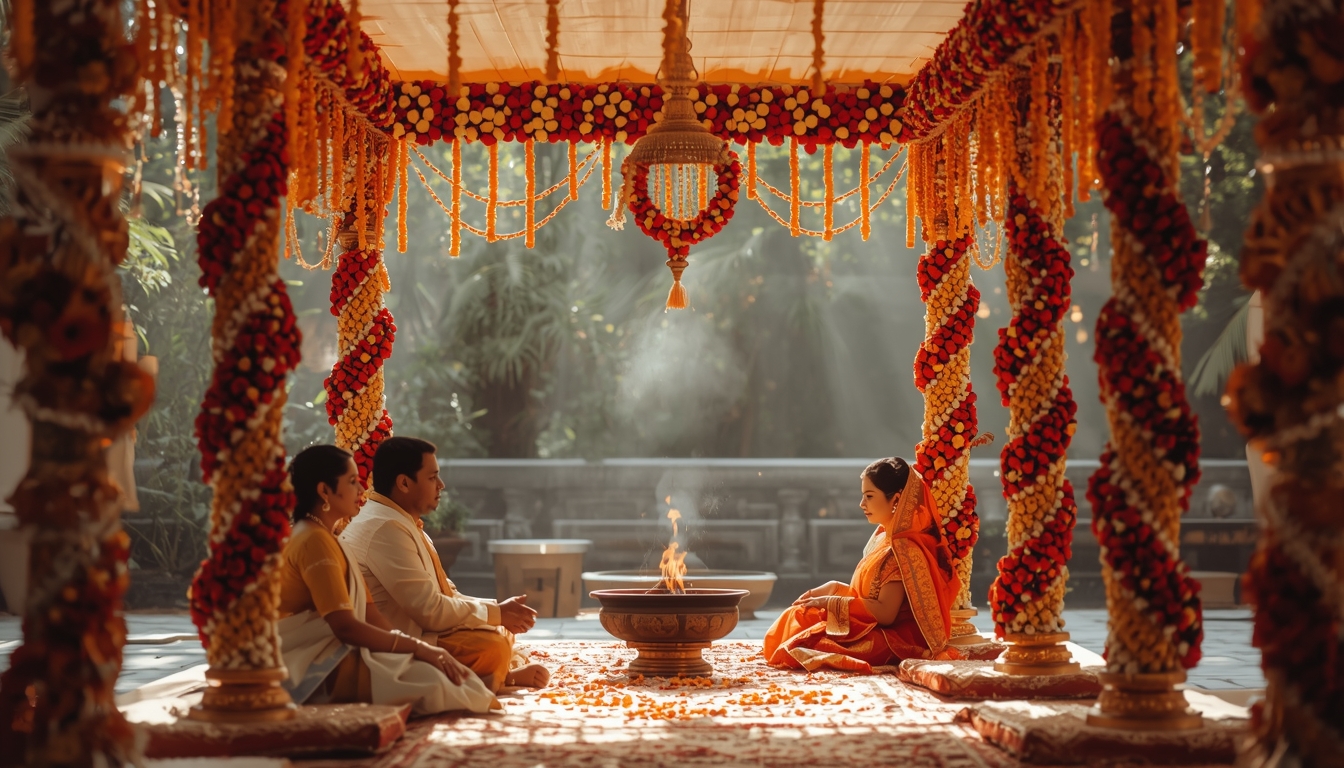
The mandap is the canopy or altar where the Hindu wedding ceremony takes place. It typically has four pillars representing the four parents (or the four directions in some traditions) and a central area where the sacred fire (havan kund) sits.
The seating around the mandap follows a clear pattern:
- Inside or directly beside the mandap: the couple, the priest (pandit), and the parents of the couple. Sometimes grandparents and other officiating family members.
- The bride's side (ladkiwale): the bride's family, extended relatives, and her invited guests, typically seated on one side of the mandap.
- The groom's side (ladkewale): the groom's family, extended relatives, and his invited guests, on the opposite side.
- The first row(s): reserved for grandparents, parents who aren't directly inside the mandap, and senior relatives.
- Subsequent rows: aunts, uncles, cousins, then close family friends, then extended guests.
For Sikh weddings, the Anand Karaj takes place at a gurdwara, where guests sit on the floor (men typically on one side, women on the other in many traditional gurdwaras, though seating customs vary). The Guru Granth Sahib is the focal point, and the couple circles it four times during the laavan.
For Muslim weddings, the nikah ceremony has a much simpler seating arrangement, often with the bride and groom in separate rooms during the ceremony itself, and a unified reception afterward.
The point: ceremony seating follows tradition, not preference. Your priest, officiant, or family elders will guide the specific arrangement.
The Reception Stage and the Couple's Seating
The reception is where the seating chart actually matters in the way it does for Western weddings. Most modern Indian receptions are seated dinners with assigned tables, plus a stage where the couple sits.
The stage
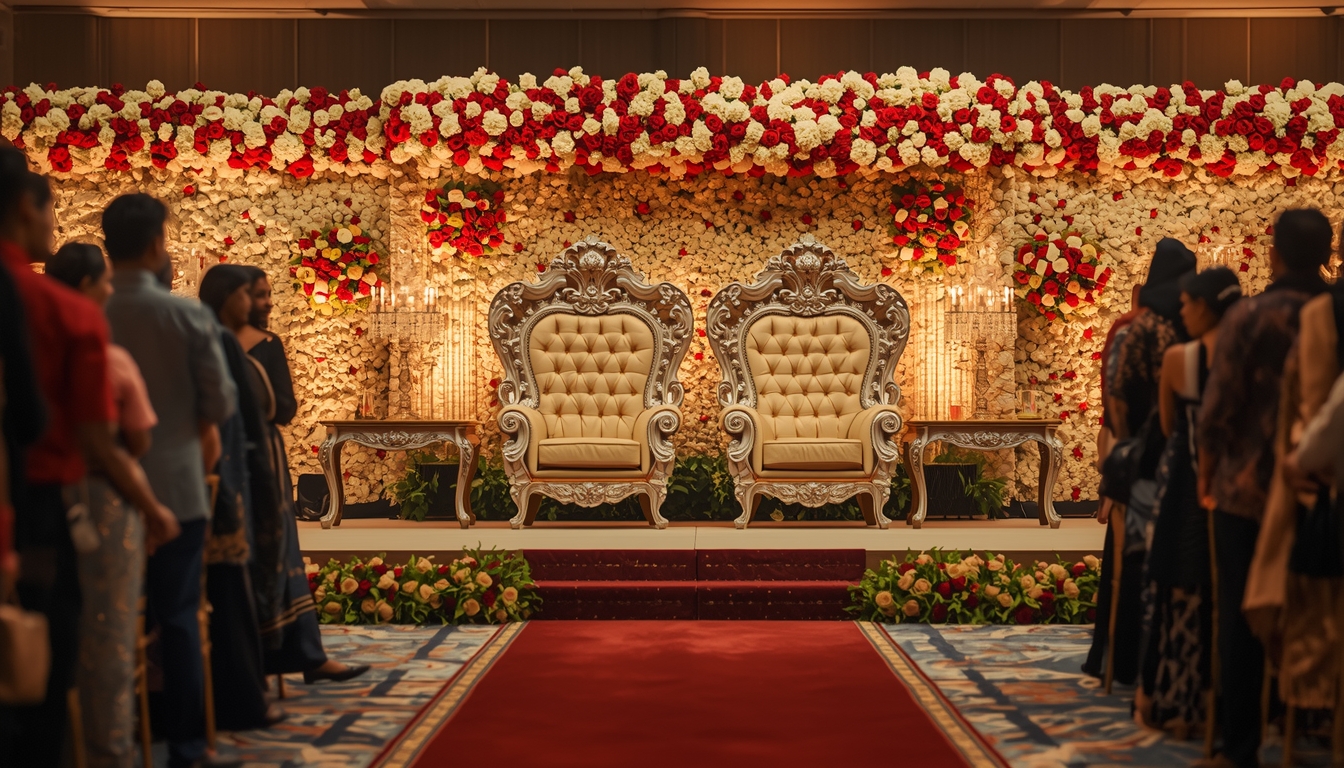
The bride and groom sit on a raised, elaborately decorated stage at the front of the reception hall. The setup typically includes:
- Two ornate throne-style chairs for the couple
- An elaborate floral backdrop, often with the couple's names or initials
- Sometimes additional seats for parents or grandparents flanking the couple
- A line for guests to come up, congratulate the couple, exchange gifts, and take photos
This is functionally different from a Western sweetheart table or head table. The stage isn't where the couple eats, it's where they receive guests for a portion of the evening. Many couples eventually move to a dedicated couple's table to actually have dinner.
Where the couple eats
After the receiving line winds down (usually 1 to 2 hours), the couple often moves to a smaller reserved table near the stage to eat. This table can include immediate family, close cousins, or the wedding party.
Family Hierarchy at the Reception
Indian reception seating prioritizes elders explicitly. The family tables, in rough order of proximity to the stage:
- Grandparents and great-grandparents on both sides, at the closest tables. They have the best view of the stage and the easiest access for greeting the couple.
- Parents and immediate family at the next ring of tables. Sometimes parents have their own dedicated table; sometimes they sit with grandparents.
- Aunts, uncles, and senior relatives at the inner-ring tables.
- Cousins and their families at the middle tables.
- Family friends, especially long-time family friends and "uncle/aunty" figures, also placed close to the family tables they're aligned with.
- Friends of the bride and groom at their own tables, often in the middle to back of the room.
- Colleagues, distant relatives, and acquaintances at the outer tables.
If grandparents have mobility issues, factor this in. The closest tables to the stage are also typically the closest to the entrance or at least to clear paths, so elders don't have to navigate crowded sections of the room.
The Bride's Side vs the Groom's Side
At the reception, each side typically has its own zone of tables. This isn't strictly enforced (especially as families blend over time), but the general pattern is:
- Bride's side tables on one side of the room, with the bride's family and her invited guests
- Groom's side tables on the opposite side, mirroring the structure
- Mutual friends, the wedding party, and shared family in the middle, blending the two sides
This zoning makes greetings easier (the couple knows roughly where to find each side's relatives) and respects the way each side typically arrives, sits, and socializes.
A practical note: the bride's side and groom's side don't always have equal guest counts. Don't force symmetry. If the bride's family invited 200 people and the groom's family invited 80, the seating chart should reflect that, with the bride's side occupying more tables.
Pre-Wedding Events: Mehendi, Haldi, and Sangeet
The pre-wedding events have looser seating expectations than the ceremony or reception, but they're not entirely freeform.
Mehendi
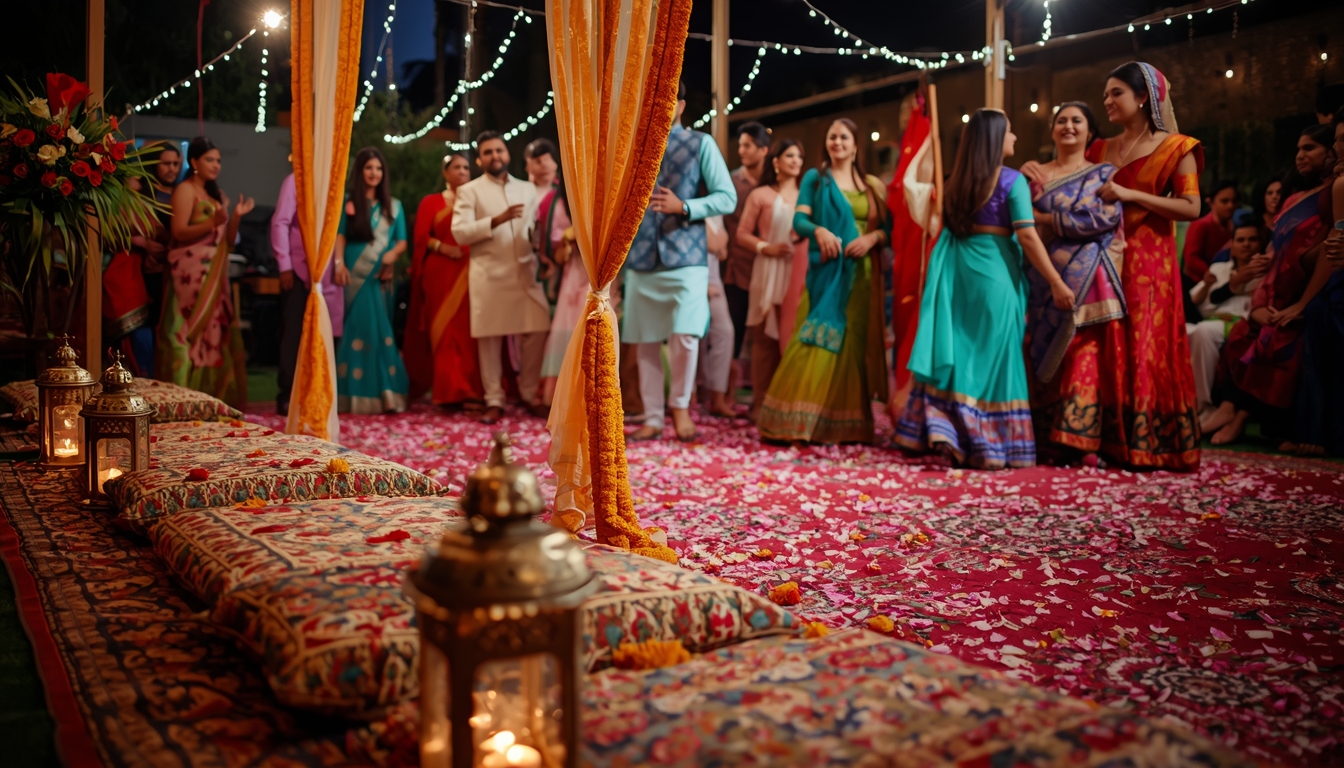
The henna ceremony is traditionally bride-side focused, attended by close female family members and friends of the bride. Seating is usually on floor cushions or low couches arranged in clusters. The bride sits on a slightly elevated central seat (a small dais or decorated chair) where the mehendi artist works on her hands and feet.
Other guests rotate through getting their own henna applied, while sitting in casual conversational groups. No formal seating chart is needed.
Haldi
The turmeric ceremony is intimate, usually 30 to 60 close family members. The bride and groom each have their own haldi (sometimes on the same day, sometimes separate days, sometimes at the same venue). The honoree sits on a low decorated stool, with family members taking turns applying turmeric paste. Seating is casual, often on floor cushions or simple chairs around the central seat.
Sangeet
The sangeet is the music and dance event, and it's the most flexible in terms of seating. Common formats:
- Lounge-style. Floor cushions, low tables, mix of seated and standing areas.
- Performance-focused. A stage at the front for choreographed dances, with theater-style seating or banquet rounds facing the stage.
- Hybrid. Banquet tables for dinner, plus an open dance floor, plus a stage for performances.
Most modern sangeets use a hybrid format. If you're doing performances, build the seating chart so the family has a clear view of the stage. Friends of the bride and groom, who often perform, are typically placed at tables near the stage so they can move easily between their seats and the performance area.
Special Considerations
Large guest counts
Indian receptions with 500 to 1,000+ guests need different planning than Western receptions. A few principles:
- Round tables only. Long banquet tables don't scale to this size cleanly.
- Multiple food stations instead of one buffet line. Live counters (chaat, dosa, kebabs, biryani) are common at large Indian receptions and reduce queue length.
- Multiple bar locations if alcohol is served. Some Indian weddings are dry; others have full bars; many have a designated whiskey lounge separate from the main bar.
- Clear table numbering and signage. At 80+ tables, guests need help finding their assigned spots. An entrance display with a well-organized seating chart is essential.
- Multiple coordinators. One coordinator can't manage a 600-guest reception. Plan for a lead coordinator plus assistants assigned to specific zones.
Vegetarian and dietary considerations
Most Indian weddings have extensive vegetarian options, often with separate veg and non-veg sections. Some weddings are entirely vegetarian (especially for Jain families or strict Hindu observances). Confirm with the couple's families and pass dietary requirements to the venue.
Practically, this affects seating only when you have specific guests with strict dietary needs (Jain, halal-only, or specific allergies) who should be seated near the appropriate food station.
Honored guests and notable attendees
If religious leaders, well-known community figures, or extremely senior family elders are attending, they get seats near the stage. Their tables are often confirmed personally by the couple's parents rather than left to the general seating chart.
Common Mistakes
- Treating the reception like a Western wedding. The stage, the receiving line, the family hierarchy, and the multi-event flow are all different. A Western seating chart approach won't translate.
- Forgetting that grandparents need clear access. The closest tables to the stage are an honor, but they're useless if grandparents have to navigate 200 chairs to reach them.
- Mixing the bride's side and groom's side too aggressively. Some blending is fine in the middle of the room, but each side should have a clear zone.
- Ignoring family input. Indian seating decisions are family decisions. Show the chart to your parents, your in-laws, and key family elders before locking it.
- Underestimating guest count growth. Indian guest lists tend to expand as relatives invite their own guests. Build in a 10 to 15% buffer over your initial count.
- Skipping the seating chart for the reception entirely. Some couples assume open seating works because of the casual flow. At 300+ guests, this creates chaos. Even a basic table assignment system saves hours of confusion.
- Forgetting the kids. Larger Indian weddings have many children attending. A dedicated kids' area or kids' tables can work well at the reception. Our atomic guide on should kids have their own table at a wedding covers the trade-offs.
Working with the Venue and Coordinator
Most Indian wedding venues, especially banquet halls and dedicated wedding venues, have experience with Indian weddings and will support the standard layouts. A few questions to confirm:
- Can the venue accommodate a stage at the front, plus the round tables behind it?
- What's the maximum table count and corresponding capacity?
- Are there enough power outlets for the stage lighting and AV?
- What's the load-in time for decorators? Indian wedding decor often takes a full day to set up.
- Can the venue handle multiple food stations, including live counters?
- Is there a dedicated bridal room and groom's room near the entrance?
If you're working with a wedding planner, make sure they have experience with Indian weddings specifically. The logistics differ enough that a great Western wedding planner without Indian wedding experience will miss things.
Building the Seating Chart at Scale
For a 300+ guest reception, a spreadsheet seating chart is not a real plan. The relationships, the hierarchy, the bride's and groom's side zones, the elder placements, the late additions and cancellations, all of this is much easier to manage visually.
MySeatPlan's drag-and-drop seating chart builder handles large Indian weddings cleanly because you can lay out the stage, the family tables in their hierarchy zones, and the friend and extended-guest tables visually. As cousins drop out or new aunties get added, you move them between tables in seconds rather than redoing the chart on paper.
For the broader seating chart workflow that applies to any wedding (Indian or otherwise), our step-by-step seating chart guide walks through the order of operations from final guest list to printed table assignments. And for the etiquette principles that translate across most cultures, see our wedding seating chart etiquette guide.
Quick Reference: Indian Wedding Reception Seating
- Stage at the front for the bride and groom, with throne-style seating
- Grandparents and senior elders at the closest tables to the stage
- Parents and immediate family at the next ring
- Aunts, uncles, cousins fill the inner zones
- Bride's side on one side of the room, groom's side on the other
- Mutual friends and the wedding party in the middle
- Friends of the couple in the middle to back zones
- Colleagues, distant relatives, and acquaintances at the outer tables
- Multiple food stations and bar locations for guest counts over 300
- Dedicated kids' area or tables if many children are attending
- Final chart reviewed with both sets of parents before printing
Indian wedding seating rewards careful planning and family input. The hierarchy, the side zoning, and the stage-centric layout are all rooted in respect, both for the families involved and for the cultural traditions that make the day what it is. Plan it deliberately, defer to elders where their guidance matters, and use the right tools to keep the logistics from overwhelming the celebration.
Frequently asked questions
-
Seating at an Indian wedding reception is typically organized around a stage where the couple sits, with guests arranged at banquet tables based on family hierarchy. Elders and immediate family are seated closest to the stage, while friends and extended guests are placed further out.
Plan your perfect event seating arrangement
MySeatPlan gives you everything you need to organize your big day — all in one place.
- Drag-and-drop seating chart
- Guest list with RSVP tracking
- Export seating charts as images & PDF
- Share your plan with others via shareable link
- Design your invitation card
- Guest photo & video uploads