Should Kids Have Their Own Table at a Wedding?
 MySeatPlan
·
MySeatPlan
·
A kids' table is a smart move when you have 4 or more children between 5 and 12. For toddlers, smaller groups, or teenagers, other arrangements work better. Here's how to decide and what to put on the table.
Ready to create your own event seating chart?
Try our free drag-and-drop seating chart builder.
Get Started →Yes, a kids' table is a smart move when you have 4 or more children between roughly 5 and 12 years old. It gives the kids a space of their own, lets parents enjoy the reception, and prevents wandering or boredom. For toddlers, fewer than 4 kids, or teenagers, a kids' table doesn't usually make sense, and other arrangements work better. The right answer depends on the number of kids, their ages, and whether their parents want to sit with them.
The Quick Answer
| Situation | Recommendation |
|---|---|
| 4+ kids ages 5 to 12 | Yes, dedicated kids' table |
| 2 to 3 kids ages 5 to 12 | Seat them together at a guest table with their families |
| Toddlers (under 5) | Seat with parents, not at a kids' table |
| Teenagers (13+) | Seat with adults or as a young-adult cluster |
| Mixed ages, large group | Kids' table for ages 5 to 12, others with parents |
Why a Kids' Table Works
When done well, a kids' table is the most popular table in the room with the children, and a quiet relief for the parents. The reasons it works:
- Kids enjoy each other. They'd rather sit with other kids than between two adult cousins making polite dinner conversation.
- Parents get a real evening. A few hours where they're not cutting up chicken or refilling juice cups changes the whole tone of the night.
- Less wandering. Kids who have something to do at their table are less likely to roam the dance floor or interrupt toasts.
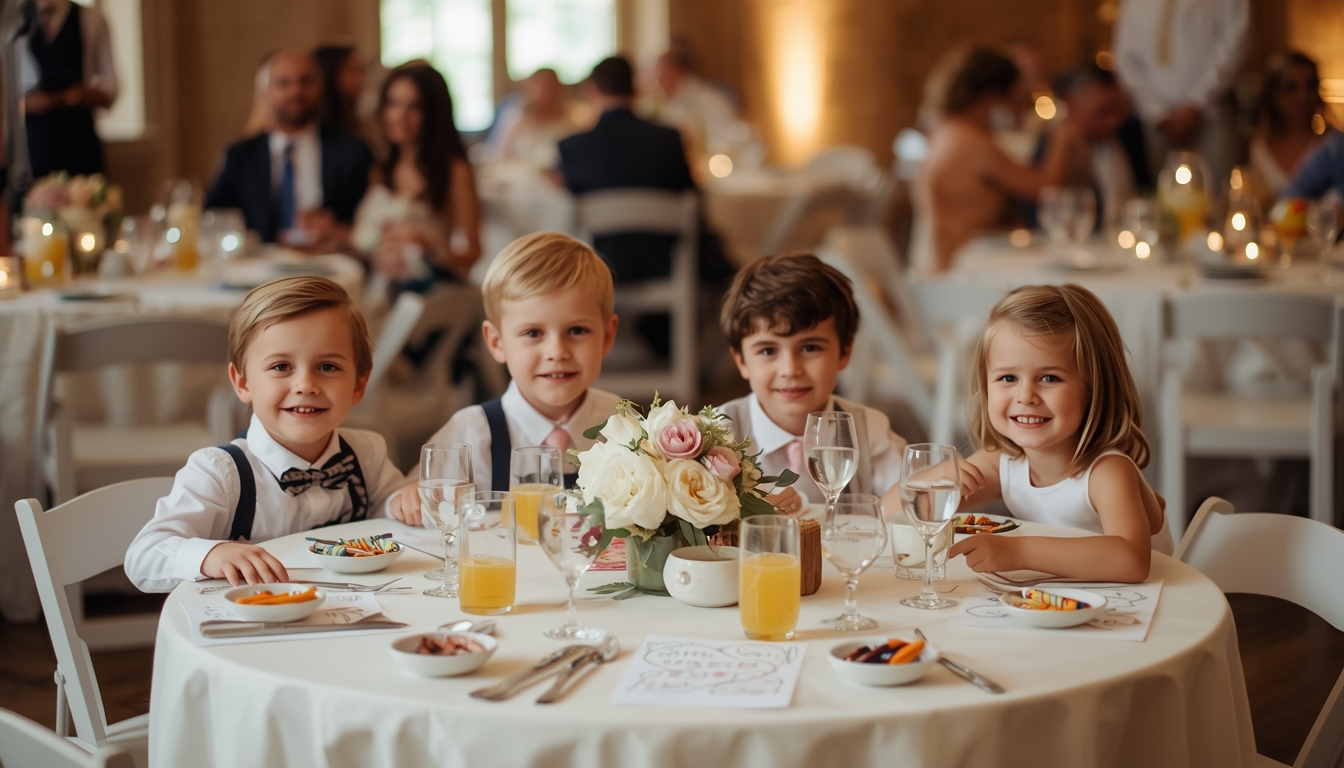
- Photographs are charming. A kids' table mid-reception, all crayons and paper crowns, is one of the best candid shots of any wedding.
When a Kids' Table Doesn't Work
It's not always the right call. A few situations where it backfires:
You only have 2 or 3 kids
A "table" of 2 kids feels like a punishment, especially if the kids barely know each other. Better: seat them at the guest table with their parents and provide an activity bag. Or seat them next to each other within an adult table.
The kids are mostly toddlers
Children under 5 typically can't manage a meal alone. They need a parent next to them to help with food, drinks, and the inevitable spill. Seat them with their families.
The kids are teenagers
A 14-year-old does not want to sit with a 7-year-old. Either seat teens with the adults (they'd usually rather be there) or create a "young adults" table for the cousins, friends, and teens together.
The parents would rather sit with their kids
Some parents love a kids' table and the break it gives them. Others prefer to keep their child next to them. Ask in advance, especially with parents of younger or shy kids. Don't assume.
How to Set Up a Great Kids' Table
Once you've decided to do one, the difference between a memorable kids' table and a chaotic one is in the setup. The key is to give them something to do.
What to put on the table
- A paper tablecloth they can draw on, or paper placemats per seat
- A small bucket of crayons, colored pencils, or markers in the center
- Activity sheets: word searches, mazes, coloring pages, "find the bride's bouquet" scavenger hunt cards
- Small bags of stickers, mini puzzles, or wedding-themed Bingo cards
- A simple kid-friendly centerpiece (low and unbreakable, no tall candles)
- Optionally, paper crowns or a fun napkin design
What to feed them
Most caterers offer a kids' menu at a reduced price (typically 50 to 70% of the adult plate). Common options:
- Chicken tenders or breaded chicken
- Pasta with butter or simple tomato sauce
- Mini burgers or sliders
- Mac and cheese
- Grilled chicken with steamed vegetables for kids who want "real" food
Confirm with parents whether their child is happy with kids' menu food or would prefer the adult plate. Some kids actually prefer salmon or steak.
Where to place the table
Place the kids' table somewhere parents can see it, but not in the busiest path of service. A few rules:
- Within line of sight of the parents' tables.
- Not directly next to the speakers, the band, or the dance floor (kids will leave the table at every song).
- Not on the main service path where waitstaff are constantly walking through.
- Close enough that parents can step over to check in without leaving their own dinner cold.
The Adult-at-the-Kids'-Table Question
Should an adult sit at the kids' table to supervise? It depends on age:
- Ages 5 to 7: Yes, often. A young aunt, an older cousin, or a babysitter (some couples hire one for the reception specifically) keeps things running.
- Ages 8 to 12: Usually not needed. They self-manage well, and an adult presence can squash the fun.
- Mixed ages: A 14- or 15-year-old cousin who's "in charge" works perfectly. They feel grown-up, the kids respect them, and you don't have to pull an adult out of their own dinner.
What About Babies and Infants?
Babies and infants come with their parents. They don't need a place card or a separate table. A few practical considerations:
- Confirm with the venue that high chairs are available if needed.
- Reserve a quiet space (a side room or sofa area) where parents can feed or change a baby without leaving the building.
- Don't seat parents with babies right next to the speakers.
Should the Wedding Be Adults-Only?
Different question, but related. Some couples opt for fully adults-only weddings, where no children attend. This is a valid choice, but it has to be communicated clearly:
- State it on the wedding website.
- Address invitations specifically to the invited adults, not "and family."
- Don't make exceptions for some kids and not others. Either no kids or all kids.
If you go adults-only, expect a small number of guests with kids to decline. That's the trade-off. Make sure the policy is clear so families can plan ahead.
Common Mistakes
- Forcing 2 kids into a "kids' table." A table of 2 isn't a kids' table, it's an isolated cousin sitting with one stranger. Seat small groups with their families.
- Mixing toddlers and tweens at one table. A 4-year-old and an 11-year-old don't have much in common. Either split them or seat each with their parents.
- Forgetting to feed the kids. Skipping a kids' menu and trying to give every child the adult chicken plate is a recipe for unhappy children. Coordinate with the caterer in advance.
- Putting the kids' table next to the speakers. The DJ at full volume + kids = misery. Place it somewhere quieter.
- No activities. Kids without something to do will find something to do, and you won't like it.
- Not asking parents. Some parents love a kids' table, some don't. A quick text in the weeks before the wedding solves this.
- Skipping place cards. Even at a kids' table, a small place card with each child's first name is a nice touch and avoids the "where do I sit" shuffle.
Quick Reference
- Use a kids' table when you have 4 or more children ages 5 to 12
- For 2 to 3 kids, seat them at family tables instead
- Toddlers under 5 stay with their parents
- Teenagers go with adults or in a young-adult cluster
- Provide activities: paper tablecloth, crayons, activity sheets, simple puzzles
- Coordinate a kids' menu with the caterer (typically 50 to 70% of the adult plate)
- Place the table within line of sight of parents, away from speakers and service paths
- An older teen "supervisor" works better than a tied-down adult
The kids' table is one of the small wedding details that disproportionately affects how the night feels for parents. Done well, it's a reception highlight. Done poorly, you'll have parents doing dinner shifts at two tables. Once you've decided whether to have one and where to place it, the rest of the seating chart fills in around it. For the full layout, MySeatPlan's drag-and-drop seating chart builder lets you map the kids' table, parents' tables, and the rest of the room visually. And for guidance on writing each child's place card (first name only is the standard), see our guide to writing wedding place cards.
Plan your perfect event seating arrangement
MySeatPlan gives you everything you need to organize your big day — all in one place.
- Drag-and-drop seating chart
- Guest list with RSVP tracking
- Export seating charts as images & PDF
- Share your plan with others via shareable link
- Design your invitation card
- Guest photo & video uploads