How to Write Wedding Place Cards (With Examples)
 MySeatPlan
·
MySeatPlan
·
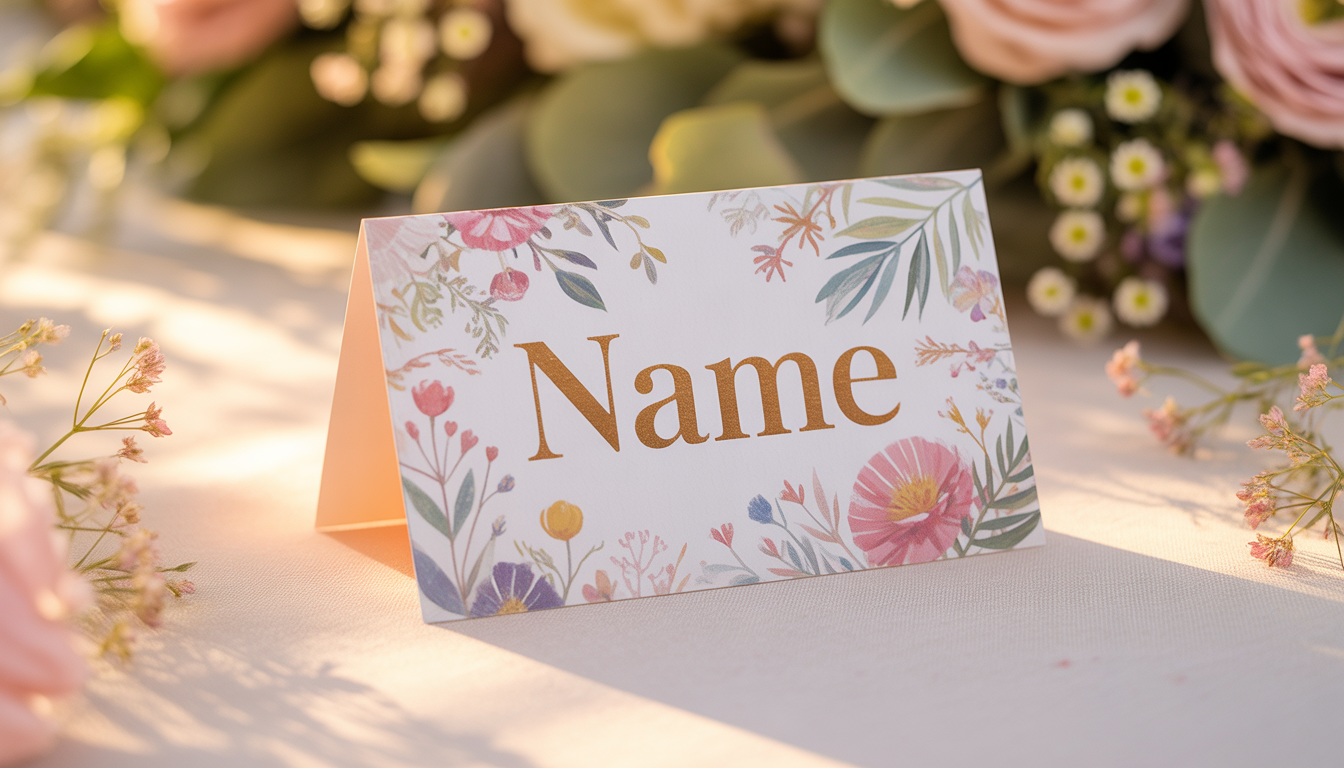
Place cards are the small detail that makes your reception feel polished and personal. Here's exactly how to write them, format names, handle titles, and avoid the mistakes couples make most often.
Ready to create your own event seating chart?
Try our free drag-and-drop seating chart builder.
Get Started →You've finalized the guest list, built the seating chart, and picked your tables. The last piece, the one guests actually pick up and hold, is the place card. It's small, but it carries a surprising amount of weight. A place card tells each guest they were expected, that someone thought about where they should sit, and that the evening was planned with care.
This guide walks you through exactly how to write wedding place cards, how to format names for every situation (married couples, children, plus ones, professionals with titles), and the small details that separate a polished reception from a confusing one.
What a Place Card Actually Does
A place card has one job: tell a specific guest where to sit. That's it. It's different from an escort card, and couples mix these up constantly, so it's worth getting straight before you order anything.
- Escort cards are picked up at the entrance. They tell a guest which table to go to. They usually sit on a display table near the reception entrance, arranged alphabetically.
- Place cards sit on the table itself, at each individual seat. They tell a guest which chair is theirs within that table.
You can use both, or just one. Small weddings (under 60 guests) often skip escort cards and go straight to place cards. Larger weddings usually use both, because asking 150 people to find their specific chair from a single display is chaos.
If you haven't decided on your full seating approach yet, start with our step-by-step guide to creating a wedding seating chart, then come back here once you know who's sitting where.
The Basic Format
A standard place card contains two things:
- The guest's name
- Optionally, their table number or table name (if you're not using separate escort cards)
That's the whole thing. Resist the urge to add meal choices, seat numbers, or decorative text that makes the card hard to read from arm's length. The card needs to be legible in soft reception lighting, sometimes by guests who left their glasses at home.
Standard example
| Situation | Place card reads |
|---|---|
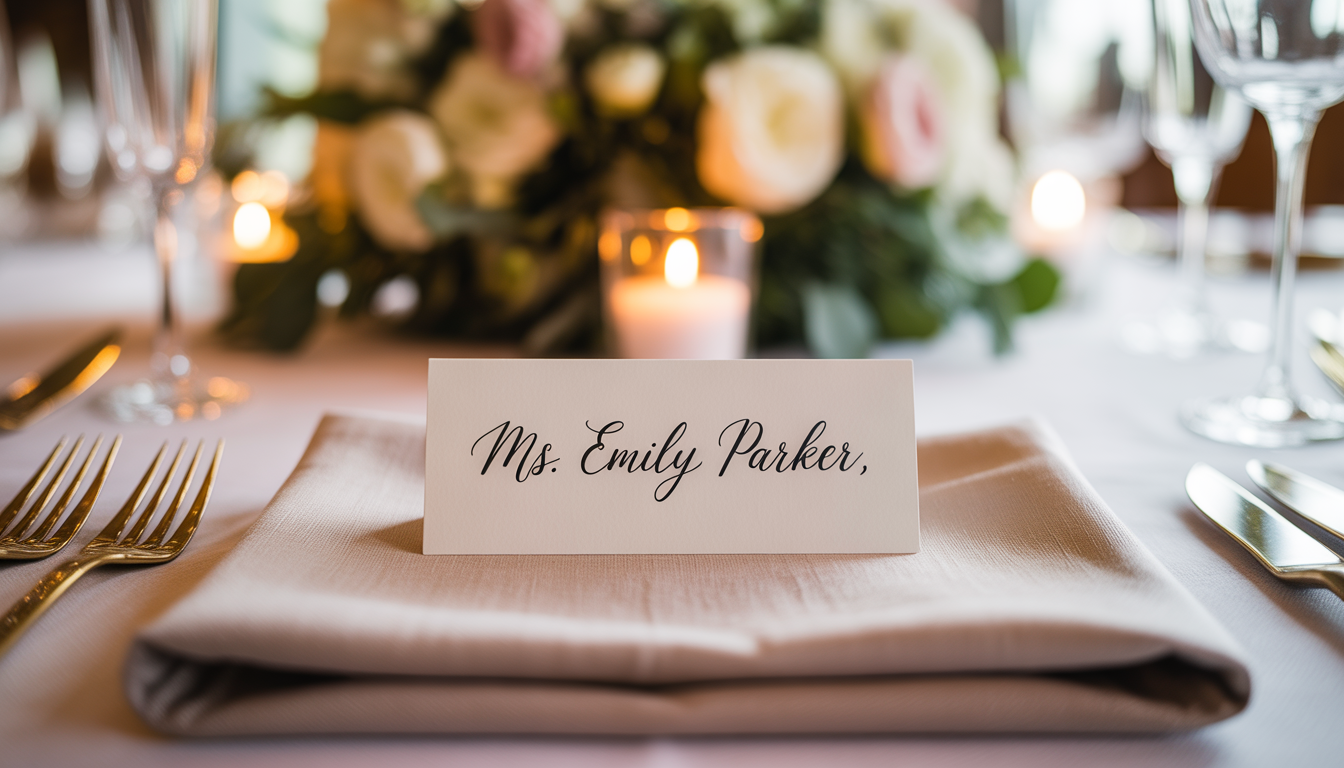
| Single guest | Ms. Emily Parker |
| Married couple, same table | Mr. David Chen · Mrs. Sarah Chen (separate cards) |
| Child | Lucas |
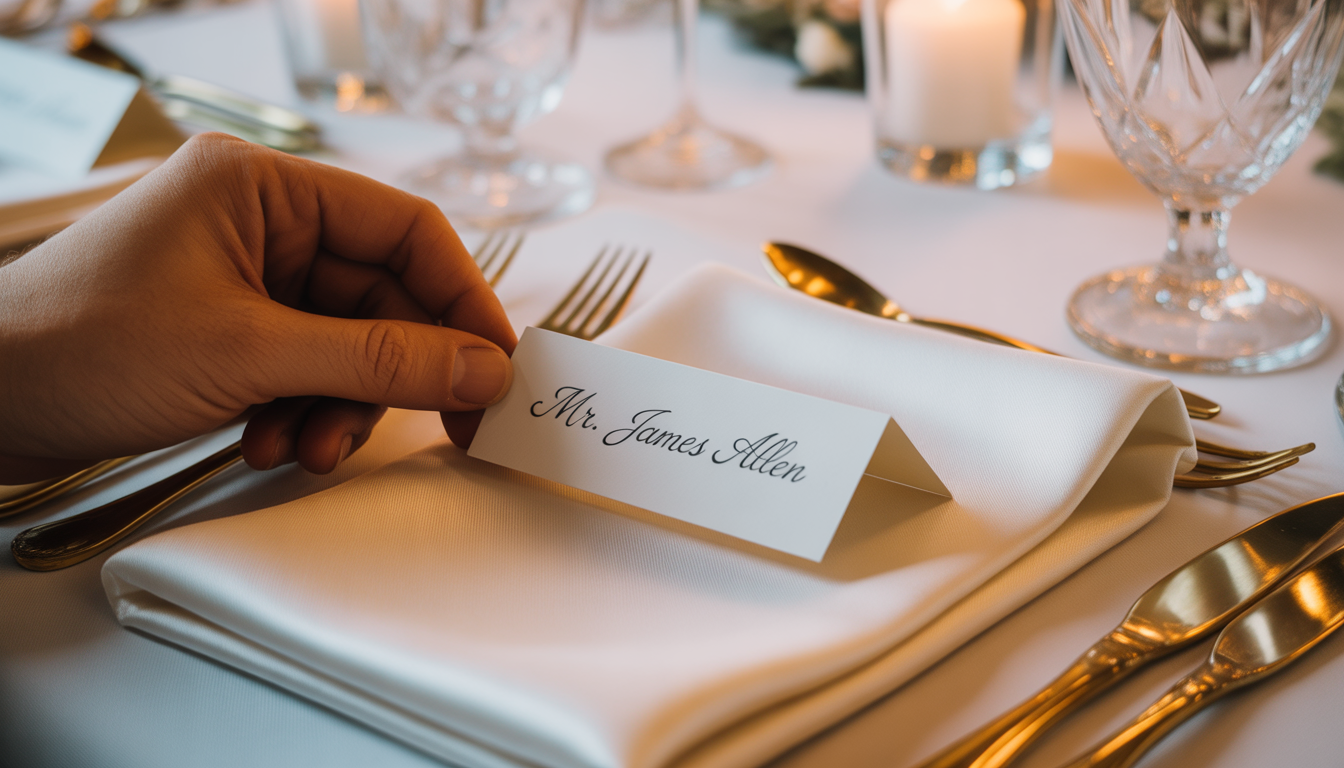
| Guest with a plus one | Mr. James Allen · Ms. Rachel Kim (separate cards) |
Each adult gets their own card. Couples don't share a card, even if they're sitting next to each other. This small detail matters because it signals that each person was individually welcomed, not treated as an extension of their partner.
How to Format Names
Most couples hit three questions when they start writing place cards: should I use titles, how do I handle married names, and what do I do when guests have doctorates, military ranks, or complicated family situations? Here's the short answer for each.
Titles (Mr., Mrs., Ms., Mx.)
Titles are traditional but not required. If the rest of your wedding is formal, use them. If it's a casual backyard reception, first and last names are perfectly acceptable. Pick one approach and stay consistent across all 150 cards. Mixing "Mr. John Smith" with "Emily" on the next card looks careless.
- Mr. for men
- Mrs. for married women taking their spouse's name
- Ms. for women regardless of marital status (use this if you're unsure)
- Mx. for non-binary guests who prefer it
When in doubt, ask. A quick text to the guest or the person who invited them beats guessing wrong.
Married couples with different last names
Each card gets their own name exactly as they use it. Don't merge them, don't force the shared last name, and don't add "and guest."
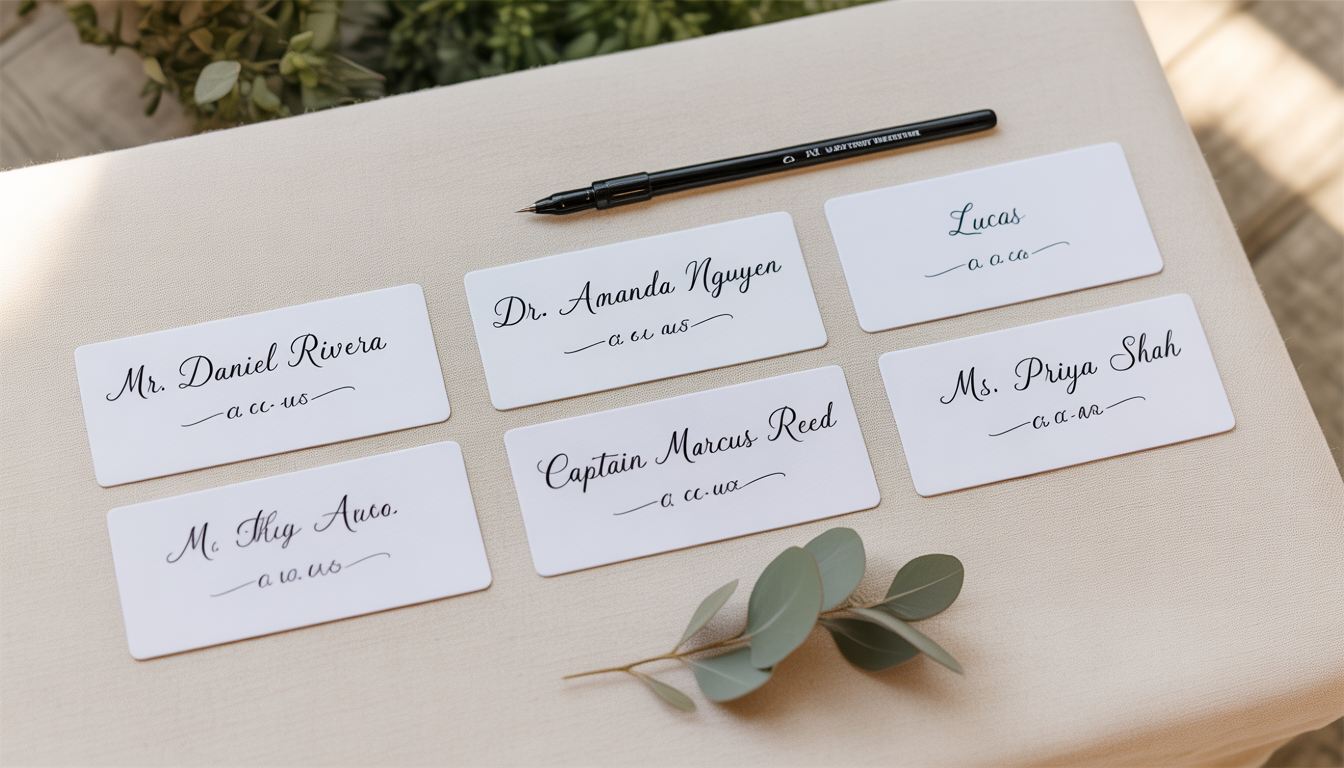
Mr. Daniel Rivera
Ms. Priya Shah
Professional titles (Dr., Judge, Rev., military rank)
Use them if the guest uses them socially. A medical doctor who introduces herself as "Dr. Nguyen" at parties should see "Dr. Amanda Nguyen" on her place card. A PhD in chemistry who never mentions it outside work gets "Ms. Amanda Nguyen." The rule is simple: match how the person presents themselves in everyday life.
For military guests, use their rank: "Captain Marcus Reed" or "Lieutenant Sarah Blake." If you're unsure of a current rank, ask a family member. Getting it wrong is noticed.
Children
Children under 18 typically get first name only. No Mr. or Ms., no last name unless there are two kids with the same first name at the same table.
Lucas
Ava
Noah K.
Noah M.
Where Table Numbers Go
If you're not using separate escort cards, the table number goes on the place card, usually small and centered under the name. This hybrid approach works well for weddings under 100 guests.
Ms. Emily Parker
Table 4
For larger weddings, separate escort cards and place cards. The escort card sends them to Table 4, and the place card waits at their specific seat. This prevents the bottleneck of 150 people trying to find 150 unique cards at one display.
Font, Size, and Legibility
This is where couples overspend on calligraphy and end up with cards nobody can read. A few rules that save the evening:
- Minimum font size: 18pt for names. Anything smaller gets lost in candlelight.
- Skip pure cursive scripts for long or unfamiliar names. "Bartholomew Fitzgerald-Thompson" in flowing script becomes an inkblot.
- High contrast only. White card with black or navy ink. Gold on cream looks beautiful in daylight and disappears at 7 p.m.
- Don't center long names on tiny cards. Leave margin, especially on the sides.
If you're hand-lettering, print a test card and photograph it in low light before committing to 200 of them. What looks elegant on your kitchen table can vanish on a dim reception table.
Where to Place the Card on the Table
Place cards typically sit in one of three spots:
- Above the dinner plate, centered, leaning against a napkin, menu, or flower. Most traditional.
- On the napkin, if the napkin is folded flat or rolled. Works well with minimalist table settings.
- Tucked into a charger plate or a small holder at the top of the setting. Best for windy outdoor receptions.
Pick one and apply it to every single seat at every single table. Inconsistent placement makes guests second-guess whether they're at the right seat.
Place Cards for Special Situations
Divorced parents
If divorced parents are seated apart (which is usually the right call), write each of their place cards with the names they currently use, not the names they had when they were married. If one parent has remarried, their new spouse gets a place card at the same table, seated next to them. We cover the full approach in our guide to seating divorced parents at a wedding.
Guests who didn't RSVP
Don't make a place card for them. If they show up anyway, have a small stack of blank cards and a pen at a back table so someone (not you) can write one on the spot. You're not printing 15 extra cards for people who might not come.
Vendors and the wedding party
Vendors eating at the reception (photographer, videographer, band) get place cards too, usually at a dedicated vendor table. The wedding party gets place cards at the head table or sweetheart table arrangement, and yes, even the bride and groom get their own. It's a small touch but it makes the head table feel finished.
Timeline: When to Write the Cards
Place cards are one of the last things on the wedding planning timeline, because they depend on final RSVPs and a locked seating chart. Here's roughly when to handle them:
| When | What to do |
|---|---|
| 6 weeks before | RSVP deadline. Start cleaning your guest list. |
| 4 weeks before | Lock the seating chart. Confirm name spellings. |
| 2-3 weeks before | Order or write place cards. |
| 1 week before | Hand off to your day-of coordinator with a printed seating chart. |
Don't rush the name-checking step. Ask a second set of eyes to read every single card before they're sealed in a box. The most common wedding place card mistake is a misspelled name, and it's the one guests remember.
Common Mistakes to Avoid
- Misspelling names. Copy names directly from RSVPs, not from memory. Double-check with the person who invited them.
- Mixing formal and casual formats. Either everyone gets a title or nobody does.
- Forgetting children. If kids are attending, they need a card. Leaving them out makes parents feel their child wasn't welcome.
- Using nicknames for some and legal names for others. Pick one. If Grandma Elizabeth goes by "Beth," write Beth. Consistency is what makes it feel thoughtful.
- Printing before RSVPs are final. You'll throw half of them away.
- No backup. Keep 10 blank cards and a matching pen on hand. Someone will spill wine on a card or a last-minute guest will appear.
If you want the full list, we've written a longer piece on the 10 wedding seating chart mistakes couples make most often, and several of them touch place cards directly.
Should You Write Them Yourself or Outsource?
This depends on your guest count and your handwriting.
- Under 50 cards: Writing them yourself is realistic and saves money. Expect to spend an evening on it, not an hour.
- 50 to 120 cards: Consider printing them. Modern home printers handle cardstock well, and you get perfect consistency.
- Over 120 cards: Hire a calligrapher or use a printing service. It's faster, cleaner, and keeps you sane in the last month.
Whichever route you take, start from a clean guest list with correct spellings. The bottleneck isn't the writing, it's tracking down how "Katherine" spells her name versus "Catherine." Our free wedding guest list template has a dedicated column for display name, which is exactly what you copy onto the place card.
Tying It Back to Your Seating Chart
Place cards are the physical output of your seating chart. If the chart is wrong, the cards will be wrong, and 150 people will find out in real time. Before you write a single card, sit with your seating plan and walk through it like a guest: enter the room, find the table, find the seat. Does it make sense? Is Uncle Rob actually next to his wife? Is the kids' table actually near the exit?
This is exactly the problem MySeatPlan's drag-and-drop seating chart builder was built to solve. You arrange tables and guests visually, move people around as RSVPs come in, and export a clean list you can hand to whoever is writing your place cards. No spreadsheet version conflicts, no lost sticky notes, no "wait, where did we put Aunt Diane?" two weeks before the wedding.
Quick Reference: Place Card Checklist
- Every adult guest has their own card
- Every child attending has a card with first name
- Name spellings double-checked against RSVPs
- Titles used consistently (all or none)
- Font is at least 18pt and legible in low light
- Table numbers included if not using escort cards
- Cards placed consistently at every seat
- 10 blank backup cards and a matching pen ready for the day
- Handed off to coordinator with a printed master seating chart
Place cards are the last small detail in a very long process, and they're the one guests physically interact with. Get the names right, keep them readable, and be consistent. Everything else is decoration.
Frequently asked questions
-
Wedding place cards should include the guest’s name and, if needed, their table number. Each guest should have their own card, even couples. Keep the text simple and legible so guests can quickly find their seat without confusion.
Plan your perfect event seating arrangement
MySeatPlan gives you everything you need to organize your big day — all in one place.
- Drag-and-drop seating chart
- Guest list with RSVP tracking
- Export seating charts as images & PDF
- Share your plan with others via shareable link
- Design your invitation card
- Guest photo & video uploads