How to Plan a Wedding on a Budget (Without It Feeling Cheap)
 MySeatPlan
·
MySeatPlan
·
You don't need a $40,000 budget to have a wedding that feels personal, elegant, and memorable. Here's where to save, where not to, and how to build a beautiful day on a number you can actually afford.
Ready to create your own event seating chart?
Try our free drag-and-drop seating chart builder.
Get Started →The average wedding in the United States now costs more than $33,000. That number scares people, and it should, because it's the result of couples quietly saying yes to every upsell along the way. The truth is, you can plan a wedding that feels elegant, personal, and full of love for a fraction of that. What you spend is far less important than what you prioritize.
This is a practical guide to planning a beautiful wedding on a real budget. No vague "cut costs" advice. Instead, actual numbers, the specific places to save without anyone noticing, the three areas where cheaping out always backfires, and sample breakdowns for $5,000, $10,000, and $20,000 weddings.
First: Decide What "Budget" Actually Means for You
Budget is relative. A $20,000 wedding feels tight in Manhattan and extravagant in rural Tennessee. Before you start cutting, write down three numbers:
- Your comfortable number. What you can spend without taking on debt or delaying other life goals.
- Your maximum. The hardest line you won't cross, even if a vendor tries to push you there.
- Your ideal guest count. Because guest count drives 50 to 60% of the total cost.
Now you have a real budget to plan against, not a fantasy number and not an industry-average guilt trip.
The Guest List Is Your Single Biggest Lever
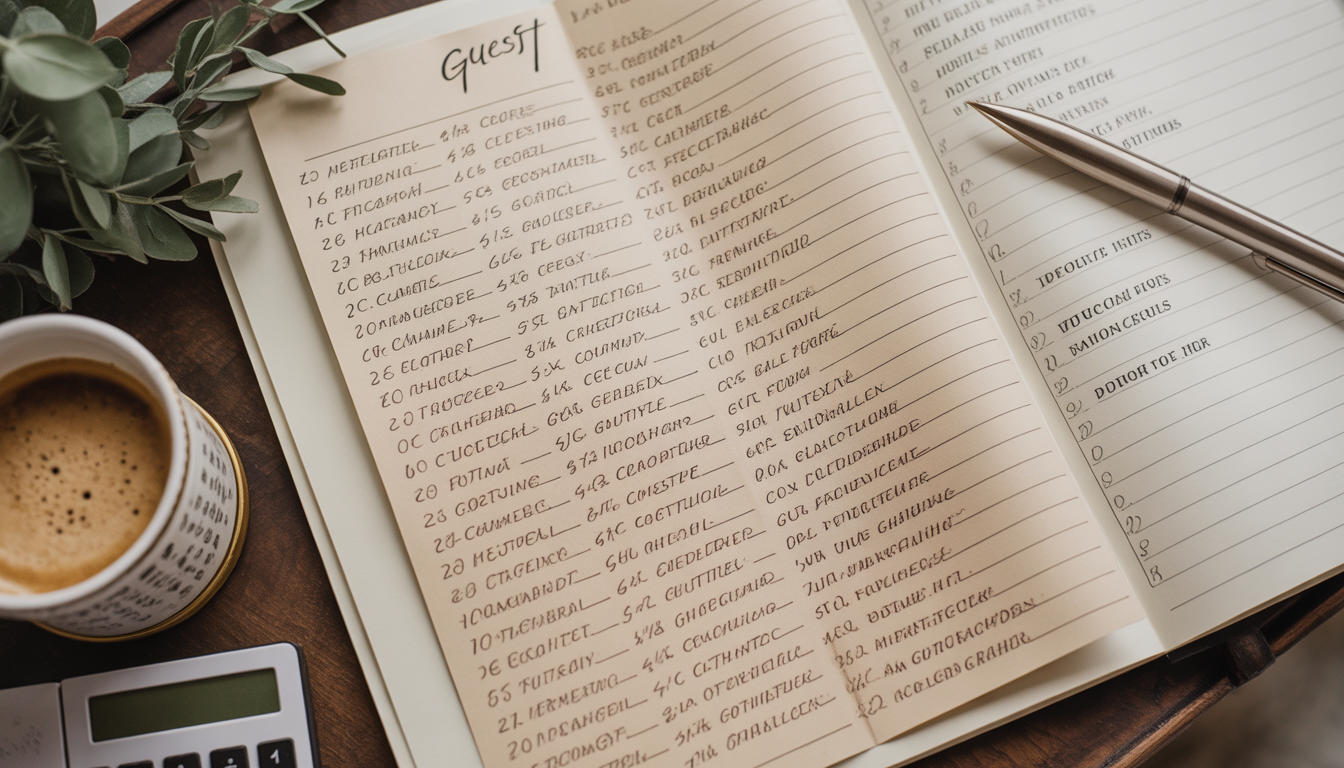
Nothing, and we mean nothing, affects your wedding budget more than how many people you invite. Every added guest costs you roughly $80 to $200 in catering, bar, rentals, cake, stationery, and favors. Cut 30 guests and you save $3,000 to $6,000 without changing a single other decision.
This is the single best piece of budget advice on this page: before you try to negotiate a florist down by $300, ask yourself if you really need to invite your coworker from two jobs ago. Our guide on how many people to invite to your wedding walks through exactly how to build a list that fits your budget.
- Micro wedding (under 20 guests): can be done beautifully for $3,000 to $8,000.
- Small wedding (20 to 50 guests): realistic at $8,000 to $15,000.
- Mid-size wedding (50 to 100 guests): $15,000 to $30,000 is typical.
- Large wedding (100+ guests): hard to do under $25,000 anywhere in a major metro area.
Where to Save Without Anyone Noticing
Some line items are pure overhead. Guests literally never notice whether you spent $400 or $4,000 on them. These are the first places to cut.
1. The date and day of the week
Saturday weddings in peak season (May to October) are the most expensive. Shift to a Friday, Sunday, or any weekday and you can save 20 to 40% on venue and vendor pricing, sometimes more. Off-peak months (January, February, November for most regions) stack discounts on top.
2. The venue itself
Venue rental is usually the largest single cost of a wedding. Alternatives that save thousands:
- Non-traditional venues: art galleries, breweries, restaurants with private rooms, public parks, botanical gardens, libraries, historic homes.
- All-inclusive venues: often cheaper than building it piece by piece, because they bundle catering, rentals, and coordination.
- Family or friend's property: backyard weddings can be stunning, but factor in tent, restroom, and lighting rentals.
- Airbnb or VRBO estates: rent a large property for the weekend, use it for both the wedding and accommodation.
3. Flowers
Flowers are where budgets quietly hemorrhage. A $200 centerpiece at ten tables is $2,000 for one night. Alternatives that look just as beautiful:
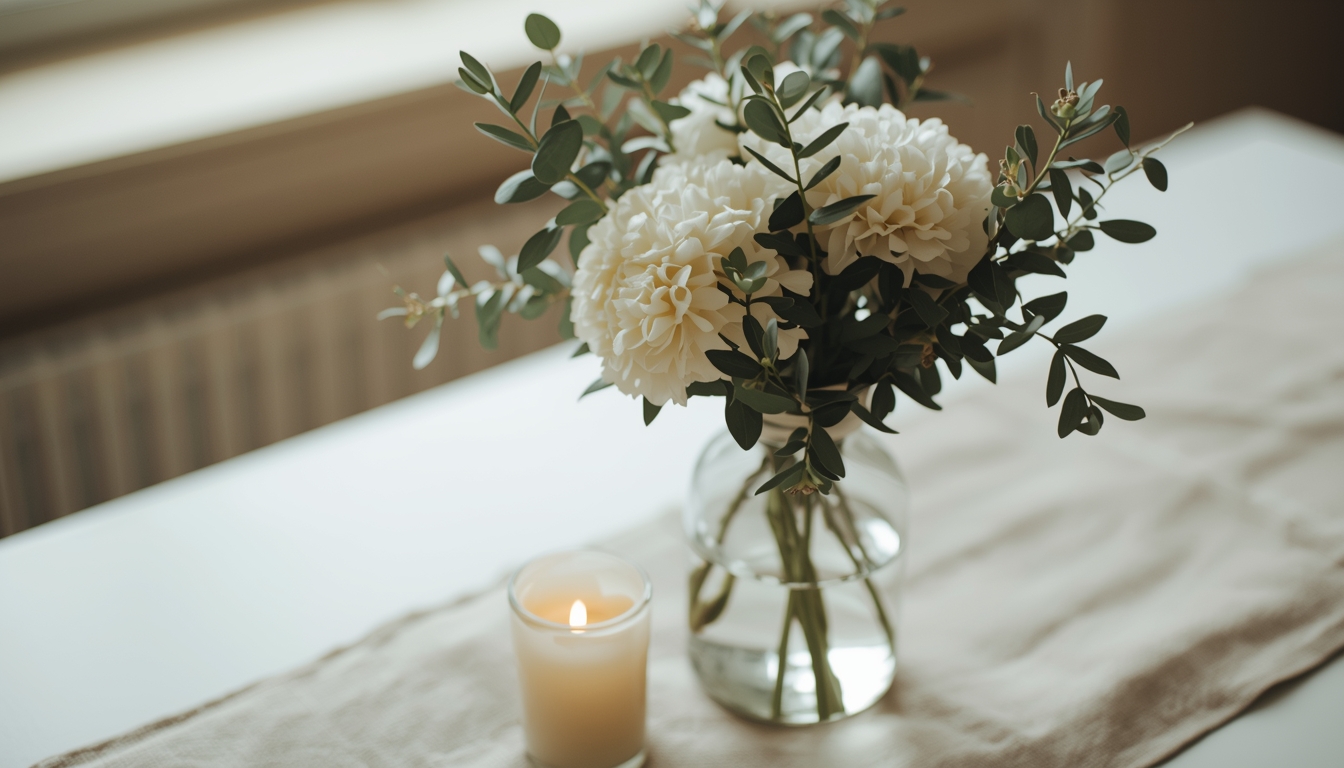
- Greenery-only arrangements (eucalyptus, ferns, olive branches). Half the cost, twice the impact.
- Single stems in bud vases instead of full arrangements.
- Grocery-store flowers arranged yourself, a day before.
- Potted plants as centerpieces that guests take home.
- Candles as the primary visual instead of florals.
4. Stationery
Custom letterpress invitations can run $8 to $15 per guest. Alternatives:
- Digital save-the-dates and wedding websites (free or near-free).
- Print invitations through Minted, Zola, Vistaprint, or similar. Under $2 per guest.
- Skip the inner envelope, RSVP card, and details insert. Put everything on the website with a QR code.
5. Favors
Be honest: most wedding favors end up in the trash within 24 hours. Options:
- Skip them entirely. Nobody will complain.
- Donate to a cause in guests' names with a small tent card.
- One shared dessert table instead of individual favors.
6. The cake
A tiered wedding cake often runs $500 to $1,500. Alternatives:
- A small ceremonial top tier for cutting photos, then sheet cakes from the same baker served in the kitchen. Same taste, half the cost.
- Dessert bar instead of cake (cupcakes, mini pies, cookies, donuts).
- Grocery store cake. Whole Foods and Costco bakeries deliver surprisingly good wedding cakes for a fraction of the price.
7. Transportation
Stretch limos are expensive and, frankly, dated. A nice SUV or a vintage car rental looks better and costs less. For larger parties, carpool between the ceremony and reception, or use a single shuttle to move guests.
The Three Places Not to Cheap Out
Some categories look like easy places to save and end up being the ones couples regret most. Protect your budget here.
1. Photography
The photographer is the only vendor whose work you'll look at for the next 50 years. A $500 Craigslist photographer will deliver $500 Craigslist photos. A $3,000 photographer will deliver memories you hang on walls.
If the budget is truly tight, hire a solid mid-range photographer for 4 to 6 hours (ceremony plus reception highlights) instead of a celebrity photographer for 10 hours. Short coverage from someone great beats long coverage from someone mediocre.
2. Food and drink
Guests will forget the flowers. They will not forget if they were hungry or stuck in line at a stressed bar. Food doesn't have to be a 5-course plated dinner, it just has to be enough, hot, and on time.
Affordable options that still feel generous:
- Buffet or family-style instead of plated.
- Food trucks, one per cuisine, parked outside the venue.
- Restaurant catering instead of dedicated wedding caterers, often 30 to 50% less for the same quality.
- Beer, wine, and one signature cocktail instead of a full open bar.
3. A day-of coordinator
This feels like something you can skip, especially on a small budget. Don't. A day-of coordinator (usually $500 to $1,500) handles the 100 tiny questions that come up on the wedding day so you don't have to. Without one, you or a family member becomes the coordinator, which means spending the day stressed instead of present.
If you truly cannot fit one in, delegate in advance. Assign specific roles to 3 trusted friends: vendor point of contact, setup manager, and general emergency handler. Write a printed day-of timeline and hand it to all three.
A Sample $5,000 Wedding Breakdown
| Category | Budget | Notes |
|---|---|---|
| Venue | $500 | Public park, restaurant private room, or family property |
| Food and drink (30 guests) | $1,800 | Restaurant catering or food truck, BYO wine |
| Photography | $1,200 | Emerging photographer, 4 hours |
| Attire | $600 | Off-the-rack dress, rental suit |
| Flowers and décor | $300 | DIY, grocery store, candles |
| Stationery | $100 | Digital invites, minimal printing |
| Officiant and license | $250 | Friend ordained online, marriage license |
| Misc buffer | $250 | Rings, small favors, tips |
| Total | $5,000 |
A Sample $10,000 Wedding Breakdown
| Category | Budget | Notes |
|---|---|---|
| Venue | $2,000 | Non-traditional venue, off-peak or weekday |
| Food and drink (60 guests) | $3,600 | Buffet catering, beer/wine/one signature cocktail |
| Photography | $2,000 | Mid-range photographer, 6 hours |
| Attire | $900 | Sample sale dress, rental or budget suit |
| Flowers and décor | $600 | Mostly greenery, candles, a few florals |
| Stationery and signage | $200 | Online printing service |
| Music (DJ or playlist + speaker) | $300 | Starter DJ or curated Spotify setup |
| Day-of coordinator | $400 | |
| Total | $10,000 |
A Sample $20,000 Wedding Breakdown
| Category | Budget | Notes |
|---|---|---|
| Venue | $4,500 | Traditional venue, Friday or Sunday |
| Food and drink (80 guests) | $6,400 | Plated or family-style, full bar with limits |
| Photography and video | $3,500 | Established photographer, short video highlight |
| Attire and beauty | $1,800 | Dress, suit, hair and makeup |
| Flowers and décor | $1,500 | Florist with a tight scope, reusable pieces |
| Music (DJ + ceremony) | $900 | |
| Day-of coordinator | $800 | |
| Stationery, cake, misc | $600 | |
| Total | $20,000 |
Hidden Costs That Blow Budgets
The biggest budget killers aren't the big line items. They're the small ones you didn't plan for.
- Tax and service fees. Venue and catering invoices often add 20 to 25% on top of the quoted price. Always ask for the "all-in" figure.
- Tips for vendors. Budget 10 to 20% of certain vendor costs for tips (hair/makeup, musicians, delivery drivers).
- Rentals you didn't know you needed. Extra chairs, linens, lighting, heaters, generators for outdoor weddings.
- Postage. Custom-shaped invitations often require non-machinable postage at double the rate.
- Alterations. A $600 dress often needs $200 to $400 in alterations.
- Marriage license. $25 to $120 depending on jurisdiction.
- Vendor meals. Photographers, DJs, and videographers expect meals. That's 3 to 6 additional plates.
- Overtime. Reception runs long, vendors charge hourly overages. Read the contracts.
Add a 10% buffer to every estimate. It's not pessimism, it's arithmetic.
DIY, But Strategically
DIY sounds like the obvious way to save money. Sometimes it is. Often it's a trap, because the hidden cost is your time and sanity in the final two weeks.
Good DIY projects:
- Wedding website
- Playlist curation
- Simple signage printed online
- Table numbers (anyone can print and frame numbers)
- Welcome bags for out-of-town guests
- Seating chart and place cards, if your handwriting holds up
Bad DIY projects:
- Flower arrangements for more than 10 tables (you'll be arranging at 2 a.m. the night before)
- Food you cook yourself
- Day-of coordination
- Anything involving a sewing machine and a deadline
A small DIY detail your guests remember (handmade escort cards, a family recipe passed out as favors) is charming. A full DIY wedding is a part-time job you didn't sign up for.
Use Free and Low-Cost Tools
A big chunk of what coordinators and planners charge for is organization. You can replicate most of it with the right tools.
- Guest list and RSVPs: a spreadsheet works, or a free tool. Our wedding guest list template walks through the columns that matter.
- Wedding website: Zola, The Knot, and Minted all have free tiers.
- Seating chart: a spreadsheet breaks at around 50 guests. MySeatPlan's drag-and-drop seating chart builder is free for small events and lets you arrange tables visually, move guests as RSVPs update, and export a clean chart for your coordinator or place-card writer. One of the few paid tools actually worth using on a tight budget.
- Budget tracking: a simple spreadsheet with category totals and a running "actual vs. planned" column.
Budget Mistakes That Actually Matter
- No written budget at all. If the number only exists in your head, it will grow without you noticing.
- Cutting the photographer to save $1,500. You'll regret this every time you look at the photos for the next 40 years.
- Keeping too many guests to stay "inclusive." Every extra 10 guests costs $1,000 to $2,000. Be honest about who you actually want there.
- Paying retail for everything. Sample sales, off-season bookings, cash discounts, and package bundles all exist. Ask.
- Ignoring the timeline. Rushing final decisions costs money. Our complete wedding planning timeline lays out when to book what, so you're not paying premium rates for last-minute bookings.
- Forgetting the seating chart until the last week. Late seating changes cost printer rush fees and caterer headcount changes. Start the seating chart as soon as RSVPs start coming in. Our step-by-step seating chart guide covers the order of operations.
The Mindset Shift That Actually Saves Money
Most wedding budgets explode because couples try to have every element of a $50,000 wedding at a $20,000 price point. The couples who stay on budget pick 2 or 3 priorities and go all-in on those, while keeping the rest simple.
Maybe you care deeply about food and music. Then spend there, and keep flowers and stationery minimal. Maybe you want spectacular photos and a stunning venue. Then accept a shorter vendor list, a smaller guest list, and a simpler cake.
A wedding that's great at 3 things beats a wedding that's mediocre at 12.
Quick Reference: The Budget Wedding Checklist
- Real budget number written down, with 10% buffer
- Guest list ruthlessly cut to what the budget actually supports
- Off-peak date or non-Saturday considered
- Non-traditional venue explored
- Photography, food, and coordination protected
- Flowers, favors, and stationery trimmed first
- Hidden costs (tax, tips, rentals) factored in
- DIY limited to projects that won't break you
- Free and low-cost planning tools in place
- 2 to 3 priorities chosen, rest kept simple
A wedding on a budget is not a worse wedding. It's a more honest one. You're spending money on what matters to you, cutting what doesn't, and refusing to let the industry average dictate how your day looks. Guests remember two things: whether they felt welcomed, and whether you seemed happy. Everything else is decoration, and decoration scales down beautifully when you need it to.
Frequently asked questions
-
To plan a wedding on a budget, start by setting a clear spending limit, then build your guest list within that number. Prioritize what matters most (like food or photography), and cut costs on less noticeable areas like favors, stationery, and décor.
Plan your perfect event seating arrangement
MySeatPlan gives you everything you need to organize your big day — all in one place.
- Drag-and-drop seating chart
- Guest list with RSVP tracking
- Export seating charts as images & PDF
- Share your plan with others via shareable link
- Design your invitation card
- Guest photo & video uploads