How Many People Should You Invite to Your Wedding?
 MySeatPlan
·
MySeatPlan
·
The guest count decides almost everything else about your wedding, the budget, the venue, the energy of the room. Here's how to land on a number you won't regret, with real averages and a simple way to build your list.

Ready to create your own event seating chart?
Try our free drag-and-drop seating chart builder.
Get Started →Before you book a venue, pick a caterer, or even set a date, one number decides almost everything else about your wedding: how many people you invite. The guest count drives your budget, your venue options, the shape of the room, the length of your reception timeline, and the feeling of the whole day. Get it wrong in either direction and you'll feel it, either in an uncomfortably empty room or in a monthly payment you're still making two years later.
This guide walks you through how to land on a guest count that fits your budget, your venue, and the wedding you actually want, with real average numbers, a simple formula, and the kind of trade-offs nobody tells you about until it's too late.
The Short Answer
The average wedding in the United States has around 115 to 130 guests. In the UK, it's closer to 80 to 100. In parts of Europe and the Mediterranean, it can stretch well past 200. But averages don't plan weddings, budgets do.
A more useful way to think about it: your guest count is whatever number keeps your per-person cost within a range you can actually afford, at a venue that genuinely fits that many people, for a day that still feels like yours. Everything in this article is about finding that number.
Start With the Budget, Not the List
Most couples do this backward. They write a list of everyone they'd love to invite, add it up, and then try to find a venue and a budget to fit. That almost always ends in painful cuts later, or a budget that quietly balloons by 40%.
The better order is:
- Decide what you can comfortably spend on the wedding.
- Decide what percentage of that budget goes to "per-guest" costs (food, drink, rentals, stationery, favors, cake).
- Divide to get a realistic guest count ceiling.
- Build the list inside that ceiling.
The per-guest math
Roughly 50 to 60% of a wedding budget scales directly with guest count. Catering, bar, rentals, cake, invitations, and favors all get bigger as the list gets longer. The other 40 to 50% (venue fee, photography, attire, flowers, music, officiant) stays roughly the same whether you have 60 guests or 160.
That means the question isn't "what does a wedding cost per person," it's "what does adding one more person cost." And that number is usually between $80 and $250 per guest depending on your region and your choices.
| Style of wedding | Typical marginal cost per added guest |
|---|---|
| Backyard, buffet, beer and wine | $60 to $100 |
| Mid-range venue, plated dinner, open bar | $120 to $180 |
| Hotel or upscale venue, full service, premium bar | $200 to $350+ |
So if your total budget is $40,000 and you're targeting a mid-range venue at roughly $150 per added guest, you can carry about 130 to 140 guests comfortably. Go above that and something has to give, usually the venue, the bar, or the honeymoon.

Let the Venue Vote Too
Venues have two numbers that matter, and they're not the same: maximum capacity and comfortable capacity. Maximum is what the fire marshal allows. Comfortable is how many people can actually eat, dance, and move around without bumping elbows.
As a rule, comfortable capacity for a seated dinner with a dance floor is about 70 to 75% of the listed maximum. A venue that sleeps 200 on the brochure usually hosts 140 to 150 well. If you push to 200 you'll lose the dance floor, the lounge corners, and any breathing room between tables.
This cuts both ways. A 60-guest wedding in a 200-capacity room feels empty and echoey no matter how many candles you light. If your list is small, look for small venues, or use draping and layout tricks to compress a bigger space. We covered layout options in depth in our guide to wedding reception floor plan ideas for every venue size.
A Simple Formula for Your Guest Count
Here's a quick way to pressure-test a number before you commit to it:
(Total budget × per-guest budget share) ÷ cost per added guest = your guest ceiling
Example: $35,000 budget × 55% per-guest share = $19,250 for scalable costs. Divide by $150 per added guest = roughly 128 guests. That's your ceiling, not your target. Aim 10 to 15% below it to leave room for vendor overages, upgrades you'll inevitably want, and the reality that a few quotes will come in higher than expected.
Build the List in Layers
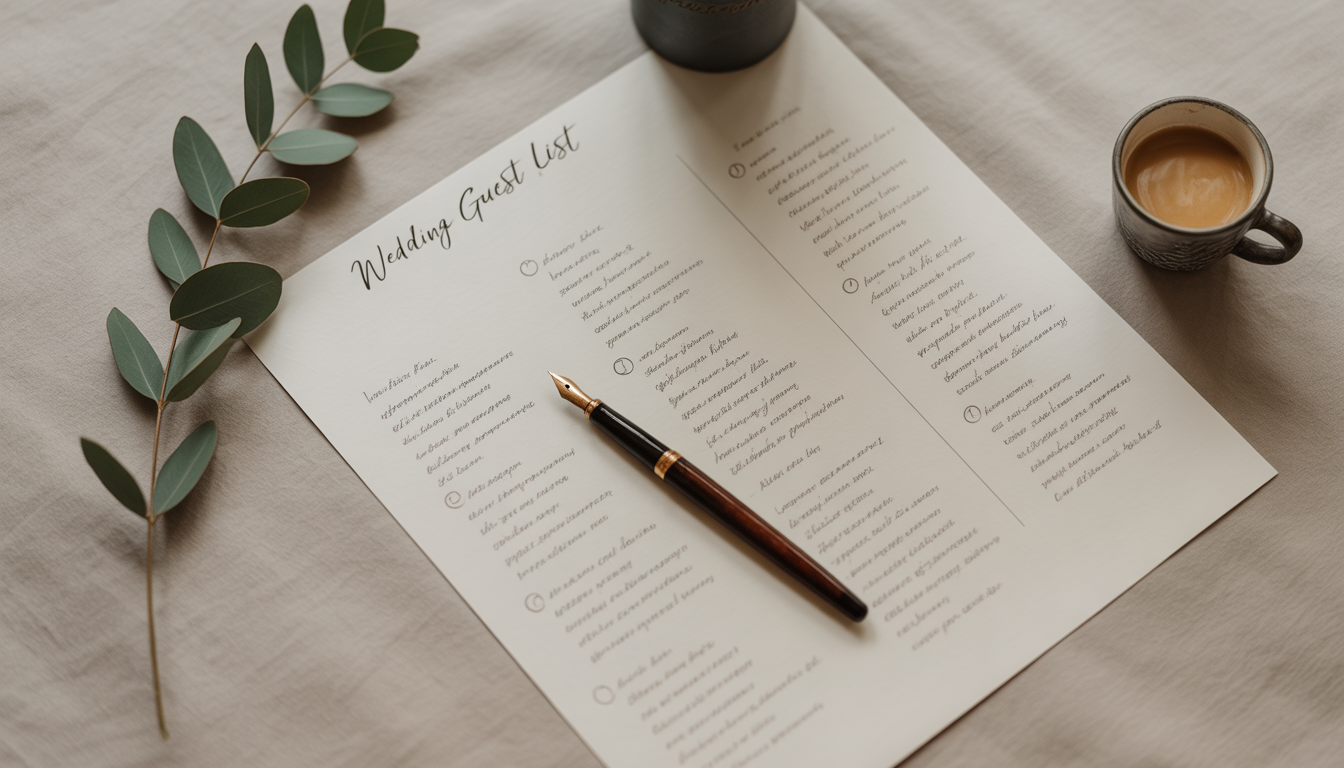
Once you know your ceiling, build the list in concentric circles. This is the single best technique for keeping a guest list honest, because it forces you to be explicit about who belongs in which circle and why.
- Circle 1, non-negotiable. Immediate family, the wedding party, and the handful of people you literally cannot imagine the day without. For most couples this is 20 to 40 people combined across both sides.
- Circle 2, close people. Extended family you actually see, close friends, godparents, mentors. Usually 40 to 80 more.
- Circle 3, wider social circle. Work friends, college friends you've drifted from, your parents' friends, cousins you see once a year. This is where guest lists balloon.
- Circle 4, "would be nice." Neighbors, plus ones for single friends, distant relatives. This is the first circle to cut when you hit your ceiling.
Add them up circle by circle. Stop at your ceiling. Whatever didn't make it stays off, and that's fine, because the alternative is either going into debt or ending up with a day that feels rushed because you were trying to feed too many mouths.
Real Average Guest Counts by Wedding Size
| Size | Guest count | Feels like |
|---|---|---|
| Micro wedding | 2 to 20 | Intimate, conversational, every guest is spoken to |
| Small wedding | 20 to 60 | Personal, relaxed, full dinner-party energy |
| Mid-size wedding | 60 to 120 | Traditional reception with room to dance |
| Large wedding | 120 to 200 | Big party, you won't speak to everyone, needs structure |
| Very large wedding | 200+ | Closer to an event than a dinner, full coordination required |
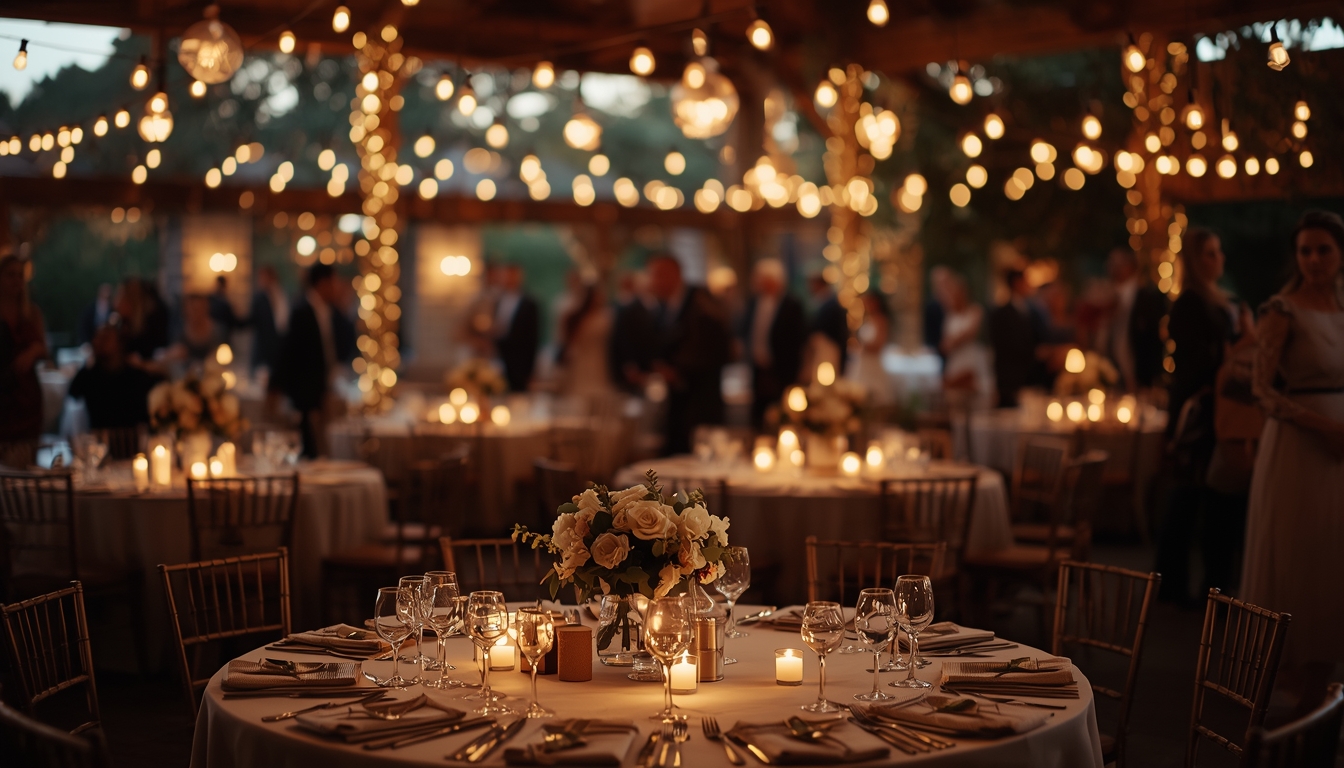
There's no "correct" number, but there's a correct number for you. Couples who regret their guest count almost always skew one way: they invited more people than the venue comfortably held, or more than the budget cleanly supported. Couples who wish they'd had a bigger wedding are rarer than you'd think.
The Response Rate Question
You won't invite 130 people and have 130 come. Plan for a response rate, then work backward.
- Local wedding, most guests nearby: expect 80 to 85% to attend.
- Regional wedding with some travel: expect 70 to 80%.
- Destination wedding: expect 50 to 65%.
So if you want 120 guests in the room, and you're having a regional wedding, you can safely invite around 150. Don't send invitations to 180 "just in case," because the math sometimes flips and you'll be stuck feeding an unexpected crowd.
This is also the moment where guest tracking matters most. A real system (not a half-updated spreadsheet) makes this manageable. Our wedding guest list template goes deeper on tracking RSVPs, meal choices, and plus ones, and it's free to copy.
Plus Ones, Kids, and Other Tricky Categories
These three categories quietly add 15 to 30% to a guest list if you don't set rules early.
Plus ones
The traditional rule: single guests who are in a serious, named relationship get a plus one. Single guests you've never seen with a partner don't. The modern rule: whatever is consistent. If you offer plus ones to some single friends and not others, that's the cut people remember.
A sensible policy, extend plus ones to anyone in a relationship of more than six months, and to anyone who won't know anyone else at the wedding. Otherwise, solo invites with good seating. Which leads directly to, who they sit with matters. Put them with people they'll click with, not at the overflow table. Our wedding seating chart etiquette guide covers this in more detail.
Kids
You have three realistic options: all kids welcome, immediate family kids only, or fully adults-only. Whichever you pick, apply it uniformly. The worst thing you can do is let some families bring kids and tell others not to, because it will get back to you.
Kids typically cost 50 to 70% of an adult per head, but the bigger cost is logistical, a kids' table, activity bags, earlier bedtimes, and parents who can't stay late.
Coworkers and work friends
The clean rule: invite nobody from work, or invite a specific group (your team, your direct department), or invite only people you genuinely see outside of work. Halfway lists, "three people from accounting but none from sales," create office drama that follows you back to your desk.
The Cuts You Won't Regret
Couples who cut their list usually say the same thing afterward: they don't remember the people they left off, but they remember having space at the wedding. Common cuts that age well:
- Coworkers you don't see outside the office
- College friends you haven't spoken to in over a year
- Parents' friends who are really just their friends, not yours
- Extended family you only see at funerals and Christmas
- Plus ones for guests who won't know anyone anyway (solo invite with thoughtful seating is fine)
- "Courtesy" invites to people who invited you to their wedding five years ago
None of these cuts are rude if they're applied consistently. What's awkward is inconsistency, inviting one cousin and not another with no clear reason.
The Cuts You Might Regret
A few categories are worth protecting even when the list gets tight:
- Grandparents and their siblings, while they're still around
- Childhood best friends you've kept up with
- The handful of people who will genuinely feel hurt to not be there, and who you'd feel hurt to not have there
- Mentors who shaped who you are
If cutting one of these to stay under budget, consider a smaller venue or a simpler menu first. You can always serve pasta. You can't always get your grandmother back to a reception.
Pressure From Parents
If parents are contributing financially, it's normal (and fair) for them to expect some say in the guest list. A common split: each parent side gets roughly a third of the list, the couple gets a third. This isn't a rule, it's a starting point for a conversation that needs to happen early, ideally before you book a venue.
Two things help keep this from spiraling:
- Agree on total guest count first, then split it.
- Be honest about who actually needs to be there. "Mom's coworker she hasn't seen in two years" is negotiable, grandparents aren't.
If parents are not contributing, the list is yours. Be kind about it, but be clear.

Once You Have the Number
The guest count isn't the end of the planning, it's the start. Once you know the number, you can book a venue that actually fits, lock a caterer, and start building the seating chart. That last one sounds simple and isn't, especially once plus ones, family dynamics, and dietary requirements layer in.
When you're ready to arrange the people into tables, MySeatPlan's drag-and-drop seating chart builder lets you visualize the room, move guests around as RSVPs come in, and export a clean plan for your day-of coordinator. It's the part of wedding planning where a real tool saves the most time, because seating changes happen up until the week of.
For the step-by-step side of it, our full guide to creating a wedding seating chart walks through the order of operations, from final guest list to printed place cards.
Quick Reference: Guest Count Checklist
- Total budget decided and written down
- Per-guest marginal cost estimated for your wedding style
- Guest ceiling calculated (aim 10 to 15% below it)
- Venue comfortable capacity confirmed, not just maximum
- List built in four circles, stopped at the ceiling
- Response rate factored in based on travel required
- Plus-one policy decided and applied consistently
- Kids policy decided and applied consistently
- Parent contributions and list expectations aligned early
The right number of guests isn't the biggest number you can afford, it's the number that lets the day feel exactly like you wanted it to feel. Start from the budget, respect the venue, build in layers, and cut without guilt. You'll thank yourself on the morning after.
Frequently asked questions
-
Most weddings have between 80 and 150 guests, but the right number depends on your budget, venue size, and priorities. A good rule is to choose a guest count that fits comfortably within your per-person budget and venue capacity.
Plan your perfect event seating arrangement
MySeatPlan gives you everything you need to organize your big day — all in one place.
- Drag-and-drop seating chart
- Guest list with RSVP tracking
- Export seating charts as images & PDF
- Share your plan with others via shareable link
- Design your invitation card
- Guest photo & video uploads