Do You Need Place Cards at a Wedding?
 MySeatPlan
·
MySeatPlan
·
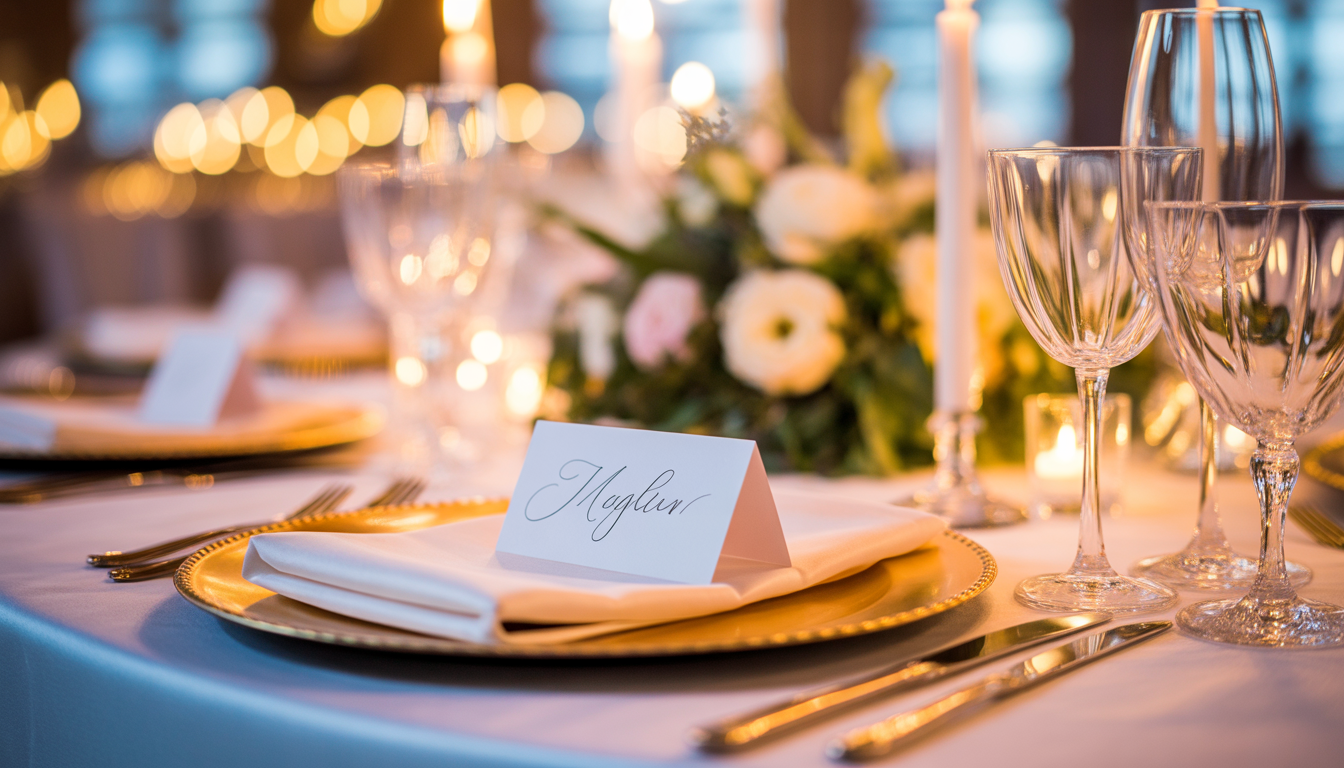
Place cards aren't strictly required, but they make the night smoother for guests, the kitchen, and the venue staff. Here's when you need them, when you can skip them, and what to do instead.
Ready to create your own event seating chart?
Try our free drag-and-drop seating chart builder.
Get Started →Place cards aren't strictly required, but they're strongly recommended for weddings over 50 guests, plated meals with multiple options, and any reception where you've taken time to plan the seating. They confirm individual seats, help the kitchen serve the right meal to the right person, and add a polished detail to the table setting. You can skip them at very small weddings or fully cocktail-style receptions, but most weddings benefit from having them.
The Quick Answer
| Wedding type | Place cards needed? |
|---|---|
| Under 30 guests, one long table | Optional, but a nice touch |
| 30 to 50 guests, assigned tables | Recommended, especially with plated meals |
| 50 to 100 guests, plated dinner | Yes, especially with multiple meal options |
| 100+ guests | Yes, always |
| Buffet or family-style under 50 guests | Optional |
| Cocktail-style reception | No |
What Place Cards Actually Do
Place cards solve four problems at once, even though they look like a small decorative detail.
- They confirm individual seats. Guests know exactly where to sit, removing the awkward "is this seat taken?" shuffle.
- They help the kitchen. If guests have selected meal options on their RSVP (chicken, fish, vegetarian), the catering team uses the place cards to deliver the right plate to the right person.
- They reflect your planning. A place card signals that you've thought about who sits next to whom, which guests appreciate, especially the ones placed thoughtfully.
- They polish the table setting. Place cards are part of the visual flow of a formal dinner table. They round out the look of the linens, the centerpiece, and the menu cards.
When You Need Them (And Why)
Plated meals with multiple options
This is the strongest case. If guests pre-selected their entrée on the RSVP card, the catering team uses place cards (often with a small symbol indicating meal choice) to plate the right food at the right seat. Without place cards, the meal service slows dramatically while servers ask each guest what they ordered.
Assigned seating at all
If you've gone to the trouble of building a seating chart, place cards are how that work shows up on the day. Without them, a thoughtful seating plan dissolves the moment guests sit wherever they want at the table. See our guide on do you need assigned seats at a wedding for the full case for assigned seating in the first place.
Larger weddings
At 100+ guests, place cards become essential because the social mix at each table matters. A place card next to a thoughtful neighbor is one of the small details that makes the dinner work for guests who don't know many people in the room.
Formal weddings
Black-tie, traditional, or formally styled weddings expect place cards as part of the standard table setting. Without them, the table looks unfinished.
When You Can Skip Them
Very small weddings
Under 30 guests at one long table, place cards are optional. Some couples still use them for the visual touch, but you can absolutely skip them and verbally tell guests where to sit.
Cocktail-style receptions
No seated dinner means no assigned seats means no place cards. Guests rotate between standing rounds and lounge clusters all night.
Open seating weddings
If you've decided that anyone can sit anywhere, don't use place cards. Mixed messages confuse guests, who'll wonder if they're in the right spot.
Buffets at small weddings
Buffet service doesn't need place cards to plate the right meal (everyone serves themselves). At smaller buffet weddings, you can still assign tables without assigning specific seats.
Place Cards vs. Escort Cards
People mix these up constantly. Quick distinction:
- Escort cards are at the entrance and tell guests which table to go to.
- Place cards are at each seat and tell guests which chair is theirs.
You can use one, the other, or both. The full breakdown is in our guide on are place cards and escort cards the same thing.
What a Place Card Should Have
Keep it simple. A place card needs:
- The guest's name (formatted consistently across the wedding)
- Optionally, a small symbol for meal choice (a fish, chicken, or vegetable icon)
- Optionally, the table number, if you're not using separate escort cards
That's it. Skip decorative text, full sentences, or long quotes. A place card needs to be readable from arm's length in soft reception lighting. For full guidance on writing them (titles, married couples, children, professional titles), see our guide to writing wedding place cards.
How Much Do They Cost?
Place cards are one of the cheaper wedding stationery items. A few options:
| Approach | Cost per card |
|---|---|
| Print at home on cardstock | $0.10 to $0.30 |
| Online printing service (Minted, Vistaprint) | $0.50 to $1.50 |
| Hand-lettered by the couple or a friend | Free, but time-intensive |
| Calligrapher | $2 to $5+ per card |
Calligraphy is beautiful but adds up fast at 150 guests. Print at home or use an online service for everything except very formal weddings, and the difference is hard to notice from across a candlelit table.
Common Mistakes
- Skipping them at large weddings. 120 guests with no place cards means slower meal service, awkward seat-finding, and a less polished evening.
- Using them with open seating. Don't put cards on a table you've told guests is open seating. It confuses everyone.
- Misspelled names. Triple-check spelling against RSVPs. Misspelled names are the place card mistake guests remember.
- Inconsistent name formats. Either everyone gets a title (Mr., Ms., Dr.) or no one does. Mixing styles looks careless.
- Forgetting children. If kids are at the wedding, they get a place card too. Even if it's just a first name.
- Printing too early. RSVPs change up to a week before. Print 7 to 10 days out, not 3 weeks out.
- No blank backups. Keep 10 blank cards and a matching pen on hand for last-minute corrections or additions.
The Alternative: Skip Place Cards Entirely
If you genuinely don't want place cards, two alternatives work:
- Assigned tables only, free seats within. Guests are told which table they're at (via escort cards or a posted sign) and pick their own chair. Works well at 30 to 80 guest weddings.
- One single seating chart sign at the entrance. Names listed alphabetically with table numbers next to them. No individual cards needed. Works for under 80 guests, breaks at larger sizes.
Both options reduce stationery cost significantly while keeping the social structure of the seating chart.
Quick Reference
- Place cards aren't legally required, but they're strongly recommended for most weddings
- Use them for: plated meals, assigned seating, weddings over 50, formal styling
- Skip them for: open seating, cocktail receptions, very small weddings
- Each card needs only the guest's name (and optionally a meal icon)
- Print 7 to 10 days before the wedding, after RSVPs lock
- Triple-check name spellings against RSVPs
- Keep 10 blank backup cards on hand for last-minute changes
Place cards are the small, easy detail that quietly makes a reception run better. They take an evening to write or an hour to print, and they save the catering team an hour of confusion on the night. For the full guide to writing them (titles, formats, edge cases), see how to write wedding place cards. And once your seating chart is locked, MySeatPlan's drag-and-drop seating chart builder exports a clean, alphabetized list of every guest with their table assignment, so writing or printing the cards is a 30-minute job, not a weekend project.
Plan your perfect event seating arrangement
MySeatPlan gives you everything you need to organize your big day — all in one place.
- Drag-and-drop seating chart
- Guest list with RSVP tracking
- Export seating charts as images & PDF
- Share your plan with others via shareable link
- Design your invitation card
- Guest photo & video uploads