Do You Need Assigned Seats at a Wedding?
 MySeatPlan
·
MySeatPlan
·
For most weddings over 50 guests, yes, you need assigned seats. They prevent chaos, respect family dynamics, and keep the dinner running on time. Here's when you can skip them and how to set one up.
Ready to create your own event seating chart?
Try our free drag-and-drop seating chart builder.
Get Started →For most weddings with more than 50 guests, yes, you need assigned seats. Assigned seating prevents the bottleneck at the entrance, respects family dynamics, gets dinner served faster, and removes the awkward shuffle of strangers trying to find a chair. For very small weddings (under 30 guests) or fully cocktail-style receptions, you can skip it. Everywhere in between is a judgment call, and the bigger the guest list, the stronger the case for assigned seats.
The Quick Answer
| Guest count | Recommendation |
|---|---|
| Under 30 guests | Optional. One long table or open seating works fine. |
| 30 to 50 guests | Assigned tables, free choice of seat within the table. |
| 50 to 100 guests | Assigned tables strongly recommended. |
| 100+ guests | Assigned seats at every place setting. |
| Cocktail-style reception | Open seating works at any size. |
Why Assigned Seats Make the Night Better
The case for assigned seats isn't about formality, it's about reducing friction. A wedding reception has 80 guests trying to find a seat at the same moment, and most of them don't know each other. Without assignments, three things happen:
- A bottleneck at the entrance. Guests stand around looking confused while they try to figure out where they fit. Cocktail hour drinks turn warm. The DJ stalls.
- Tables fill unevenly. Some tables fill instantly with friends who came together. Others have one couple sitting alone at a table for 10. Catering panics.
- Guests sit with people they already know. Which means coworkers cluster, college friends cluster, and the whole room becomes a series of cliques rather than a celebration.
Assigned seats solve all three. The entrance moves smoothly, every table fills evenly, and you control which guests get to know each other.
The Three Levels of Assignment
Not all "assigned seats" are equal. There are three levels, and the right one depends on your guest count and how much control you want.
Level 1: Open seating
Guests sit wherever they want. Works for under 30 guests, family-style dinners, and cocktail-style receptions. Above 30 guests, this becomes chaos.
Level 2: Assigned tables, free seats
Guests are assigned to a specific table by escort card or seating chart sign, but they pick their own chair within that table. This is the most popular level for weddings of 30 to 80 guests because it gives you control over the social mix without forcing every individual seat.
Level 3: Fully assigned seats
Every guest has a specific chair, marked with a place card. Required at formal weddings, weddings over 100 guests, and any wedding with multiple meal options where the kitchen needs to know exactly who gets what. Also the level photographers prefer because the head table and parents' tables look intentional, not random.
When You Can Skip Assigned Seats
A few specific situations where open seating actually works:
- Very small weddings. Under 30 guests at one or two tables, where everyone knows each other. Open seating is fine and feels more intimate.
- Family-style at one long table. Some weddings put everyone at a single long banquet table. With one table, "assignment" is just deciding who sits next to whom, and even that can be loose.
- Cocktail-style receptions. No seated dinner, just standing rounds, lounge clusters, and food stations. People rotate. Open seating is the whole format.
- Very informal backyard weddings. If the vibe is genuinely picnic-casual and you're under 50 guests, open seating fits the tone.
If your wedding doesn't fit any of these, plan for assigned seats. The work upfront saves an hour of chaos on the day.
What You Actually Need
Assigned seats sound complicated. They're not. You need three things:
- A seating chart. Built once you have final RSVPs, ideally 2 to 3 weeks before the wedding.
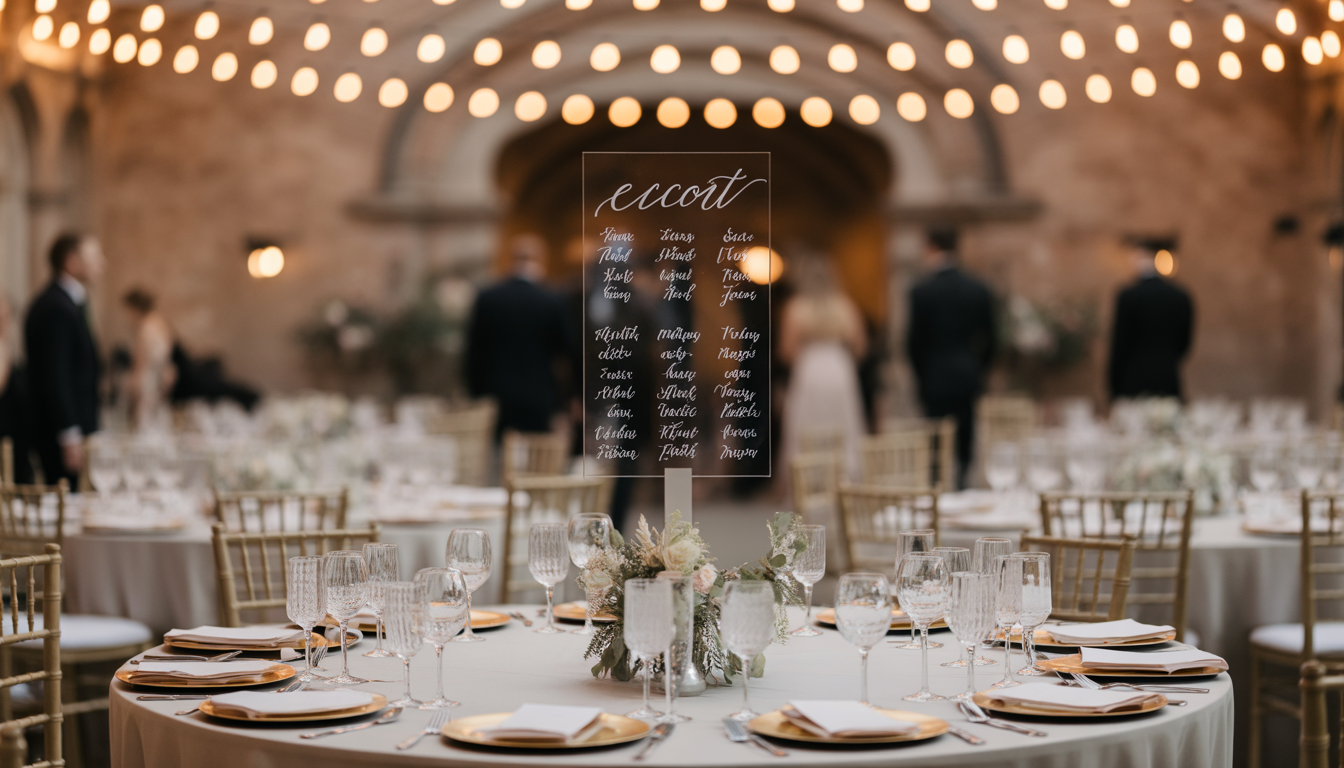
- A way to tell guests their table. Either an escort card display at the entrance (alphabetical, one card per guest with their table number) or a single seating chart sign at the entrance with everyone listed.
- Optional: place cards at each seat. If you're going to fully assigned seats, place cards on each plate confirm the chair.
That's it. The chart is the main project, the rest is decorative.
Common Concerns Couples Have
"Won't guests feel restricted?"
The opposite happens. Guests feel relieved. Walking into a 100-person wedding and being told "sit anywhere" is stressful, especially for guests who don't know many people. Being told "you're at table 7" removes the awkward shuffle and the fear of taking someone's chair.
"It feels too formal."
Even at very casual weddings, assigned tables work without feeling stiff. You don't need calligraphy and gold-edged place cards. A handwritten sign at the entrance with names grouped under table numbers is enough. The format follows the formality.
"What about late RSVPs and changes?"
Real, but manageable. Lock the chart 2 weeks out, expect 5 to 10% changes, and have a small stack of blank place cards on hand for last-minute additions. MySeatPlan's drag-and-drop seating chart builder handles late changes cleanly because you can move guests visually instead of redoing a spreadsheet.
"What if guests want to switch seats?"
They will, sometimes. Two friends move next to each other after the speeches, a parent moves to talk to the grandparents. That's fine. Assigned seats set the starting position for dinner, not a lockdown for the night.
What Goes Into a Good Seating Chart
If you're going to do assigned seats, do them deliberately. The point isn't just to fill chairs, it's to create the right social mix. A few principles:
- Mix friend groups thoughtfully. Don't put all the work friends at one table. Cross-pollinate.
- Respect family dynamics. Divorced parents at separate tables. Tense relatives away from each other.
- Keep partners together. Plus-ones and spouses sit at the same table as their partner.
- Place older guests near the action but not next to speakers. Grandparents want to see, but they shouldn't be deafened by the band.
- Cluster kids if there are enough of them. A kids' table with activities is more fun for them and easier for parents.
The full breakdown of how to build the chart from scratch is in our step-by-step seating chart guide. For etiquette specifically, our wedding seating chart etiquette guide covers the rules that prevent awkward placements.
Common Mistakes
- Skipping assigned seats at a 100-guest wedding to "keep it casual." Casual still needs structure when there are 100 people in the room.
- Building the chart too early. RSVPs change. Lock the chart 2 weeks before, not 2 months.
- Not communicating the table assignment clearly. Either an escort card display or a posted seating chart, not both, and not "ask the venue manager."
- Forgetting last-minute changes. Have blank place cards and a pen at a back table for the inevitable "we have one more person" moment.
- Using an outdated chart on the day. The version printed Monday is not the same as the version you finalized Friday. Bring the latest one to the venue.
Quick Reference
- Under 30 guests: assigned seats optional
- 30 to 100 guests: assigned tables (free seats within) is the sweet spot
- 100+ guests: fully assigned seats with place cards
- Cocktail-style receptions: open seating works at any size
- Lock the chart 2 weeks before the wedding
- Have a clear escort card display or seating chart sign at the entrance
- Keep blank place cards on hand for last-minute changes
Assigned seats are one of those wedding details that feels optional in the planning stage and essential on the day. The 3 hours you spend building the chart save you a chaotic 30 minutes at the entrance and make the entire dinner run smoother. For the full layout, including how many guests fit at each table size, see our guide on how many guests per table. And when you're ready to build, MySeatPlan's drag-and-drop seating chart builder handles every step visually, from arranging tables to printing escort cards that match your final layout.
Plan your perfect event seating arrangement
MySeatPlan gives you everything you need to organize your big day — all in one place.
- Drag-and-drop seating chart
- Guest list with RSVP tracking
- Export seating charts as images & PDF
- Share your plan with others via shareable link
- Design your invitation card
- Guest photo & video uploads