Where Does the Officiant Sit at a Wedding Reception?
 MySeatPlan
·
MySeatPlan
·
The officiant traditionally sits at the parents' table or with close family at the reception, not at the head table. Here's the standard etiquette, modern alternatives, and what to do if your officiant is also a close friend.
Ready to create your own event seating chart?
Try our free drag-and-drop seating chart builder.
Get Started →The officiant traditionally sits at the parents' table or with close family at the reception, not at the head table. They're treated as an honored guest, usually with their plus-one, and seated near the couple but not as part of the wedding party. If your officiant is a close friend or family member, they may also sit at a different relevant table, but the default is the parents' table or a family table with similar seniority.
The Quick Answer
| Officiant type | Where they sit |
|---|---|
| Religious officiant (priest, pastor, rabbi) | Parents' table or family table, with their plus-one |
| Hired professional officiant | Parents' table or family table, with their plus-one |
| Close friend acting as officiant | With their friend group, or wherever they'd normally sit |
| Family member acting as officiant | With family, often the parents' table |
| Officiant attending only the ceremony | No reception seat needed |
Why the Officiant Sits at the Parents' Table
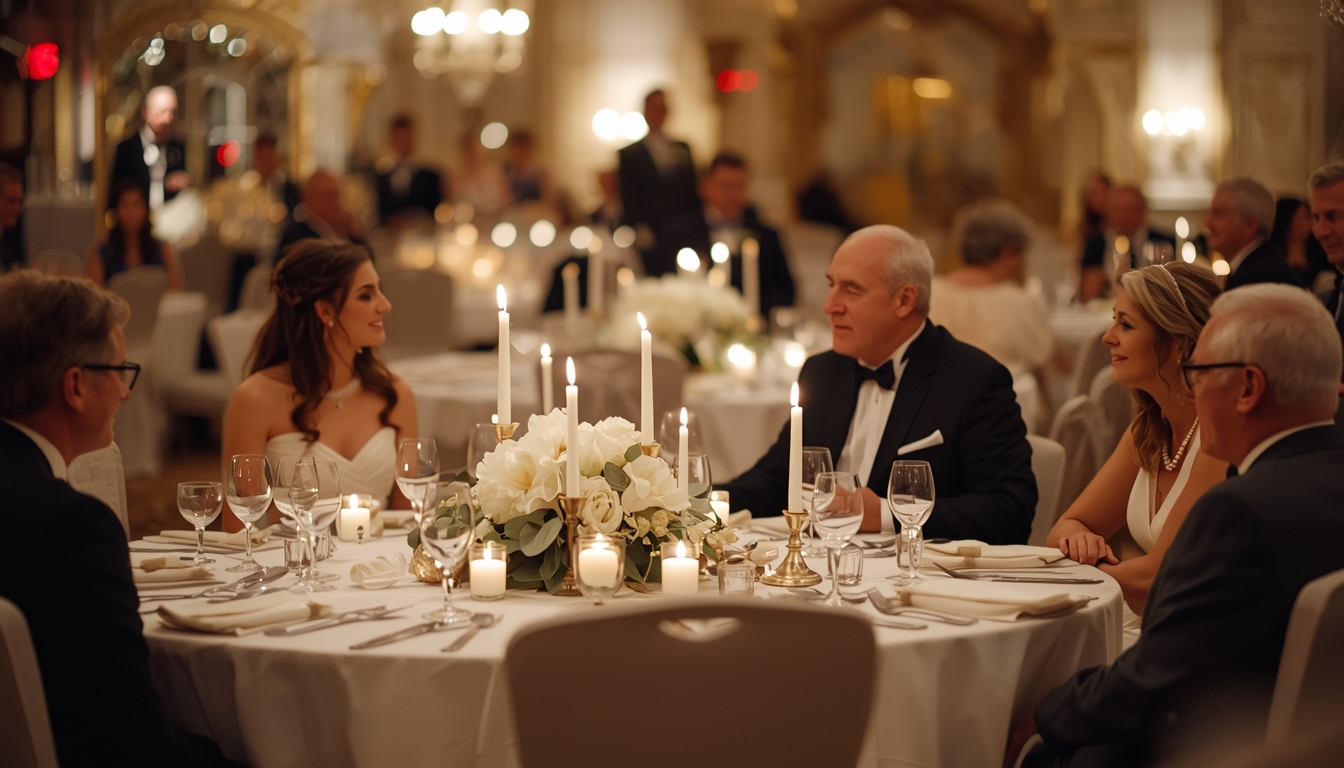
The parents' table at most weddings is a "family of honor" table, which traditionally includes the couple's parents, grandparents (if mobile and present), and the officiant. It's placed close to the head table or sweetheart table, and it's the second most prominent table in the room.
The officiant fits there for three reasons:
- Seniority. The officiant is the person who married you. They belong at the table where the couple's elders sit, not with the wedding party or the friend tables.
- Logistics. If toasts include a brief word from the officiant or a blessing before the meal, having them seated near the head table makes the choreography easy.
- Hospitality. The parents' table is a natural conversation cluster of mature guests. Most officiants enjoy the vibe more than they would at a wedding-party table.
What About the Officiant's Plus-One?
If the officiant is bringing a spouse or partner, they should be invited to the reception and seated next to the officiant. This applies whether the officiant is a paid professional or a friend doing the ceremony as a favor.
Two notes:
- If you've hired a professional officiant who doesn't know anyone at the wedding, the plus-one matters even more. They're the one person who guarantees the officiant has someone to talk to during the dinner.
- If the officiant is local and treating the wedding as a job (more common with hired civil officiants), some don't expect to stay for the reception. Confirm with them in advance.
Should the Officiant Stay for the Reception at All?
This is one of the easier questions to answer wrong. The default answer: yes, invite them, with their plus-one, unless they've explicitly told you they prefer to leave after the ceremony.
Three scenarios:
The officiant is a close friend or family member
They were going to be at the wedding anyway. They officiate the ceremony, then enjoy the reception as a guest. Seat them wherever fits their relationship to the couple.
The officiant is a religious leader from your community
Some religious officiants stay only for the ceremony due to other obligations or personal preference. Others stay for dinner. Ask in advance, and if they stay, the parents' table is the standard placement.
The officiant is a hired professional you don't know personally
Many professional officiants leave after the ceremony, treating it as a paid service. If yours stays, seat them at the parents' table or a senior-relatives table with their plus-one. If they leave, no reception seat needed.
When the Officiant Is a Friend
This is increasingly common. A close friend gets ordained online, performs the ceremony, then transitions back into being a wedding guest. In that case, the seating math changes:
- They sit with their friend group, partner, or wherever they'd normally be seated as a wedding guest.
- Don't sit them at the parents' table out of obligation, especially if they wouldn't naturally know the people there.
- If they're part of the wedding party (which is unusual but possible), they may sit at the head table or wherever the wedding party sits.
The point is: the "officiant goes at the parents' table" rule applies when the officiant is a senior figure (clergy, hired professional). When the officiant is a peer, peer seating wins.
If the Officiant Speaks During the Reception
Some weddings include a brief blessing or word from the officiant before dinner, or a short speech later in the night. If yours does, two considerations:
- Seat them near a clear path to the microphone. If they're at the parents' table near the head table, they don't have to cross the dance floor.
- Brief them on timing. Whether it's a 30-second blessing or a 3-minute speech, share the timing in advance so the program runs smoothly. Our guide on the ultimate wedding day checklist covers the broader timing of speeches.
Tipping and Honorariums
Not strictly a seating question, but worth mentioning because it ties to the reception logistics. Most officiants receive an honorarium or tip on the wedding day, separate from any flat fee. Standard amounts:
- Civil officiants: $50 to $100 tip on top of the booking fee, often handed over before the ceremony
- Religious officiants: $100 to $300 honorarium (often donated to the church or temple), or a personal gift
- Friends or family officiants: a thoughtful gift rather than cash, sometimes paired with paying for their formal attire or a contribution toward their travel
Hand the envelope to the officiant before the ceremony, or have the best man or maid of honor deliver it during the cocktail hour.
Common Mistakes
- Seating the officiant at the head table. The head table is for the couple and the wedding party, not the officiant.
- Forgetting their plus-one. Hiring an officiant doesn't mean they're alone. Ask in advance and seat their partner with them.
- Not asking if they're staying. Some officiants leave after the ceremony, others stay for dinner. Don't assume.
- Putting a hired officiant at a friends' table. They don't know your friends. They'll feel stranded. The parents' table or family-of-honor table is the right home for a stranger officiant.
- Forgetting to seat a friend-officiant with their actual people. The flip side of the above. If the officiant is one of your closest friends, don't isolate them at the parents' table out of formality. Sit them where they'd be sitting if they weren't officiating.
- Skipping the place card. Officiants get a place card like every other guest. Don't make them figure it out on their own.
Quick Reference
- The officiant traditionally sits at the parents' table, not the head table
- Invite their plus-one and seat them together
- Friend or family officiants can sit wherever fits their relationship to the couple
- Hired officiants who don't know guests fit best at the parents' or family table
- Seat them near a clear path to the microphone if they're speaking
- Confirm in advance whether they're staying for the reception
- Hand over any honorarium or tip before the ceremony
Once the officiant is placed, the rest of the seating chart fills in around them. If you're still locking in who else sits where, see our guides on who sits at the head table and who sits at the sweetheart table for the rest of the front-of-room seating. And for the full layout from RSVPs to printed place cards, MySeatPlan's drag-and-drop seating chart builder lets you place the officiant, the parents' table, and the rest of the room visually before locking it in.
Plan your perfect event seating arrangement
MySeatPlan gives you everything you need to organize your big day — all in one place.
- Drag-and-drop seating chart
- Guest list with RSVP tracking
- Export seating charts as images & PDF
- Share your plan with others via shareable link
- Design your invitation card
- Guest photo & video uploads