Should the Bride Sit on the Left or the Right?
 MySeatPlan
·
MySeatPlan
·
In most Western weddings, the bride sits on the left from the guests' view, with the groom on the right. Here's where the convention comes from, when modern couples flip it, and how the rule carries through to the reception.
Ready to create your own event seating chart?
Try our free drag-and-drop seating chart builder.
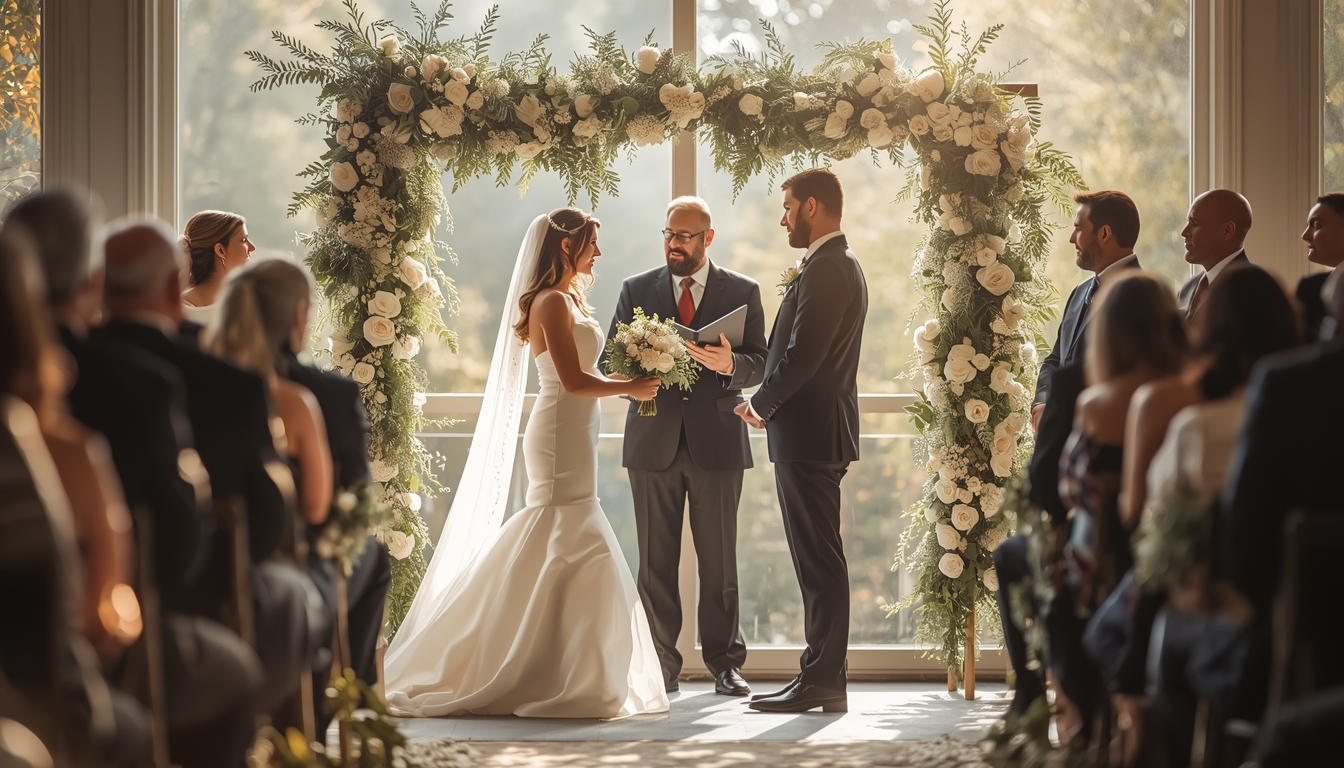
Get Started →In most Western weddings, the bride stands and sits on the left from the guests' view, with the groom on the right. This applies to both the ceremony (where you stand at the altar) and the reception (the head table or sweetheart table). The convention is rooted in centuries-old tradition, but most modern couples treat it as a default rather than a rule, and many simply pick whichever side feels right.
The Quick Answer
| Wedding type | Bride's side (from guests' view) | Groom's side (from guests' view) |
|---|---|---|
| Christian (Protestant, Catholic) | Left | Right |
| Civil / non-religious | Left (most common default) | Right |
| Same-sex couples | No convention applies, pick whichever side feels right | |
The same convention carries through to the reception. If the bride was on the left during the ceremony, she sits on the left at the head table or sweetheart table.
Why the Bride Sits on the Left
The tradition has a practical, slightly unromantic origin. In older European customs, the groom needed his right hand free to draw a sword and defend his bride from anyone trying to interrupt the wedding. With the bride on his left, his sword arm was clear. The custom outlived the swords by several centuries, and it's now the default for most Western weddings.
From the couple's own perspective, the bride is on the groom's left. From the guests looking at the altar, she appears on the left side of the room. These two facts can confuse people, especially when planning the seating chart, but they describe the same position.
Where This Matters in Your Wedding
The left/right question shows up in three specific moments:
- The ceremony. Where the bride and groom stand at the altar. Also dictates which side of the aisle the bride's family and groom's family sit on.
- The processional and recessional. Which side each person enters from, and where they end up.
- The reception head table or sweetheart table. The same left/right convention carries over. If the bride was on the left during the ceremony, she's on the left at the reception too.
For the reception specifically, this affects place card placement and how the photographer frames toasts and the first dance. Confirm with your venue and photographer at the rehearsal so everyone knows which seat is which.
Family Seating in the Ceremony
The bride's-side / groom's-side rule for guests follows the same convention as the couple. The bride's family sits on the left side of the aisle (from guests' view), and the groom's family sits on the right.
Modern couples often skip strict bride's-side / groom's-side seating entirely and tell guests to "sit anywhere." This is especially common when the family sizes are very different, since a strict split can look unbalanced when one side has 80 guests and the other has 30. A small sign at the entrance solves the problem elegantly:
"Pick a seat, not a side, you're loved by both the bride and the groom."
Modern Variations
Most couples today bend the rules in some way. Common modern approaches:
- Same-sex couples have no convention to follow. Pick whichever side feels right, or base it on practical things like the photographer's main angle or where each partner naturally feels comfortable.
- Non-religious and civil weddings typically default to the standard convention (bride on the left from guests' view), simply because it's the most familiar and easiest for the photographer and officiant to plan around.
- Photography-driven decisions. Some couples flip sides based on where the natural light is coming from, or which side of the room the photographer's main angle covers. There's no rule against this.
- Cultural traditions. Different cultural and religious traditions have their own positioning rules. If your wedding follows a specific cultural or faith tradition, ask your officiant or family elders, the convention varies more than most checklists admit.
If you flip the convention for any reason, brief the officiant, the wedding party, and the photographer in advance. The processional choreography depends on it.
How This Affects the Reception Seating
At the head table or sweetheart table, the same left/right convention from the ceremony carries through. So if the bride was on the left during the ceremony, she's on the left at the sweetheart table too. This keeps the photos consistent across the day, and it means the first dance, toast formations, and cake-cutting positioning all feel natural rather than mirrored.
For the full breakdown of head table and sweetheart table positioning, see who sits at the sweetheart table and who sits at the head table.
Common Mistakes
- Confusing "bride's left" with "guest's left." They're the same direction. The bride's left side and the guests' left side are both the left side of the room. The point of view doesn't change the answer, the side does.
- Switching sides between ceremony and reception. Pick one and stay consistent. The wedding photos look strange if the bride is on different sides in ceremony shots vs. reception shots.
- Not telling the photographer. If you flip the convention, the photographer needs to know so they can plan angles, lighting, and key shots.
- Forgetting the officiant. The officiant should know which side each partner stands on so the processional and the vows go smoothly.
- Forgetting the family seating implication. If you flip the bride's side, you also flip which side of the aisle her family sits on. Brief the ushers.
Quick Reference
- Standard Western convention: bride on the left, groom on the right (from guests' view)
- Same-sex couples: pick whichever side feels right, no convention applies
- The convention applies at both the ceremony and the reception
- Bride's-side / groom's-side family seating follows the same rule
- Modern couples often skip strict side seating with a "pick a seat, not a side" sign
- Whichever you choose, stay consistent across the ceremony and reception
- Brief the photographer, officiant, and ushers before the rehearsal
The left/right question is small, but it shapes everything from where each family sits to how your processional photos are framed. Once you've decided, the rest of the seating chart can be built around it. MySeatPlan's drag-and-drop seating chart builder lets you mirror the ceremony's positioning at the reception so the head table and sweetheart table match the side you chose at the altar. For the full layout, our step-by-step guide to creating a wedding seating chart walks through every step.
Plan your perfect event seating arrangement
MySeatPlan gives you everything you need to organize your big day — all in one place.
- Drag-and-drop seating chart
- Guest list with RSVP tracking
- Export seating charts as images & PDF
- Share your plan with others via shareable link
- Design your invitation card
- Guest photo & video uploads