How to Plan Seating for a Charity Gala (Donors, VIPs, and Sponsor Tables)
 MySeatPlan
·
MySeatPlan
·
Charity gala seating isn't just logistics, it's strategy. Where you place donors, sponsors, and prospects directly affects how much your event raises. Here's how to do it right.
Ready to create your own event seating chart?
Try our free drag-and-drop seating chart builder.
Get Started →A charity gala is not really a dinner. It's a fundraising event with a dinner inside it. Every decision in the room, from where the stage faces to which donor sits next to which prospect, is a fundraising decision. The seating plan is the single most underused lever in gala planning, and it's the one that quietly determines whether a gala raises $80,000 or $250,000.
This guide walks you through how to build a charity gala seating chart that respects your donors, supports your asks, and makes the night feel effortless. It covers VIP placement, sponsor tables, table hosts, donor hierarchy, and the small decisions that have outsized impact on the room.
What a Gala Seating Chart Is Really For
For most events, a seating chart is about logistics: get people to the right table, feed them, get them home. For a gala, it's about strategy. You're using the seating chart to:
- Recognize and reward your top donors
- Position prospective donors next to people who model giving
- Honor sponsors with the visibility they paid for
- Distribute board members and table hosts as ambassadors
- Keep the room energized for the live ask, the auction, and the program
Get this right and you'll see it in the totals at the end of the night. Get it wrong and you'll spend the next year explaining to a major donor why they were seated near the kitchen.
Start With the Floor Plan, Not the Names
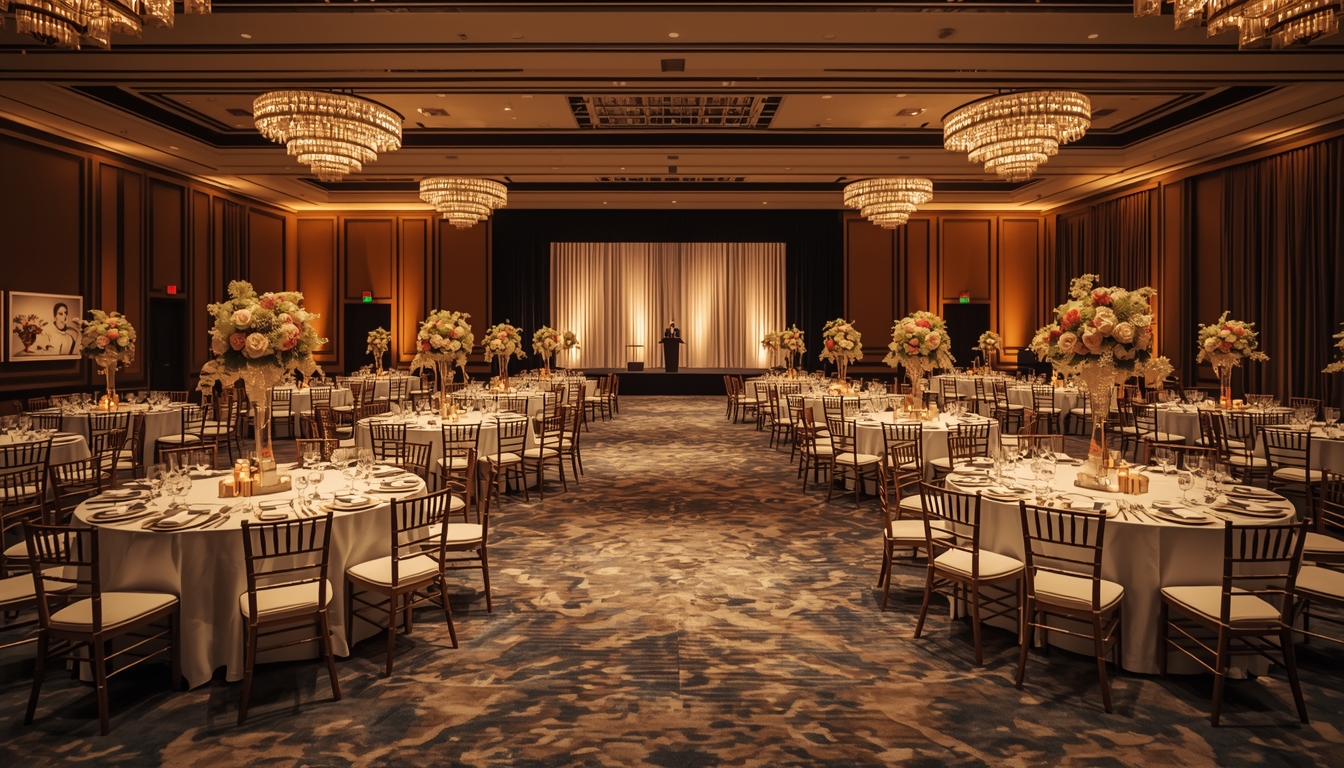
Before you assign anyone, you need a clear map of the room. Walk it (or get the venue to send a scaled diagram) and mark these zones:
- Stage and program zone. Where the speakers, emcee, and presentations will be.
- VIP zone. The 4 to 8 tables closest to the stage, with the best sight lines.
- Sponsor zone. Often the next ring out, depending on your sponsor levels.
- General seating. The bulk of the tables.
- Service paths. Where waitstaff enter and exit. Avoid placing high-priority tables on these paths.
- AV and bar zones. Spotlights, screens, sound speakers, bar lines. These create visual or noise issues for adjacent tables.
Number every table on the diagram before you start placing names. The diagram is your authority for the rest of the process. For a deeper breakdown of room layouts, our guide to reception floor plan ideas applies to galas as well, since the geometry is the same.
The Donor Hierarchy
Every gala has a donor hierarchy whether you write it down or not. Write it down. The clearer it is on paper, the easier every seating decision becomes.
A typical gala hierarchy:
| Tier | Who | Where they sit |
|---|---|---|
| 1 | Honorees, board chair, top donors, presenting sponsor | Tables 1 to 4, closest to stage |
| 2 | Major donors, named sponsors, executive committee | Tables 5 to 10, still in the front zone |
| 3 | Mid-level donors, table sponsors, prospects | Mid-room, with clear sight lines |
| 4 | General attendees, ticket buyers, friends of guests | Outer ring |
| 5 | Staff, volunteers, vendors | Back tables or designated staff table |
The point isn't to be hierarchical for its own sake. The point is that donors notice where they're seated. A $25,000 donor placed at table 23 will hear about it from a peer at table 2, and you'll spend a week of follow-up explaining why.
VIP Placement Rules
Within the VIP zone, the rules tighten further.
Table 1
The honoree (if there is one), the board chair, the executive director, and your most strategic donor or prospect. This is the table everyone in the room will look at during the program. It should reflect your organization's leadership and your most important relationship.
Tables 2 to 4
Top donors and presenting sponsors. If you have a presenting sponsor, they get table 2 unless they've requested a specific spot. Pair them with a board member who can act as host.
Sight lines, not just proximity
"Closest to the stage" doesn't always mean "best seat." A table directly under a speaker can be too close, with neck-craning sight lines and audio issues. The ideal VIP zone is 15 to 30 feet from the stage, slightly off-center, with clear sight lines to both the podium and the screen.
Avoid the service path
The corridor where waitstaff enter and exit is the worst seat in the room, even if it's geographically close to the stage. Never place a top donor on it. Walk the room with the venue manager and identify the path before you finalize the chart.
Sponsor Table Strategy
Sponsor tables are usually the trickiest because the buyer (the company) and the attendees (the employees, clients, or guests they invite) are different people. Three rules keep this clean.
Honor the sponsor level
If a company bought a $25,000 presenting sponsorship, their table goes in tier 1. A $10,000 platinum sponsor goes in tier 2. A $5,000 gold sponsor goes in tier 3. Your sponsorship deck made promises, the seating chart delivers them.
Confirm who's actually attending
Sponsor tables often have last-minute substitutions. Ask each sponsor for a confirmed list of names 10 days before the event, and again 48 hours before. Empty seats at a tier 1 table look terrible during the live ask.
Pair sponsors thoughtfully with the room around them
Place sponsor tables next to other sponsors, board members, or major donors, not next to general seating. Sponsors notice their neighbors, and a $20,000 sponsor placed next to a table of last-minute ticket buyers will not buy in next year.
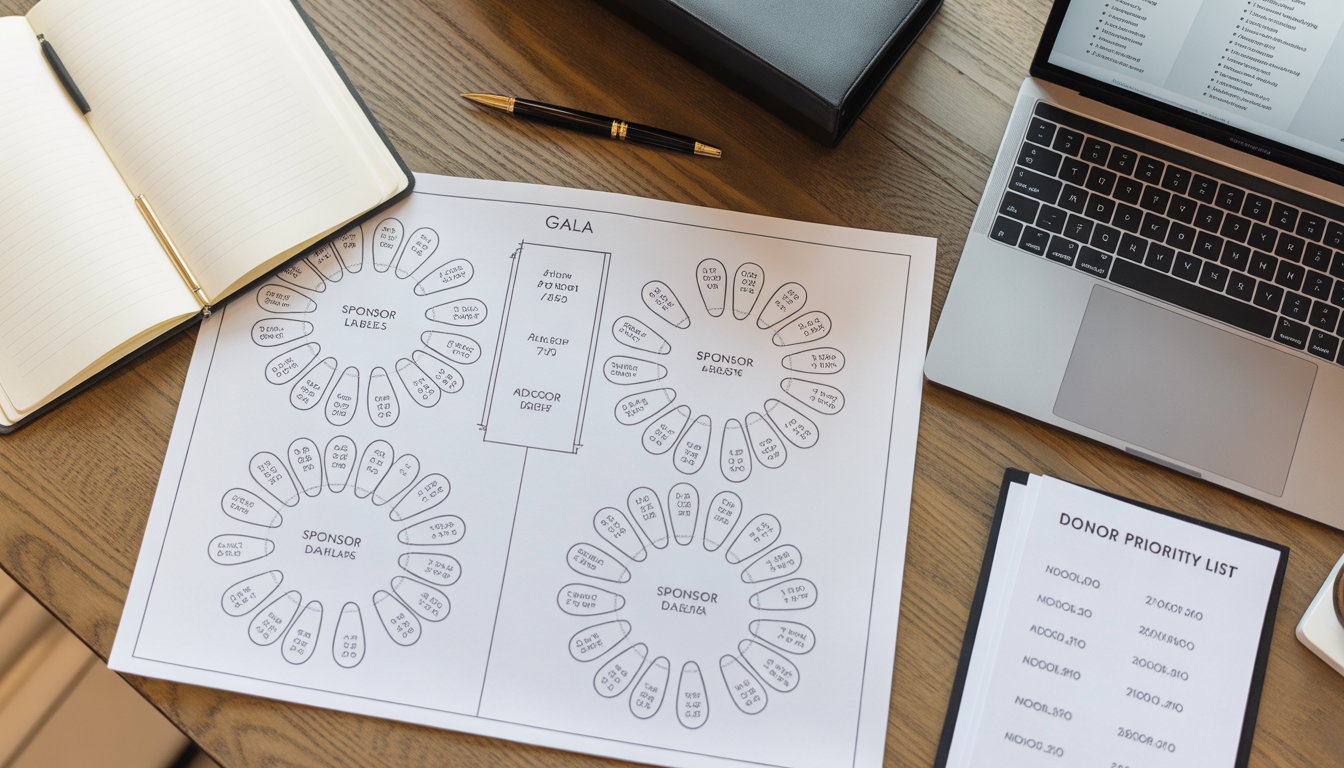
Table Hosts: The Most Underused Tool in Gala Planning
A table host is a board member, major donor, or close friend of the organization who agrees to "host" a table, meaning they invite their own guests, lead the conversation, model the giving moment, and convert prospects.
Galas with strong table hosts consistently raise more than galas without them, because every table has a designated ambassador instead of relying on the program alone. A few rules:
- Recruit table hosts 8 to 10 weeks out. Each host commits to filling a table of 8 to 10 with people they personally invite.
- Brief them. One short call covers: the case for support, the size of the night's ask, what to do during the live ask, how to follow up after.
- Place every table host strategically. Put your strongest hosts at tables of high-potential prospects. Put softer hosts with friends-of-the-org tables.
- Never let a table go unhosted. If a table doesn't have a host, assign a board member or staff lead. An unhosted table during a $50,000 paddle raise is a missed opportunity.

Mixing Donors and Prospects
One of the highest-leverage seating decisions you'll make is which prospects sit near which donors. Done right, a table of 10 might include 4 prospects, 3 current donors, 2 board members or hosts, and 1 staff lead, all positioned so the prospects experience the night through people who already give.
Three things to keep in mind:
- Don't overload prospects. A table of 8 prospects and 2 staff feels like a sales pitch. Spread prospects across multiple tables.
- Match by interest, not just dollars. A prospect who cares about education programming will respond more to a donor who funds education than to one who funds operations, even if the operations donor gives more.
- Avoid dead tables. Every table should have at least one engaged ambassador. A table of 10 polite-but-disengaged guests will not give during the paddle raise.
The Practical Workflow
For a 200-guest gala (20 tables of 10), the build looks like this:
- Lock the floor plan. Tables numbered, zones defined, service paths marked.
- Build the donor hierarchy list. Tier 1, 2, 3, 4, 5 with named guests in each.
- Place tier 1 first. Honoree, board chair, presenting sponsor, top donors. Don't move on until tables 1 to 4 are locked.
- Place sponsors next. Every sponsor at their committed level, with confirmed attendee names.
- Assign table hosts to remaining tables. Each host gets a table.
- Distribute board members. One board member per table where possible, or per cluster of 2 tables.
- Place prospects. Slot prospects into tables with donors and hosts who match their interests.
- Fill in general seating. Friends, ticket buyers, guests-of-guests fill the outer ring.
- Place staff and vendors. Back tables or designated staff table.
- Walk the chart with your ED and board chair. They'll catch the relationships you don't know about.
That last step matters more than people realize. The board chair has 20 years of context on who can't sit next to whom, who just lost a spouse, who's in a quiet feud with the next major donor. Get their eyes on the chart before it's printed.
The Seating Chart Tool Question
Galas with under 50 attendees can be planned on paper. Anything bigger needs a real tool. The reasons:
- Names change up to 24 hours before the event.
- Sponsor substitutions arrive in waves.
- Board members will ask "where am I sitting" four times in the final week.
- Your ED will want to print three different versions of the chart for review.
- Place cards have to match the final layout exactly.
A spreadsheet handles 1, 2, and 3 badly, and 4 and 5 not at all. MySeatPlan's drag-and-drop seating chart builder lets you arrange tables visually, swap names as substitutions come in, tag donor tiers and sponsor levels, and export a clean chart for the venue, the place-card writer, and the printed program. We built it for weddings originally, but the workflow maps directly onto fundraising galas, and the tool is free for events of most sizes.
For more on the general approach, our corporate event seating chart guide covers the same workflow for sales kickoffs, awards dinners, and corporate banquets.
Place Cards, Escort Cards, and Signage
Galas almost always use both escort cards (at the entrance, telling guests their table number) and place cards (on the table, telling them their seat). For a 200-guest gala this is the only realistic flow, because asking 200 well-dressed donors to navigate a single seating chart at the entrance creates a 20-minute bottleneck.
- Escort cards: arranged alphabetically at a display near the entrance. Calligraphy is nice but not required, legibility is.
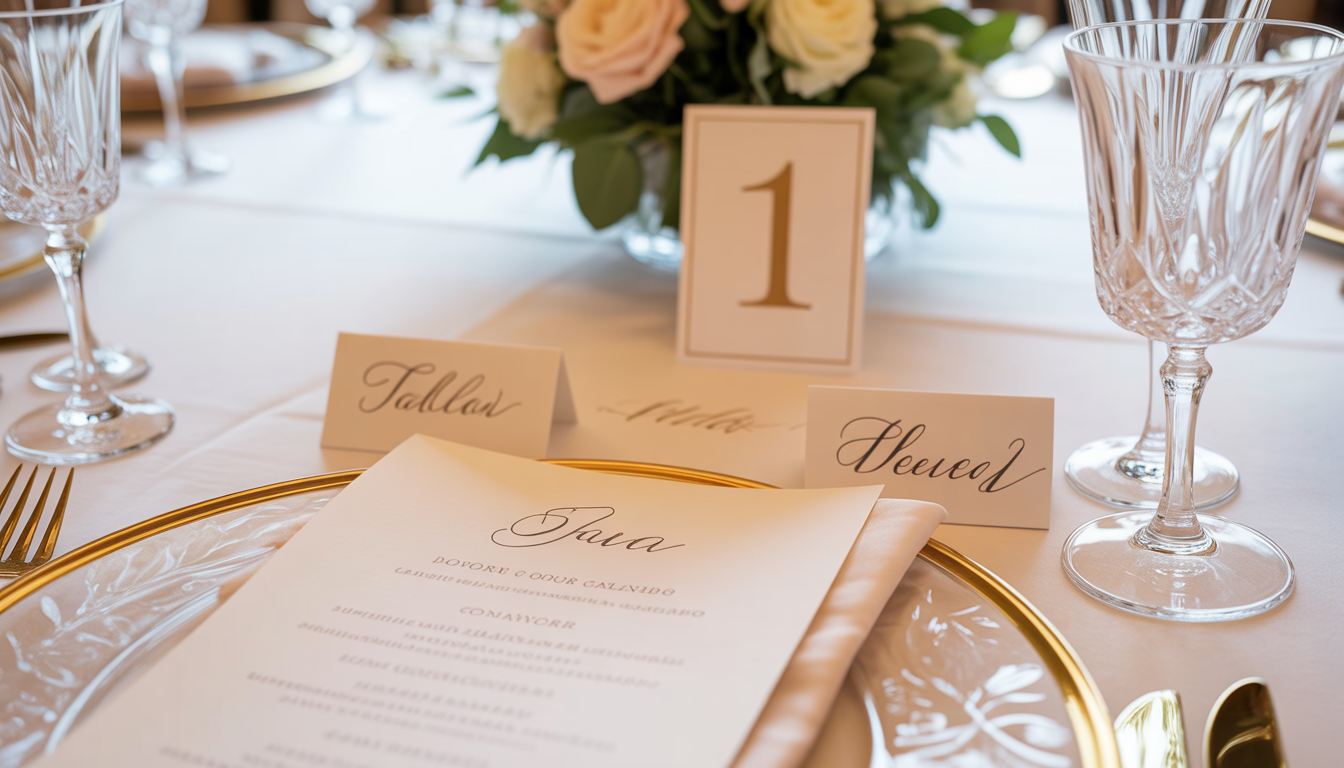
- Place cards: on the table, at each seat. Names should match the donor's preferred form (Dr., Hon., or first name only as appropriate). Our guide on writing place cards covers titles, formatting, and special situations.
- Table signage: a clear, large table number visible from across the room. For sponsor tables, some galas add a small sponsor name plate on the centerpiece.
Common Gala Seating Mistakes
- Treating it as logistics, not strategy. The seating chart is a fundraising tool. Build it that way.
- Placing donors by alphabet or arrival time. A donor at table 18 because their last name starts with W is a donor you'll lose.
- Forgetting the service path. Even at table 3, a seat next to the kitchen door is a bad seat.
- Unhosted tables. Every table needs an ambassador for the live ask.
- Bunching all prospects together. Spread them. Surround each with at least 2 active donors or board members.
- Letting sponsors self-arrange. Sponsors will accept what you give them, but only if it matches what they paid for. Honor your tiers.
- Finalizing the chart too early. Lock at 48 hours before, not 2 weeks. Substitutions are normal.
- Forgetting board members will move. Some will leave their assigned table to greet donors. Plan for it, don't fight it.
- No backup chart for staff. The volunteer at the escort card display needs a printed master, the venue captain needs one, the auctioneer's team needs one.
Working With the Auctioneer or Live Ask Lead
If you're running a paddle raise or live auction, the auctioneer cares deeply about who's sitting where. They'll often ask:
- Which table has the lead donor for the matching gift?
- Which tables are tier 1 vs tier 2, so they know where to direct attention during the ask?
- Where are the spotters and bidder card runners stationed?
- Where are the screens placed (so they can direct the room's eyes accurately)?
Walk through the chart with your auctioneer 24 hours before the event. They'll catch placement issues you'd miss, and they'll work the room better when they know who's where.
The Follow-Up Step Most Galas Skip
After the gala, archive the seating chart with the donor list. Note who actually attended (versus who was on the chart), who gave during the live ask, and who didn't. Next year's chart starts here. The relationships, the dynamics, the seating preferences, the people who moved tables, all of it is institutional memory you'll need again.
Quick Reference: The Gala Seating Checklist
- Floor plan with zones and service paths drawn out
- Donor hierarchy written down before any names are placed
- Tier 1 tables locked first (honoree, board chair, presenting sponsor, top donors)
- Sponsor tables placed at the level they paid for
- Table hosts recruited 8 to 10 weeks out, briefed before the event
- Every table has an ambassador (host, board member, or staff lead)
- Prospects spread across tables, never bunched
- Service path tables avoided for major donors
- Final chart reviewed by ED and board chair before printing
- Escort cards, place cards, and table signage all match the master chart
- Auctioneer briefed on placement 24 hours before
- Substitutions handled at 48 hours, not at the door
- Post-event archive with attendance and giving notes
A great gala feels effortless to the guests, and that's exactly the point. Behind the scenes, every table is a deliberate decision: who they sit next to, what stories they hear over dinner, who turns to them during the paddle raise. Get the seating right and the rest of the night carries itself. Get it wrong and even a great auctioneer can't fix it.
Frequently asked questions
-
To create a charity gala seating chart, start with the floor plan, identify VIP zones, rank donors and sponsors by priority, then assign tables strategically. Place top donors, honorees, board members, and presenting sponsors near the stage with clear sight lines.
Plan your perfect event seating arrangement
MySeatPlan gives you everything you need to organize your big day — all in one place.
- Drag-and-drop seating chart
- Guest list with RSVP tracking
- Export seating charts as images & PDF
- Share your plan with others via shareable link
- Design your invitation card
- Guest photo & video uploads