Corporate Event Seating Chart: How to Plan Table Assignments Like a Pro
 MySeatPlan
·
MySeatPlan
·
A practical guide to seating charts for corporate events. Covers VIP and client placement, executive protocol, sponsor tables, networking-friendly layouts, and common mistakes event planners make.

Ready to create your own event seating chart?
Try our free drag-and-drop seating chart builder.
Get Started →Corporate event seating is a different game from wedding seating. There are no bridesmaids or divorced parents, but there are clients you can't afford to offend, executives with unspoken hierarchies, sponsors expecting VIP treatment, and attendees who are there to network, not watch a first dance.
Get the seating wrong at a corporate event and the consequences are real: a neglected client, an insulted sponsor, or a room full of people who spent the evening talking to nobody useful. This guide covers how to get it right.
Corporate vs Wedding Seating: What's Different
If you've planned wedding seating before, forget most of the rules. Corporate events have different priorities:
| Wedding | Corporate Event | |
|---|---|---|
| Primary goal | Guest comfort and happiness | Business outcomes and relationship building |
| VIP logic | Family hierarchy | Client value, seniority, sponsor tier |
| Seating by | Personal relationships | Strategic connections and goals |
| Mixing groups | Usually avoided | Often intentional (for networking) |
| Biggest risk | Family drama | Offending a client or sponsor |
The core process is the same (guest list → table layout → assignments → review), but who sits where and why is driven by business strategy, not family ties.
Step 1: Define the Event's Seating Goal
Before assigning a single seat, be clear about what the seating should achieve. Different corporate events have different goals:
- Client dinner or gala: Seat clients with the team members who manage their accounts. The goal is relationship deepening.
- Fundraiser or charity event: Seat major donors and sponsors at premium tables near the stage. The goal is recognition and retention.
- Company awards night: Seat teams together so they can celebrate. The goal is morale and team bonding.
- Industry networking dinner: Mix attendees across companies and roles. The goal is new connections.
- Conference dinner: Mix attendees who don't know each other. The goal is cross-pollination of ideas.
Once you know the goal, every seating decision becomes easier. "Should I seat the VP of sales with the new client or with the marketing team?" depends entirely on whether the event is about client relationships or internal bonding.
Step 2: Identify Your VIPs
Every corporate event has a hierarchy. Identify your VIPs before you touch the floor plan:
Tier 1: Must be prominently seated
- C-suite executives (CEO, CFO, COO) from your organization
- Keynote speakers or honorees
- Top-tier clients or partners
- Major sponsors or donors
- Board members
Tier 2: Should be well-placed
- Senior management and directors
- Important clients (not top-tier, but valuable)
- Mid-level sponsors
- Elected officials or public figures if attending
Tier 3: Standard seating
- General attendees, staff, and junior team members
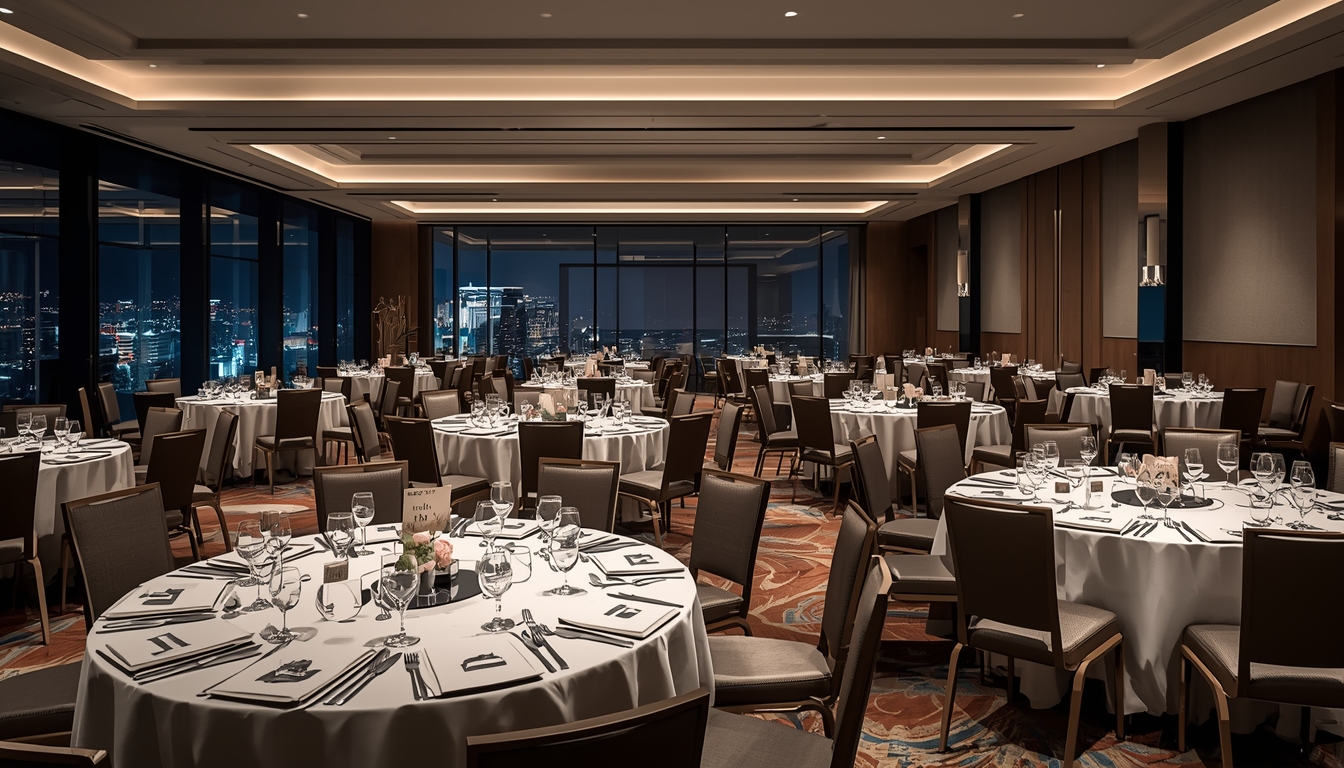
Tier 1 VIPs get tables closest to the stage, podium, or focal point of the room. Tier 2 gets the next ring out. Tier 3 fills the rest. This isn't about being elitist, it's about making sure the people whose presence matters most to your organization feel valued.
Step 3: Plan Your Table Layout
Corporate events almost always use round tables. They facilitate conversation, look professional, and work at any scale. Here's what works for different sizes:
Small events (30–60 attendees)
- 4–7 round tables of 8–10
- One head table or VIP table near the front for speakers and top executives
- Intimate enough that most people can see and hear the podium without screens
Medium events (60–150 attendees)
- 8–18 round tables
- Clear sections: VIP/sponsor tables near the front, general seating behind
- Consider a raised stage so the back of the room can see presentations
- Two bar stations to prevent long queues during cocktail hour
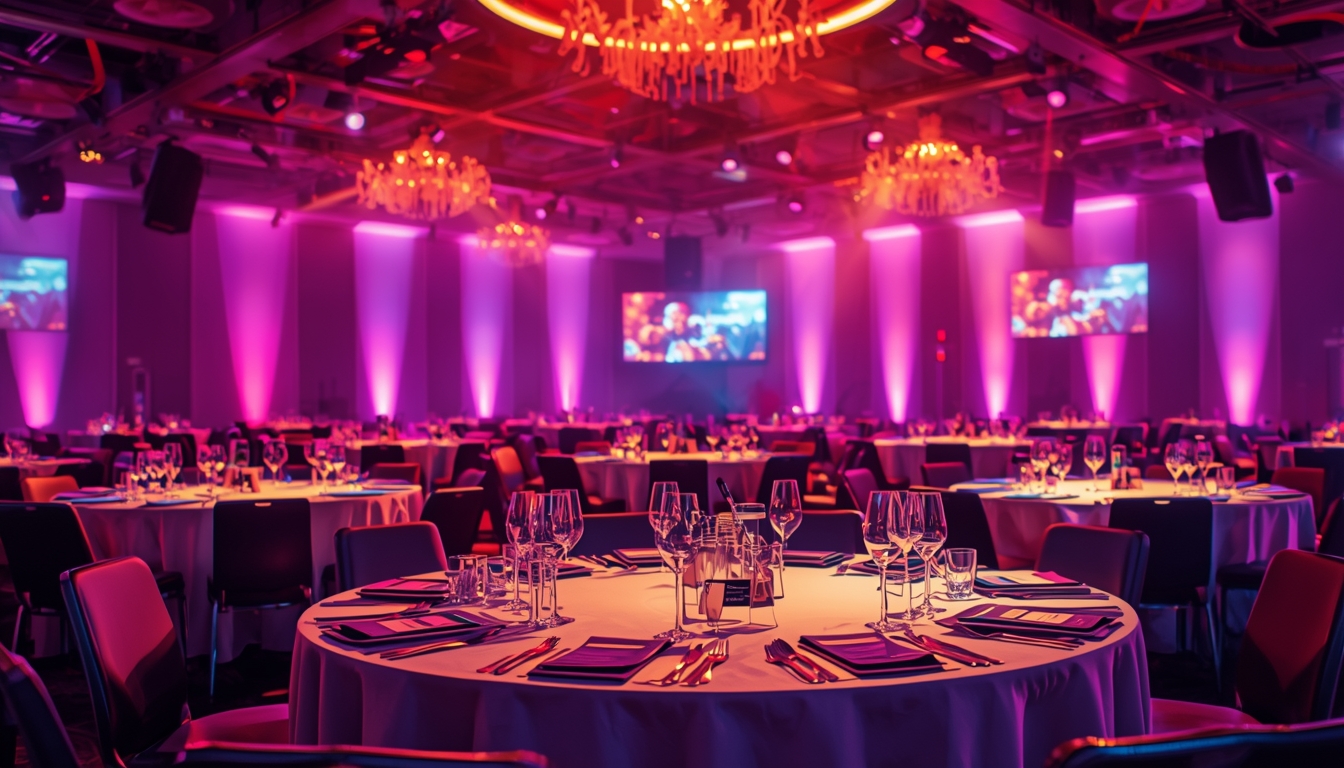
Large events (150–500 attendees)
- 18–50+ round tables
- Sections divided by aisles, with VIP section closest to the stage
- Multiple bar and food stations around the perimeter
- AV screens visible from every section
- Numbered or named tables with a clear seating chart display at the entrance
For detailed spacing requirements and how many guests fit per table size, see our table sizing guide. The numbers are the same regardless of event type.
Step 4: Assign Seats Strategically
This is where corporate seating gets strategic. Here are the principles that matter:
Seat clients with their account team
If a client is attending, the person who manages that relationship should be at their table. Don't seat a key client at a table of strangers and expect them to enjoy it. The account manager, and ideally a senior executive from your side, should be at the same table.
Separate competitors
If you've invited clients or partners from competing companies, they should not be at the same table. Check the guest list carefully. Seating the CEO of one client next to the CEO of their biggest competitor is a fast way to create an uncomfortable evening.
Mix seniority thoughtfully
A table of all junior staff will feel like the kids' table. A table of all executives can be stiff. The best corporate tables have a mix: one or two senior people, a few mid-level attendees, and someone junior who will benefit from the exposure. This creates natural mentoring dynamics and better conversation.
Use seating to facilitate introductions
One of the biggest advantages of assigned seating at corporate events is that you can engineer introductions. If two attendees would benefit from knowing each other, put them at the same table. This is especially valuable at industry events and conferences where networking is the whole point.
Seat sponsors where they'll be seen
Sponsors who paid for premium tables expect premium placement. This usually means front and center, near the stage, with good sightlines. If your sponsorship tiers include table placement, honor that agreement exactly. A sponsor who paid for a "platinum table" and ends up behind a pillar won't sponsor next year.
Step 5: Handle the Head Table or VIP Table
Most corporate events have some version of a VIP table. How you handle it depends on the event type:
Awards night or gala with a program
Seat the keynote speaker, honorees, and the most senior host executive at a VIP table near the stage. Their seats should face the room. If they need to go on stage, they should be able to get there without weaving through 20 tables.
Client dinner
Skip the formal VIP table. Instead, seat the most important client with your CEO or most senior attendee at a regular table that happens to be prominently placed. This feels less hierarchical and more personal.
Networking event
No VIP table at all. Mix everyone. The whole point is that a junior attendee could end up sitting next to an industry leader. If you create a VIP section, you defeat the purpose.
Corporate Seating Etiquette
Corporate events have their own unwritten rules:
- Never seat a client alone. Every client at the event should have at least one person from your organization at their table who they know or who manages their account.
- Don't mix personal and professional tensions. If two executives from your company have a known rivalry, separate them. The event is not the place for office politics to surface in front of clients.
- Seat interpreters next to the person they're interpreting for. Obvious, but often forgotten.
- Dietary needs are non-negotiable. If an attendee has flagged a dietary requirement, the catering team and the table captain need to know. Messing this up at a client dinner is embarrassing.
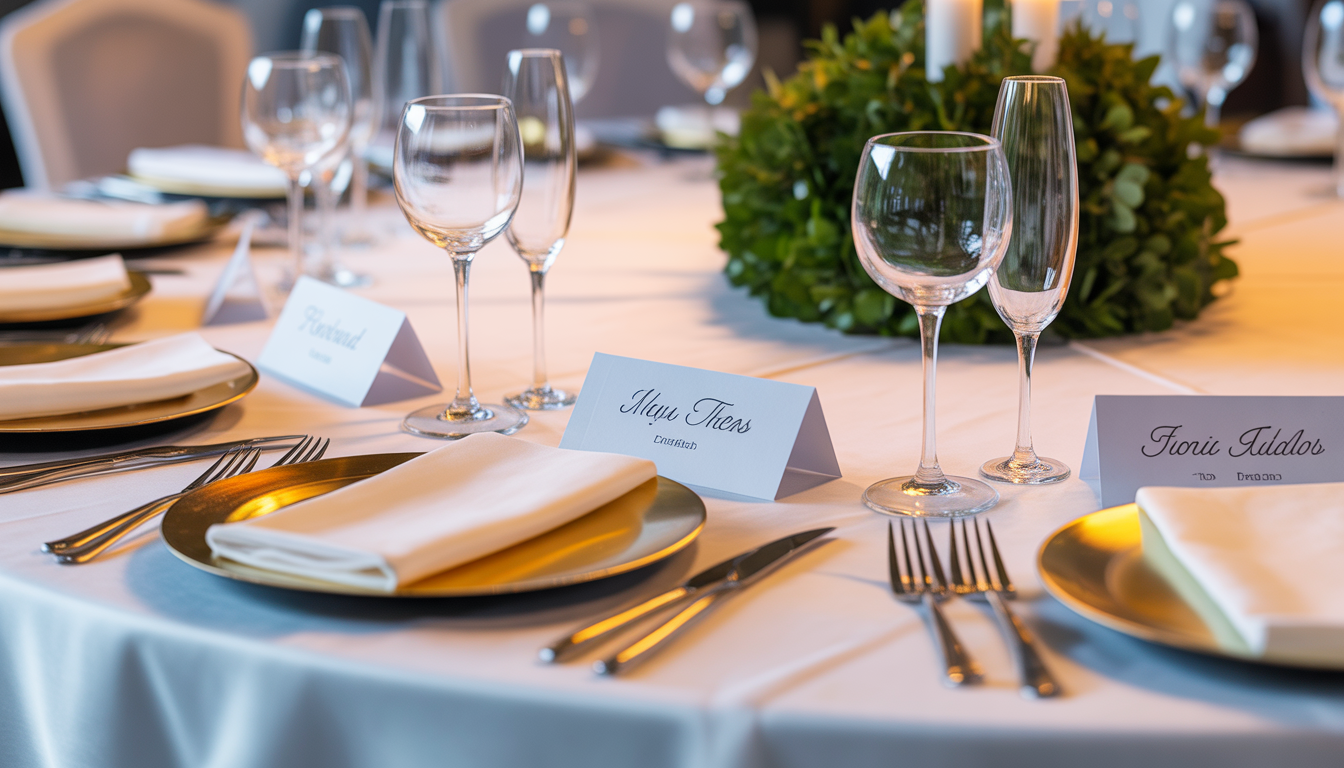
- Place cards should include titles. Unlike weddings where "John Smith" is enough, corporate place cards should read "John Smith, VP of Operations, Acme Corp." This helps tablemates start conversations.
- Don't seat the same people together every year. If you run an annual event, mix it up. Sponsors and clients notice when they're at the exact same table with the exact same people as last year.
Common Corporate Seating Mistakes
- Treating it like a wedding. Seating by "who knows who" instead of "who should meet who" wastes the biggest advantage of corporate assigned seating.
- Forgetting about competitors. Not checking whether two guests are from competing firms before seating them together.
- Ignoring sponsor agreements. If a sponsor paid for a specific table location, that's a contractual obligation, not a suggestion.
- All-executive tables. A table of eight C-suite executives sounds prestigious but often produces the most boring conversation in the room. Mix in people who will bring energy.
- No backup plan. Corporate events have more last-minute cancellations and substitutions than weddings. Have a plan for empty seats and unexpected attendees.
- Seating the host at the back. The CEO or event host should be visible and accessible, not tucked away at a back table "to be humble." Guests expect to know where the host is.
Last-Minute Changes: Plan for Them
Corporate guest lists change right up until the day of the event. Executives cancel, send substitutes, or bring someone who wasn't on the list. Here's how to stay ahead:
- Keep 2–3 empty seats distributed across different tables for last-minute additions
- Have a printed master list at the registration desk so you can redirect guests quickly
- Designate one person as the seating point of contact who can make real-time decisions
- Use a digital seating chart you can edit on the spot, not a printed board that's fixed once it's printed
MySeatPlan lets you build your floor plan, assign attendees to tables, and make changes from any device. When the CEO's assistant calls an hour before the event to say they're bringing an extra guest, you can rearrange on your phone in seconds.
Checklist: Corporate Event Seating
- Define the seating goal for this specific event (relationship building, networking, recognition)
- Identify and tier your VIPs (Tier 1 near stage, Tier 2 mid-room, Tier 3 general)
- Check for competitors on the guest list and separate them
- Seat every client with their account manager or a senior host
- Honor sponsor table placement agreements exactly
- Mix seniority levels at each table for better conversation
- Include titles on place cards
- Reserve 2–3 empty seats for last-minute changes
- Have a digital backup you can edit on event day
For general table layout ideas and spacing requirements, see our floor plan ideas guide. The layout principles apply to any seated event, not just weddings.
Frequently asked questions
-
To create a corporate event seating chart, start by defining the event’s goal (networking, client relations, or recognition), then identify VIPs and group attendees strategically. Assign seats based on business relationships, seniority, and networking opportunities rather than personal connections.
Plan your perfect event seating arrangement
MySeatPlan gives you everything you need to organize your big day — all in one place.
- Drag-and-drop seating chart
- Guest list with RSVP tracking
- Export seating charts as images & PDF
- Share your plan with others via shareable link
- Design your invitation card
- Guest photo & video uploads