How to Plan Rehearsal Dinner Seating (Without the Awkwardness)
 MySeatPlan
·
MySeatPlan
·
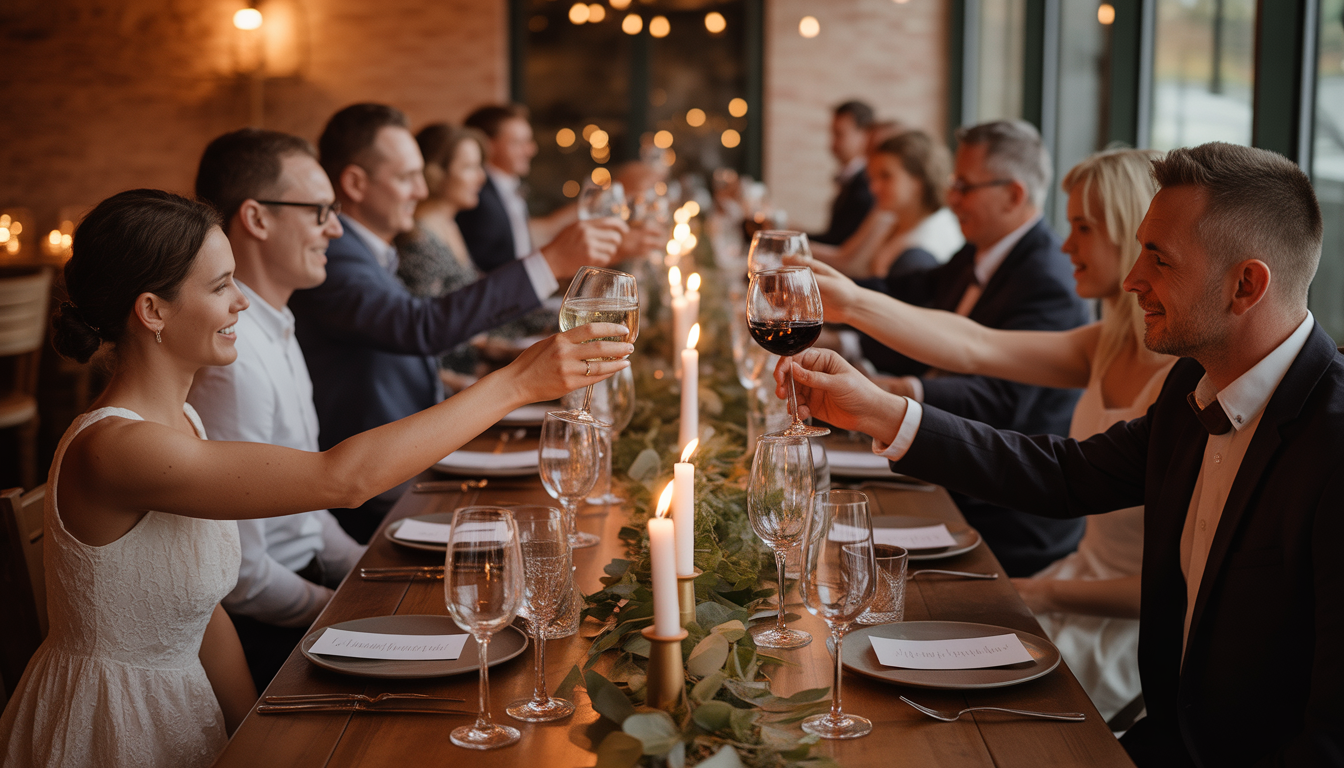
The rehearsal dinner is your families' first real meal together. Where everyone sits sets the tone for the whole weekend. Here's how to plan seating that feels warm, deliberate, and easy.
Ready to create your own event seating chart?
Try our free drag-and-drop seating chart builder.
Get Started →The rehearsal dinner is the most underrated event of the wedding weekend. It's the first time both families sit down to eat together, often the first time grandparents meet, and the moment when the whole weekend tips from logistics into celebration. Where everyone sits at this dinner shapes the energy for the next 48 hours.
This guide walks you through how to plan rehearsal dinner seating that mixes both families, honors the wedding party, gives parents and in-laws the right kind of attention, and avoids the small awkward moments that come from random or rushed placement.
What the Rehearsal Dinner Is Actually For
Before you assign anyone to a chair, understand what the dinner is supposed to do.
- Thank the wedding party. They've paid for travel, attire, showers, and bachelor/bachelorette events. The rehearsal dinner is a thank-you in food form.
- Welcome out-of-town guests. Most rehearsal dinners include immediate family and travelers, plus the wedding party. They've come a long way and the dinner is the first formal welcome.
- Mix the families. By the time you walk down the aisle, parents and grandparents from both sides should at least have shared a meal.
- Toast and roast. Most of the speeches, stories, and personal toasts happen here, not at the wedding. Reception toasts are short. Rehearsal dinner toasts are where the real stories live.
- Calm everyone down. The rehearsal earlier in the day reassures the wedding party. The dinner reassures the parents.
Seating decisions follow from these goals. A dinner where each family sits on its own side of the room is a missed opportunity. A dinner where the wedding party feels like a side table is a missed thank-you.
Decide the Format First
The format dictates the seating. Three formats dominate.
One long table
Best for 12 to 30 guests. Feels intimate, family-style, and forces everyone into one shared conversation. Ideal for traditional rehearsal dinners with parents, grandparents, and the wedding party.
Multiple round tables
Best for 30 to 80 guests. Tables of 8 to 10, with the couple at a head table and family or wedding party scattered as hosts.
Cocktail-style or restaurant buyout
Best for 20 to 60 guests. Lighter, more social, with reserved seating for the immediate family and casual seating for everyone else. Works well when the dinner is at a restaurant with private space.
If you're under 30 guests, default to one long table. The conversation is easier, the toasts land better, and the photos look great.
The Head Table at a Rehearsal Dinner
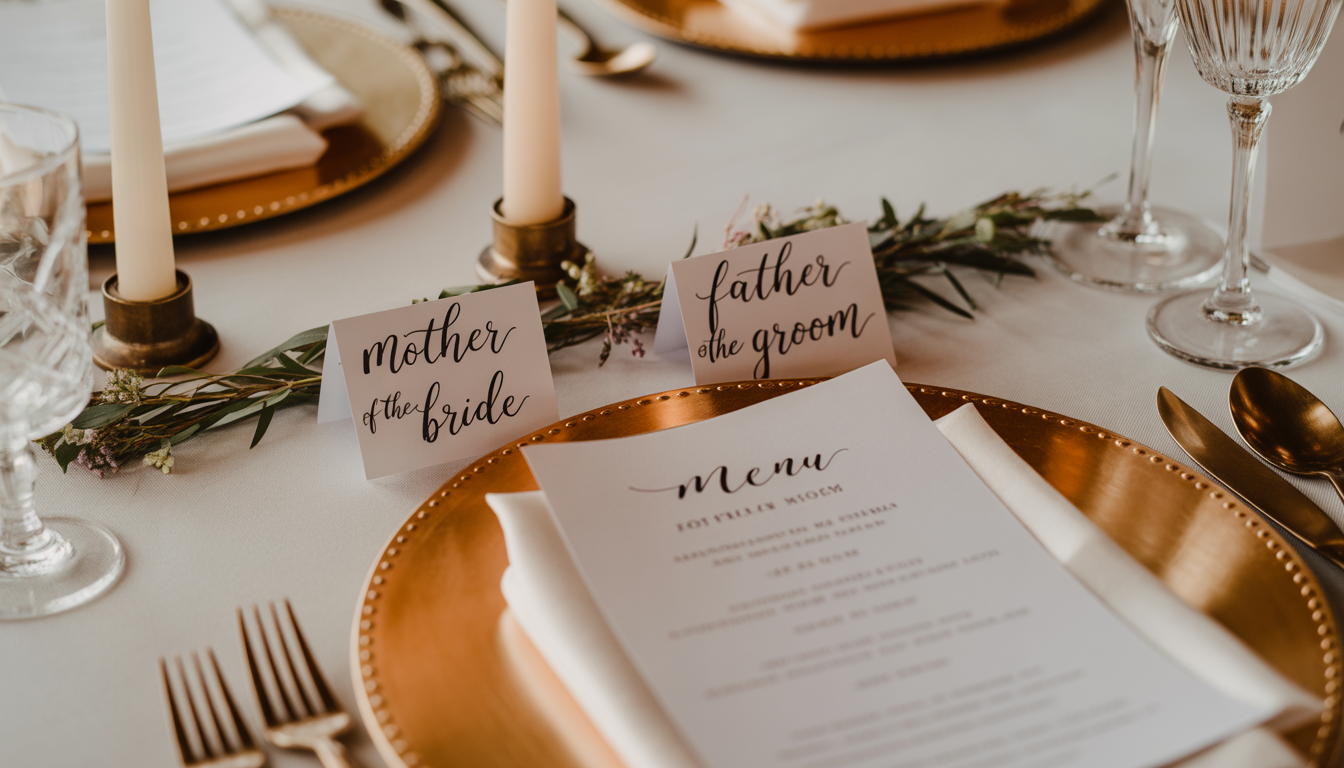
The head table at a rehearsal dinner is different from the wedding head table. At the wedding, the head table is usually the wedding party. At the rehearsal, the head table is the family.
A typical head table layout:
| Position | Who |
|---|---|
| Center | The couple |
| Beside the bride | Parents of the groom (or partner B) |
| Beside the groom | Parents of the bride (or partner A) |
| Outer ends | Grandparents, officiant, or close family |
This is the opposite of the wedding ceremony, where each person's family sits on their own side. At the rehearsal dinner, you sit next to your future in-laws on purpose. The point is to mix.
If parents are divorced
The rehearsal dinner is one of the trickiest seating moments for divorced parents because the table is small and the dinner is long. A few rules:
- Don't seat divorced parents directly next to each other unless they're explicitly fine with it.
- Place each divorced parent at a different "anchor" position, with their current spouse if remarried.
- Use grandparents, siblings, or aunts and uncles as buffers between them.
- For deeper guidance, our guide to seating divorced parents at a wedding covers the same logic in detail, and most of it applies to the rehearsal dinner too.
Where the Wedding Party Sits
If the wedding party is at the dinner (which they almost always are), they should not be at a side table or back row. They're guests of honor, not extras.
Three approaches that work:
Wedding party clustered together
One round table or one section of the long table for the wedding party. They already know each other from the rehearsal, the conversation flows naturally, and they make most of the toasts.
Risk: Can feel cliquey if other guests are watching them have all the fun. Mitigate by placing them visibly central, not in a corner.
Wedding party split as table hosts
One bridesmaid or groomsman per table, especially if you have multiple round tables of family and out-of-town guests. They become the social anchor at each table.
Best when: the dinner is over 50 guests with a mix of the couple's friends and out-of-town family.
Wedding party at the head table
For very small rehearsal dinners (under 20 guests), put the wedding party at the head table with the family. There simply isn't room for separation, and the dinner becomes one shared conversation.
Mixing Both Families
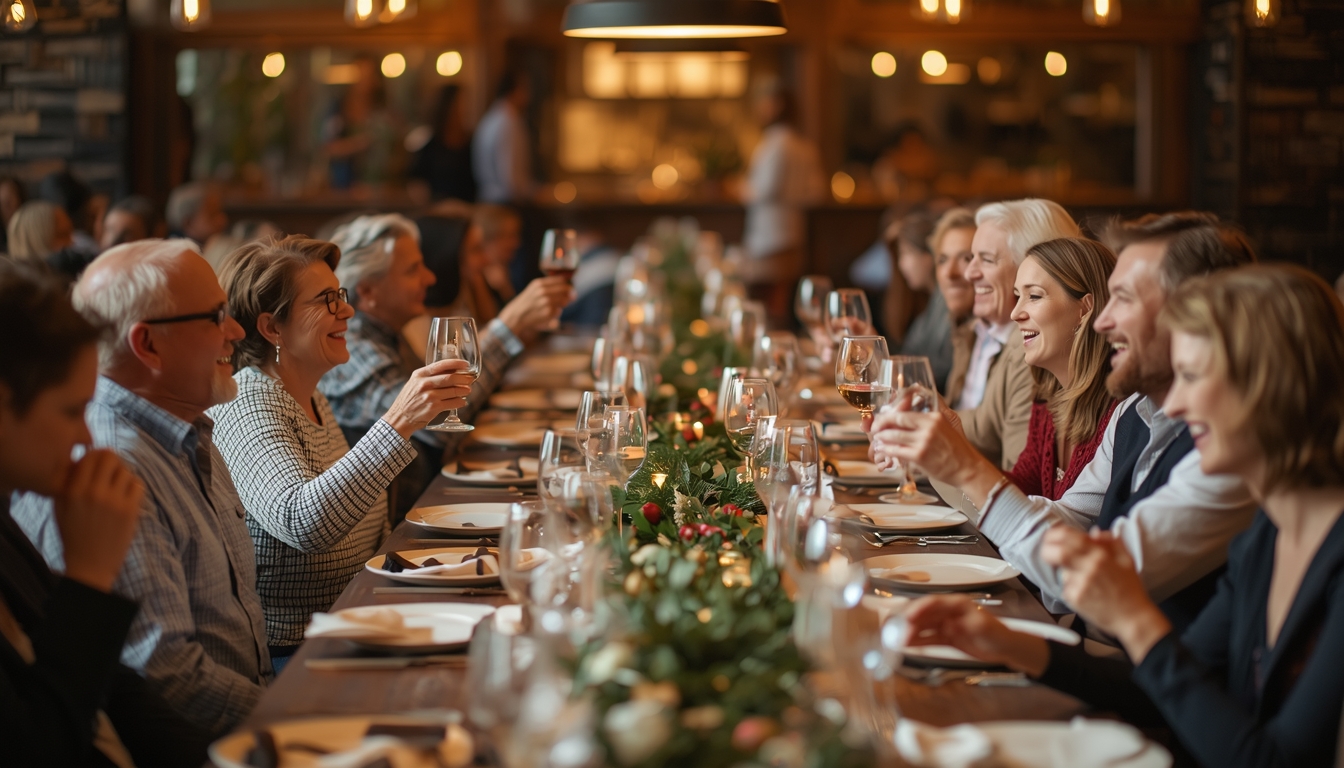
This is the single most important seating decision at a rehearsal dinner. Letting each family sit on its own side is a wasted dinner.
A simple framework that works:
- Pair grandparents. Seat the bride's grandparents near the groom's grandparents, ideally with at least one shared interest or generation in common.
- Pair siblings. Seat the bride's brother near the groom's sister, or some equivalent pairing. They'll see a lot of each other in the years ahead.
- Pair the parents. Mothers next to mothers, fathers next to fathers, alternating around the head table or main grouping.
- Distribute close family friends. If both families brought a few close friends, scatter them rather than letting them clump.
The goal isn't to force friendships. It's to give people a 90-minute window to share a meal with someone they'll meet again at the wedding. By the next day, the in-laws are already familiar.
Out-of-Town Guests
Most rehearsal dinners include out-of-town guests as a thank-you for traveling. Seat them deliberately:
- With family they actually know. Aunt Linda from out of state should sit with the cousins she came to see.
- Near someone who can answer logistics questions. "Where's the venue tomorrow," "what's the dress code," "is there a shuttle." The wedding party or local family is the right buffer.
- Not isolated as an "out-of-town table." Like a remote-employee table at a holiday party, this sounds inclusive and ends up isolating people.
The Practical Workflow
For a 40-guest rehearsal dinner with one long table or a small handful of rounds, the build looks like this:
- Confirm the guest list. Wedding party plus their plus-ones, immediate family, grandparents, officiant, and any traveling guests you're including.
- Decide the format. One long table, multiple rounds, or a hybrid.
- Place the head table first. Couple in the center, parents flanking, grandparents on the outer ends.
- Place divorced or sensitive seating second. Lock the buffers and adjacencies before adding anyone else.
- Place the wedding party. Cluster, distribute, or include in the head table depending on guest count.
- Mix the families. Pair grandparents, siblings, parents, friends across both sides.
- Slot in out-of-town guests. With people they know plus a local guide.
- Do a final read with both sets of parents. They'll catch family dynamics you don't know about.
- Print place cards or a small chart. Even at 30 guests, a chart removes the awkward "where do I sit" moment.
If you're using place cards, our guide to writing wedding place cards covers name formatting and titles, and the rules apply identically to the rehearsal dinner.
Toasts and Speech Logistics
Most of the personal speeches at a wedding weekend happen at the rehearsal dinner, not the reception. Plan the seating so the people who are speaking can be seen and heard.
- Seat speakers at the head table or near it, so they don't have to walk across the room mid-toast.
- The host (typically the groom's parents in the traditional model) usually opens with a welcome.
- Keep individual toasts to 3 minutes. Brief speakers in advance.
- Pass the mic in a clear order rather than "anyone who wants to speak." Otherwise the dinner runs long and the early speakers eat cold pasta.
If the dinner has 5+ speakers, intersperse them with food courses rather than stacking them all before dessert. Welcome toast before appetizers, parent toasts during the main, wedding party toasts before dessert.
Common Rehearsal Dinner Seating Mistakes
- Letting people self-seat. Each family clumps on its own side, the wedding party clumps in a corner, and the whole point of the dinner evaporates.
- Forgetting plus-ones. If you invited the wedding party, their plus-ones come too. Seat them next to their partner, not at a "plus-one table."
- Putting divorced parents next to each other "to make peace." A 90-minute dinner is not the place to repair a 20-year-old wound. Use buffers.
- Treating the dinner as a logistical afterthought. The rehearsal dinner is where the families actually meet. The wedding day is too rushed for real conversation.
- Burying grandparents in the corner. Grandparents at a rehearsal dinner are a gift. Seat them where they can see and hear, not at the end of a long table where they'll lose the conversation.
- Skipping place cards because "it's small." Even at 20 guests, place cards remove the awkward shuffle when people enter the room.
- Loading up speeches without breaks. Pace toasts across courses.
- Letting the dinner go too late. The wedding is tomorrow morning. End by 10 p.m. so everyone gets sleep.
If the Rehearsal Dinner Is at a Restaurant
Most rehearsal dinners happen at restaurants rather than venues, which adds two constraints:
- Tables are usually fixed. You can't redesign the layout. You're working with the room you've been given.
- Servers won't direct guests. Most restaurant staff won't enforce a seating chart. You need place cards or a host pointing people to chairs.
Walk the room before the dinner, ideally during the rehearsal itself. Confirm the table count, the orientation toward any window or focal point, and where the kitchen door opens. Place cards prevent the chaos that happens when 30 people walk in and don't know where to sit.
The Tools Question
For a 20-guest dinner, you can plan it on a napkin. For 40 to 80, a real seating tool saves time. The reasons:
- Plus-ones get added late.
- Family conflicts surface in the final week ("we'd rather not seat Aunt Linda next to Uncle Phil").
- You'll print a chart for the venue or restaurant manager.
- You'll print place cards that match exactly.
MySeatPlan's drag-and-drop seating chart builder lets you arrange tables visually for any size dinner, swap names as the guest list shifts, and export a clean chart for the venue and the place-card setup. It's the same tool you'll use for the wedding the next day, with the same guest list pre-loaded.
How the Rehearsal Dinner Sets Up the Wedding
A great rehearsal dinner makes the wedding easier in three ways:
- Speeches are already done. Most of the long, personal toasts happen here. The reception toasts can be short and tight.
- Families have met. The grandparents and aunts and uncles are no longer strangers when they line up for ceremony seating.
- The wedding party is calm. They've rehearsed, they've eaten, they've been thanked.
Use the dinner well and the wedding day starts with a room of people who already feel connected. Our wedding day checklist picks up the next morning, with a hour-by-hour plan once the dinner ends.
Quick Reference: The Rehearsal Dinner Seating Checklist
- Final guest list confirmed (wedding party, plus-ones, immediate family, grandparents, officiant, traveling guests)
- Format chosen: one long table, rounds, or hybrid
- Head table planned with parents flanking the couple, grandparents at the ends
- Divorced or sensitive seating addressed with buffers
- Wedding party placed: clustered, distributed, or at the head table
- Both families intentionally mixed (grandparents, siblings, parents)
- Out-of-town guests seated with people they know, not isolated
- Speakers placed near the head table
- Toasts paced across food courses
- Place cards written and placed
- Chart shared with the venue or restaurant manager
- Dinner ends by 10 p.m. so everyone gets rest before the wedding
The rehearsal dinner is where the wedding weekend stops being two families and starts being one. The seating chart is what makes that happen. Plan it deliberately, mix the families on purpose, and give the wedding party the thank-you they earned. The next morning, when everyone gathers for ceremony photos, the room will already feel like a wedding, not a first introduction.
Frequently asked questions
-
Seating should be planned to mix both families rather than separating them. The couple typically sits centrally, with parents nearby, while the rest of the guests are arranged to encourage conversation between people who haven’t met yet. The goal is to make the wedding feel like a continuation, not a first introduction.
Plan your perfect event seating arrangement
MySeatPlan gives you everything you need to organize your big day — all in one place.
- Drag-and-drop seating chart
- Guest list with RSVP tracking
- Export seating charts as images & PDF
- Share your plan with others via shareable link
- Design your invitation card
- Guest photo & video uploads