Do You Have to Have a First Dance at a Wedding?
 MySeatPlan
·
MySeatPlan
·
No, the first dance isn't required. It's a tradition many couples love, but plenty skip it, shorten it, or replace it with something that fits them better. Here's the etiquette, the alternatives, and how to decide.
Ready to create your own event seating chart?
Try our free drag-and-drop seating chart builder.
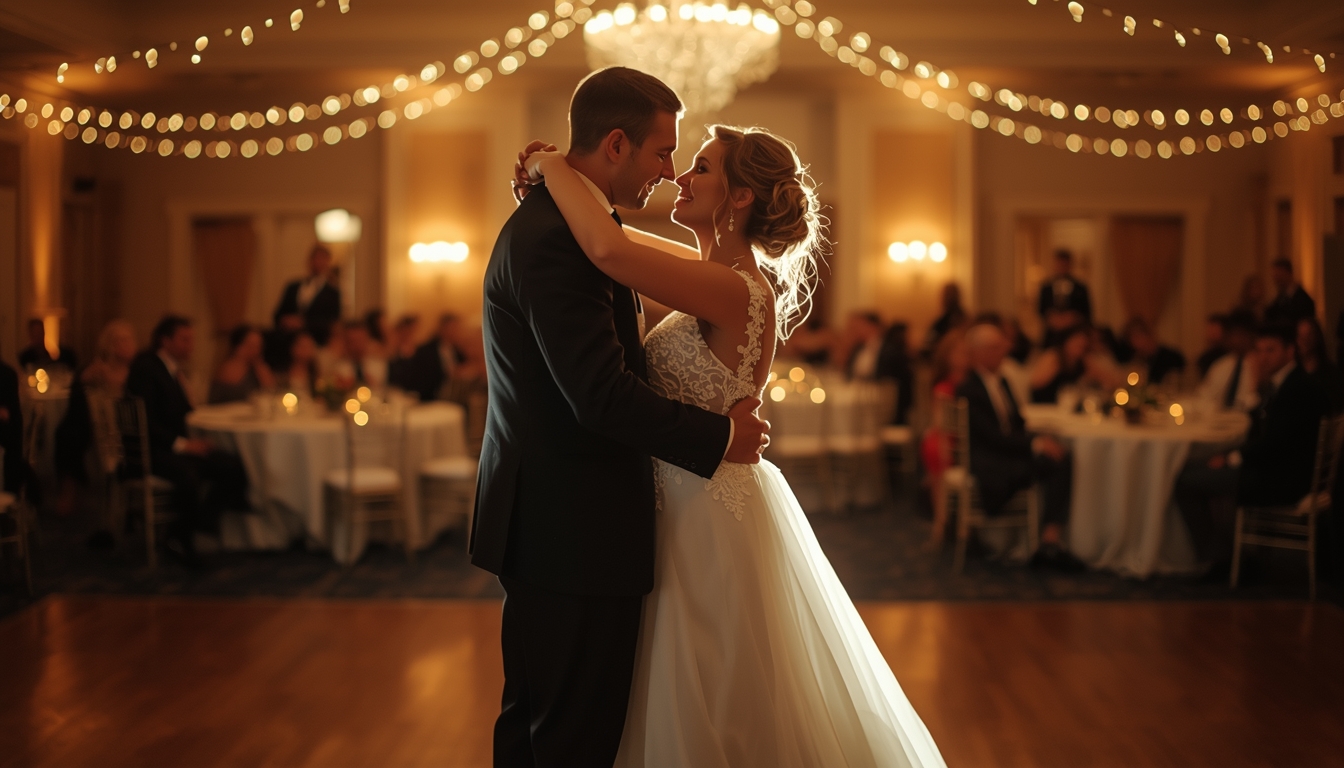
Get Started →No, you don't have to have a first dance at your wedding. It's a tradition many couples love, but plenty skip it entirely, shorten it to under a minute, or replace it with a group dance, an opening song with the wedding party, or just a clean transition straight into open dancing. The first dance is one of the most flexible parts of a wedding, you keep it, change it, or cut it based entirely on what fits the two of you.
The Quick Answer
| Couple type | Recommendation |
|---|---|
| Loves dancing or has a meaningful song | Yes, do a full first dance (2 to 3 minutes) |
| Hates being the center of attention | Skip it, or do a 30-second shortened version |
| Wants to dance but not solo | Group dance, wedding party joins after 30 seconds |
| No tradition at all | Skip and go straight to open dancing |
| Cocktail-style or casual reception | First dance is optional, often skipped |
Why Couples Skip the First Dance
Skipping the first dance is more common than people assume. The reasons are practical and emotional:
- Stage fright. Some couples genuinely don't enjoy being watched by 100 people for 3 minutes. The first dance becomes the most stressful moment of the night.
- Not big dancers. If neither of you dances much in your normal life, the first dance can feel forced. Faking it for the camera doesn't make for great memories.
- Time pressure. A full first dance plus parent dances can eat 12 to 15 minutes of the reception. Some couples would rather use that time for guests.
- Cultural or religious reasons. Some traditions don't include a first dance. Others structure dancing differently (group circles, line dances).
- It just doesn't feel like you. Sometimes the simplest reason is the best. If the first dance feels performative, skip it.
Skipping isn't a statement, it's a preference. Guests don't notice or care if you don't have one.
Why Couples Keep It
The first dance has stuck around for a reason. When it works, it's one of the most photographed and most-watched moments of the reception:
- It's a clear signal that the dance floor is open.
- It gives the couple a private moment in the middle of a busy night.
- The song often becomes "your song" forever afterward.
- It's a beautiful photography moment, particularly during golden-hour outdoor receptions.
- It anchors the program: dinner ends, first dance happens, dancing begins.
If either of you connects to a specific song, or if dancing has been part of your relationship, the tradition lands well. If neither, it's likely a tradition you can drop.
How Long Should a First Dance Be?
The traditional answer: the full length of the song, usually 3 to 5 minutes. The honest answer: most first dances should be 1.5 to 2.5 minutes.
Why shorter is better in most cases:
- The room's attention span peaks at 90 seconds. After that, even guests who love you check their phones.
- Your favorite song is often a 4-minute song. The full 4 minutes is too long for a first dance unless you've actually choreographed it.
- Shorter dances translate to better photos. Photographers get a few perfect shots in the first minute, and after that the lighting, the moment, and the natural posing all degrade.
The trick: have your DJ fade the song down at 1:30 to 2:00. The DJ does this constantly and won't blink at the request. Guests don't notice the song was shortened, they just notice the dance ended at the right moment.
Alternatives to a Traditional First Dance
The shortened first dance (30 to 60 seconds)
You take the floor, dance for 30 to 60 seconds, and the DJ invites everyone else to join. Removes the long solo moment, keeps the photo opportunity. The most popular modern compromise.
Wedding party joins after 30 seconds
You dance solo for 30 seconds, then the bridesmaids and groomsmen join with their partners. After another 30 seconds, the DJ opens the floor to everyone. This format spreads the spotlight.
Group "first dance"
Skip the solo dance entirely. The DJ announces "everyone on the floor" and the couple just leads the energy. Works well for casual weddings or couples who don't want a spotlight moment.
Surprise choreographed dance
If you actually love dancing, take a few lessons and prepare a choreographed routine. This is high-risk, high-reward: a great choreographed first dance is unforgettable, a mediocre one is more awkward than a simple slow dance.
Dance later in the night
Some couples skip the formal "first dance" segment and have a slow dance midway through the reception, when guests are warmed up and the moment feels less like a performance.
Skip it entirely
The DJ moves directly from cake cutting to open dancing. No first dance, no announcement, just a transition. Nobody will mention the absence afterward.
Where the First Dance Fits in the Reception Timeline
If you keep the first dance, the standard placement is:
- Grand entrance (couple announced into the reception)
- First dance immediately after the entrance, OR
- First dance at the end of dinner, before dancing opens
Right after the entrance is more photo-friendly because the lighting and energy are still fresh. End-of-dinner timing is more traditional and serves as a clear bridge from the seated portion of the night to the dance floor. Either works.
For the full reception flow, our wedding reception timeline guide walks through where the first dance, parent dances, and open dancing fit in the broader hour-by-hour schedule.
What About Parent Dances?
The father-daughter dance and mother-son dance are separate from the first dance, and they have their own etiquette. Like the first dance, they're optional. Skip them, shorten them, or restructure them based on your family situation.
A few common modern approaches:
- Both parent dances at full length. Traditional, can take 6 to 10 minutes total.
- Combined parent dance. Mid-song, the bride switches from her father to her mother (or stepparent), and the groom does the same. One song, two parent dances.
- Skip the parent dances. Especially common when family dynamics make them awkward (estranged parent, recently lost parent, complicated step-parent relationships).
For the full breakdown of complex family seating and parent involvement, see our guide on how to seat divorced parents at a wedding.
How to Pick the Song (If You're Doing One)
The song matters more than the dance. A few rules that help:
- Pick a song that's actually meaningful. "Our song" beats "the song everyone else picked" every time.
- Avoid songs with awkward lyrics. Listen carefully to the full song. The chorus might be perfect and the second verse might be about a breakup.
- Tempo matters more than genre. A medium-slow song (around 60 to 90 BPM) is easiest to slow-dance to. Too slow drags, too fast is uncomfortable.
- Length matters. If the song is 5 minutes, plan to fade it down. If it's a 2:30 song, you can play the whole thing.
- Don't pick something that's been overdone in your circle. If 4 of your friends have used "At Last" by Etta James, pick something else.
Common Mistakes
- Choosing a song without listening to the full lyrics. Verifying the second and third verses match the vibe takes 4 minutes and saves you from awkward moments.
- Letting the song play too long. Without a fade-out plan, your photographer ends up with great photos for the first 90 seconds and tired photos for the next 3 minutes.
- Doing a first dance because "everyone does." If neither of you wants one, don't have one. The wedding is yours.
- Surprise choreography that wasn't really practiced. A choreographed dance only works if you've actually rehearsed. A vaguely-rehearsed routine is more awkward than a simple slow dance.
- Forgetting to brief the DJ. The DJ needs to know the song, the start cue, the fade-out point, and what to play immediately after. Don't leave this to the day-of.
- Standing too far from each other. The first dance photographs better when you're physically close. The instinct under stress is to leave space, fight it.
Quick Reference
- The first dance is optional, never required
- If you do it, aim for 1.5 to 2.5 minutes (have the DJ fade the song)
- Alternatives: shortened version, wedding party joins, group dance, or skip it entirely
- Standard placement: right after the grand entrance, or at the end of dinner
- Pick a song that's actually meaningful, with lyrics that match the moment
- Brief the DJ on the song, length, fade-out point, and next track
- Parent dances are also optional, structure them however fits your family
The first dance is one of the easiest wedding traditions to drop or reshape. Whether you skip it, shorten it, or commit to the full traditional version, the wedding works either way. For the bigger picture of the reception flow, see our reception timeline guide, and our ultimate wedding day checklist walks through the morning-to-send-off plan. When you're ready to plan where each guest sits so they can see the dance floor (or where the dance floor sits relative to the head table), MySeatPlan's drag-and-drop seating chart builder handles the room layout visually.
Plan your perfect event seating arrangement
MySeatPlan gives you everything you need to organize your big day — all in one place.
- Drag-and-drop seating chart
- Guest list with RSVP tracking
- Export seating charts as images & PDF
- Share your plan with others via shareable link
- Design your invitation card
- Guest photo & video uploads