Wedding Reception Timeline: How to Plan Your Evening Hour by Hour
 MySeatPlan
·
MySeatPlan
·
A realistic hour-by-hour wedding reception timeline covering cocktail hour, dinner, toasts, first dance, and party. Includes timing tips and what to tell your vendors.
Ready to create your own event seating chart?
Try our free drag-and-drop seating chart builder.
Get Started →A wedding reception without a timeline is a recipe for awkward gaps, cold food, and a DJ asking "so... what's next?" Every reception follows roughly the same structure, but the timing depends on your guest count, venue, and how formal the evening is.
This guide gives you a realistic hour-by-hour timeline you can adapt to your wedding, along with the timing decisions that actually matter.
The Standard Reception Timeline at a Glance
Here's what a typical 5-hour reception looks like for a wedding with 100–150 guests and a 6:00 PM start:
| Time | Event | Duration |
|---|---|---|
| 6:00 PM | Cocktail hour | 60 minutes |
| 7:00 PM | Guests find their seats | 10–15 minutes |
| 7:15 PM | Couple's entrance and welcome | 5 minutes |
| 7:20 PM | First course or buffet opens | — |
| 7:30 PM | Toasts and speeches | 15–20 minutes |
| 7:50 PM | Main course (plated) or buffet continues | 40–50 minutes |
| 8:40 PM | First dance | 3–5 minutes |
| 8:45 PM | Parent dances | 5–8 minutes |
| 8:55 PM | Dance floor opens | — |
| 9:30 PM | Cake cutting | 10 minutes |
| 9:45 PM | Bouquet/garter toss (optional) | 10 minutes |
| 10:00–11:00 PM | Open dancing and party | 60–90 minutes |
| 10:50 PM | Last dance | 3–5 minutes |
| 11:00 PM | Send-off / end | — |
This is a framework, not a script. Adjust the times to fit your ceremony time, venue curfew, and personal preferences. The important thing is that every vendor, your wedding party, and your DJ or MC all have the same timeline.
Cocktail Hour (60 Minutes)
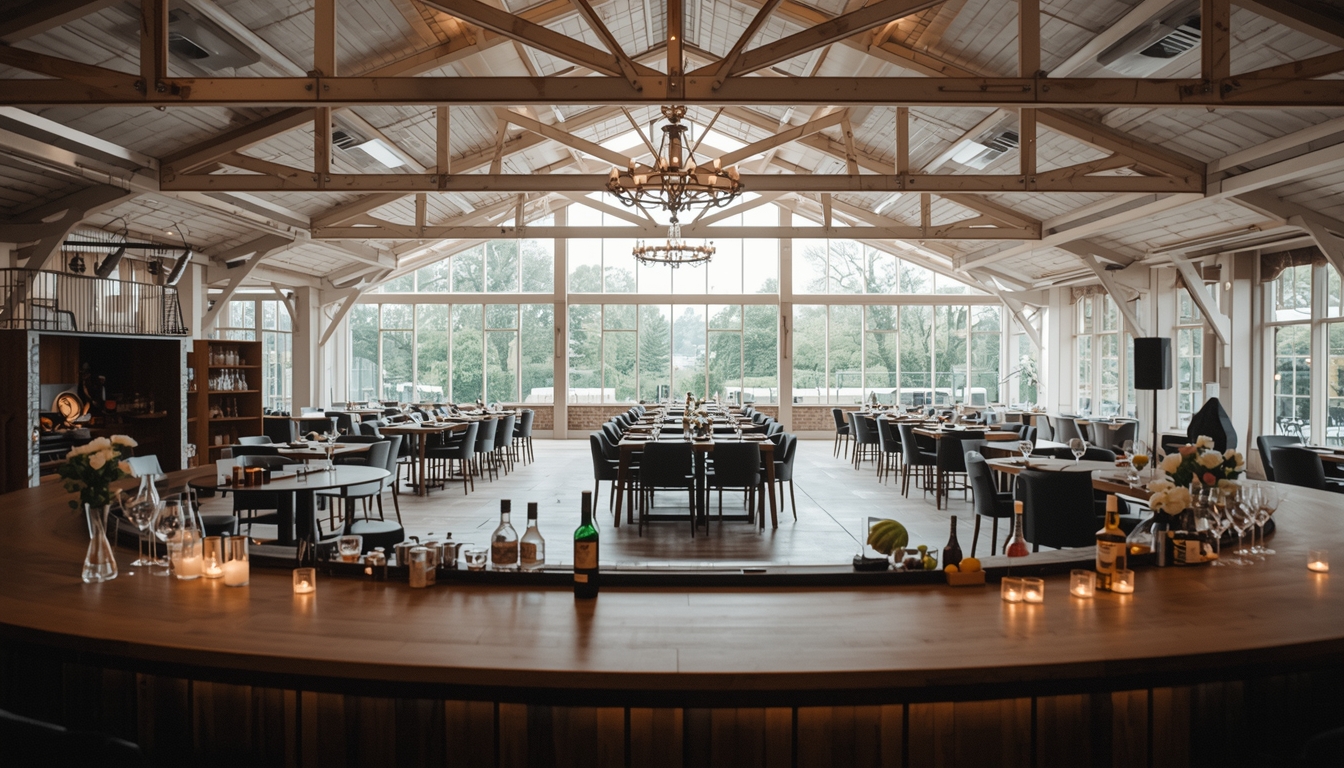
Cocktail hour serves two purposes: it gives guests something to do while you take photos, and it sets the tone for the evening. Here's how to make it work:
- Location: Ideally a separate space from the dining room. This lets your venue team finish setting up tables while guests mingle. If your venue only has one room, cocktail hour happens in the same space and the team works around it.
- Duration: 60 minutes is standard. Under 45 minutes feels rushed. Over 75 minutes and guests get restless, especially if they're standing.
- Food: Passed appetizers or a few food stations. Guests who arrived hungry won't last an hour on drinks alone.
- Seating chart display: Place the seating chart near the transition point between cocktail hour and the dining room. Guests can check their table number as they move in, which avoids a bottleneck at the door.
If you're skipping cocktail hour (some couples go straight from ceremony to dinner), build in at least 15–20 minutes for guests to find their seats and settle in.
Guest Seating Transition (10–15 Minutes)
This is the moment your seating chart does its job. Guests move from cocktail hour to the dining room and find their assigned tables.
How smoothly this goes depends on two things:
- A clear, visible seating chart display. A single small card on an easel won't work for 150 guests. Use a large display, multiple boards, or an alphabetical list that's easy to scan. Table numbers should be big enough to read from a few feet away.
- Clearly numbered tables. Table numbers on cards, stands, or signs that are visible from across the room. Guests shouldn't have to walk to every table to find theirs.
Your DJ or MC should announce the transition: "Dinner is served, please find your seats." Without an announcement, half the guests will stay at the bar.
If you haven't built your seating chart yet, our step-by-step guide covers the entire process from guest list to final assignments.
Couple's Entrance (5 Minutes)
Once guests are seated, the DJ or MC announces the couple (and sometimes the wedding party). This is your grand entrance. Keep it short and energetic. Walk in, soak it up, take your seats.
Some couples skip the formal entrance entirely and are already seated when guests come in from cocktail hour. Both approaches work. The entrance adds energy, but skipping it saves 5 minutes and avoids the "everyone stare at us walking across the room" moment if that's not your style.
Dinner Service (60–90 Minutes)
Dinner is the longest single block of your reception. How long it takes depends on the service style:
| Service Style | Duration | Notes |
|---|---|---|
| Plated (2 courses) | 60–75 minutes | Faster, more formal, no guest movement |
| Plated (3 courses) | 75–90 minutes | Adds 15 minutes per extra course |
| Buffet | 45–60 minutes | Faster eating, but table-by-table release adds time |
| Family style | 60–75 minutes | Food comes to the table, guests serve themselves |
| Food stations | 45–60 minutes | Guests graze, less structured |
Buffet timing tip
If you're doing a buffet, tables are released one at a time to prevent a stampede. With 15 tables, that's about 2 minutes per table, or 30 minutes before the last table is released. Start with tables farthest from the buffet, or let the VIP/family tables go first.
Your caterer will manage the release order, but it helps to know which tables are where. If you've built your seating chart in a visual tool like MySeatPlan, you can share the floor plan with your caterer so they know the table layout in advance.
Toasts and Speeches (15–20 Minutes)
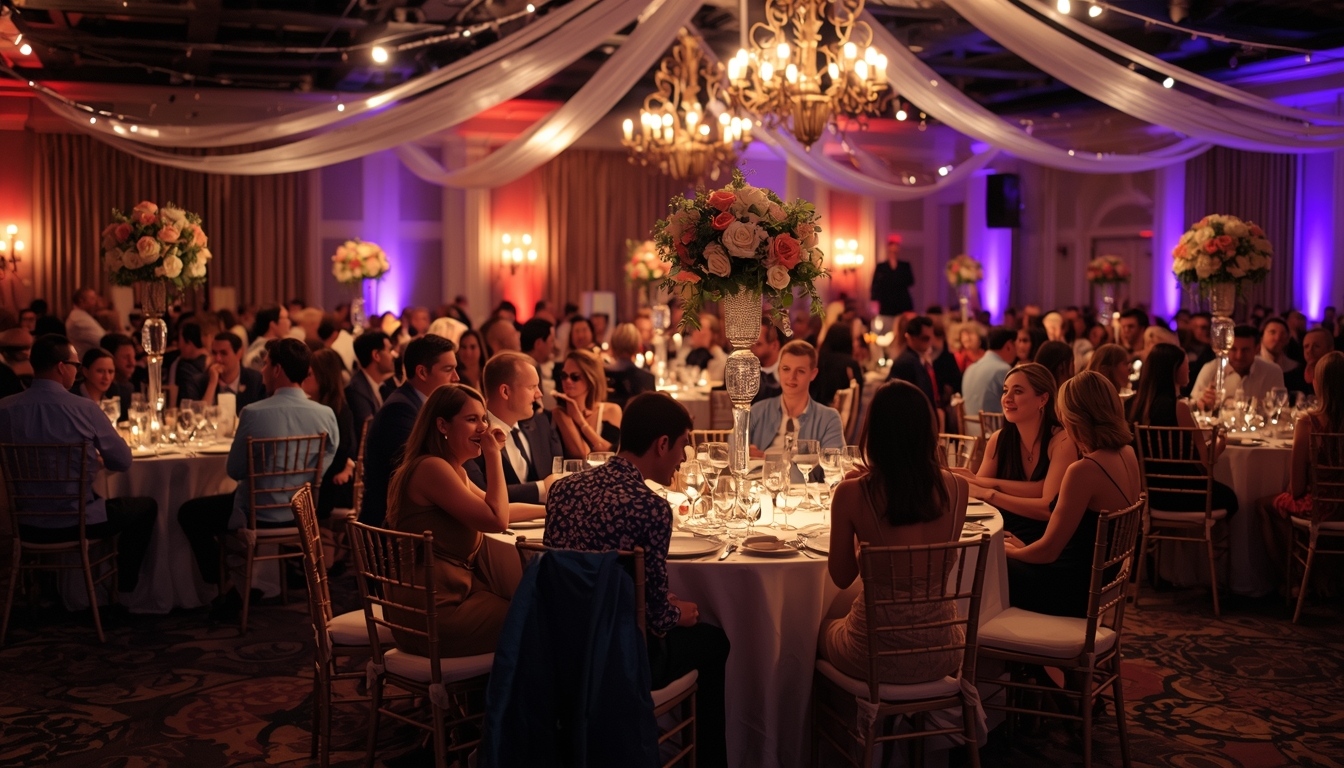
Toasts typically happen during dinner, either between courses (plated) or while guests are eating (buffet). This keeps the evening moving without dedicating a separate block to speeches.
Standard toast order
- Best man
- Maid of honor
- Parents (optional, usually father of the bride)
- The couple (a thank-you toast)
Timing tips
- Tell each speaker they have 3–5 minutes. Anyone who says "I'll keep it short" usually won't, so give them a specific number.
- Total speeches should not exceed 20 minutes. After that, guests zone out. If you have more than 4 speakers, cut someone or have them speak at the rehearsal dinner instead.
- Have the DJ or MC introduce each speaker so there's no awkward "who's going next?" pause.
- Speeches during dinner keep guests in their seats. Speeches before dinner mean hungry guests watching someone talk.
First Dance and Parent Dances (10–15 Minutes)
After dinner wraps, the dance floor opens with the couple's first dance, followed by parent dances.
Common order
- Couple's first dance (3–5 minutes, one song or a shortened version)
- Father-daughter dance (2–3 minutes)
- Mother-son dance (2–3 minutes)
- Open dance floor — the DJ invites everyone to join
Some couples combine the parent dances: start with father-daughter, then mother-son joins halfway through the same song, then invite all guests onto the floor. This saves time and avoids the audience-watching-two-people-slow-dance energy drain.
If you're not doing a first dance, that's fine. Just have the DJ open the floor after dinner with an upbeat song.
Open Dancing (60–90 Minutes)
This is the party. Once the formal events are done, the dance floor opens and stays open until the end of the night.
- Don't interrupt the dancing for events that could happen earlier (cake cutting, bouquet toss). Once the party is going, stopping it kills momentum.
- Cake cutting can happen 30–45 minutes into dancing, during a natural lull. The DJ pauses the music, you cut, guests applaud, music resumes. Total interruption: 5 minutes.
- Bouquet and garter toss are optional and increasingly skipped. If you do them, slot them before or right after cake cutting, not in the middle of peak dancing.
Last Dance and Send-Off (10 Minutes)
The DJ or MC announces the last song 5 minutes before the venue's cutoff time. Choose something meaningful or something fun that gets everyone on the floor for one final moment.
After the last dance, some couples do a send-off: sparklers, bubbles, confetti, or just a walkthrough of guests lining the exit. Coordinate with your venue on what's allowed (many ban sparklers indoors or near certain exits).
Adjusting the Timeline for Your Wedding
The standard timeline assumes a 5-hour reception starting at 6 PM. Here's how to adjust for different scenarios:
Afternoon reception (2–4 PM start)
- Cocktail hour can be shorter (30–45 minutes) since guests aren't expecting a long evening
- Skip the extensive dancing block, or keep it to 30–45 minutes
- Total reception: 3–4 hours
Late evening reception (8 PM start)
- Skip or shorten cocktail hour since guests likely had dinner before arriving
- Move straight to light food, toasts, and dancing
- Total reception: 3–4 hours
Small wedding (under 50 guests)
- Everything moves faster: transitions take 5 minutes instead of 15, buffet serves everyone in 10 minutes
- You can cut 30–45 minutes from the total timeline
- Toasts feel more intimate and can be longer or more informal
Large wedding (200+ guests)
- Everything takes longer: seating transition is 15–20 minutes, buffet release is 30+ minutes
- Add 30–60 minutes to the total timeline
- Consider two food stations or two bars to manage flow
For layout ideas based on your venue size and guest count, see our floor plan ideas guide.
Who Gets the Timeline?
Your timeline is useless if it lives only in your head. Send a finalized copy to:
- DJ or MC — they run the show. Every transition depends on them.
- Caterer — they need to know when to plate, when to release the buffet, and when cake goes out.
- Photographer and videographer — so they're in position for key moments (first dance, toasts, cake cutting).
- Venue coordinator — they manage room transitions, lighting changes, and vendor access.
- Wedding party — so they know when toasts happen and when the entrance is.
- Parents — so they know when parent dances are and aren't caught off guard.
Send the timeline at least one week before the wedding. A day-of email is too late for vendors who plan in advance.
Common Timeline Mistakes
- No buffer time. If your ceremony runs 10 minutes late (it will), every event after it shifts. Build in a 15-minute buffer between the ceremony and cocktail hour.
- Too many formal events. First dance, parent dances, anniversary dance, money dance, bouquet toss, garter toss, cake cutting, shoe game — that's 45+ minutes of structured events that interrupt the party. Pick the ones that matter and cut the rest.
- Speeches before food. Hungry guests are bad listeners. Always serve food before or during toasts.
- No announcement for transitions. Guests won't move from cocktail hour to dinner on their own. The DJ or MC must announce every major transition.
- Ending too abruptly. Announce the last dance, give guests a moment, then do the send-off. Don't just kill the music and turn on the lights.
For more mistakes that affect the whole reception experience, see our common mistakes guide.
Quick Reference Timeline
- Cocktail hour (60 min)
- Guests seated (10–15 min)
- Couple's entrance (5 min)
- Dinner with toasts (60–90 min)
- First dance + parent dances (10–15 min)
- Open dancing with cake cutting (60–90 min)
- Last dance and send-off (10 min)
Once you have your timeline, the next step is making sure your floor plan supports it. Your table layout, dance floor placement, and buffet position all affect how smoothly guests move through the evening. For help with that, our step-by-step guide covers everything from floor plan to final seating assignments.
Frequently asked questions
-
A typical wedding reception timeline lasts about 4–6 hours and includes cocktail hour, guest seating, dinner, toasts, first dance, and open dancing. Most receptions start with a 60-minute cocktail hour followed by dinner and formalities, then transition into dancing and the party.
Plan your perfect event seating arrangement
MySeatPlan gives you everything you need to organize your big day — all in one place.
- Drag-and-drop seating chart
- Guest list with RSVP tracking
- Export seating charts as images & PDF
- Share your plan with others via shareable link
- Design your invitation card
- Guest photo & video uploads