Head Table vs Sweetheart Table: Pros, Cons, and Seating Arrangements
 MySeatPlan
·
MySeatPlan
·
A side-by-side comparison of the traditional head table and the sweetheart table. Covers who sits where, the pros and cons of each, and how to decide which one fits your wedding.
Ready to create your own event seating chart?
Try our free drag-and-drop seating chart builder.
Get Started →One of the first seating decisions you'll make is where you and your partner sit. The two main options are a traditional head table with your wedding party or a sweetheart table for just the two of you. Both work, but they create very different dynamics for your reception.
Here's what each option actually looks like in practice, the real pros and cons, and how to decide which one fits your wedding.
What Is a Traditional Head Table?
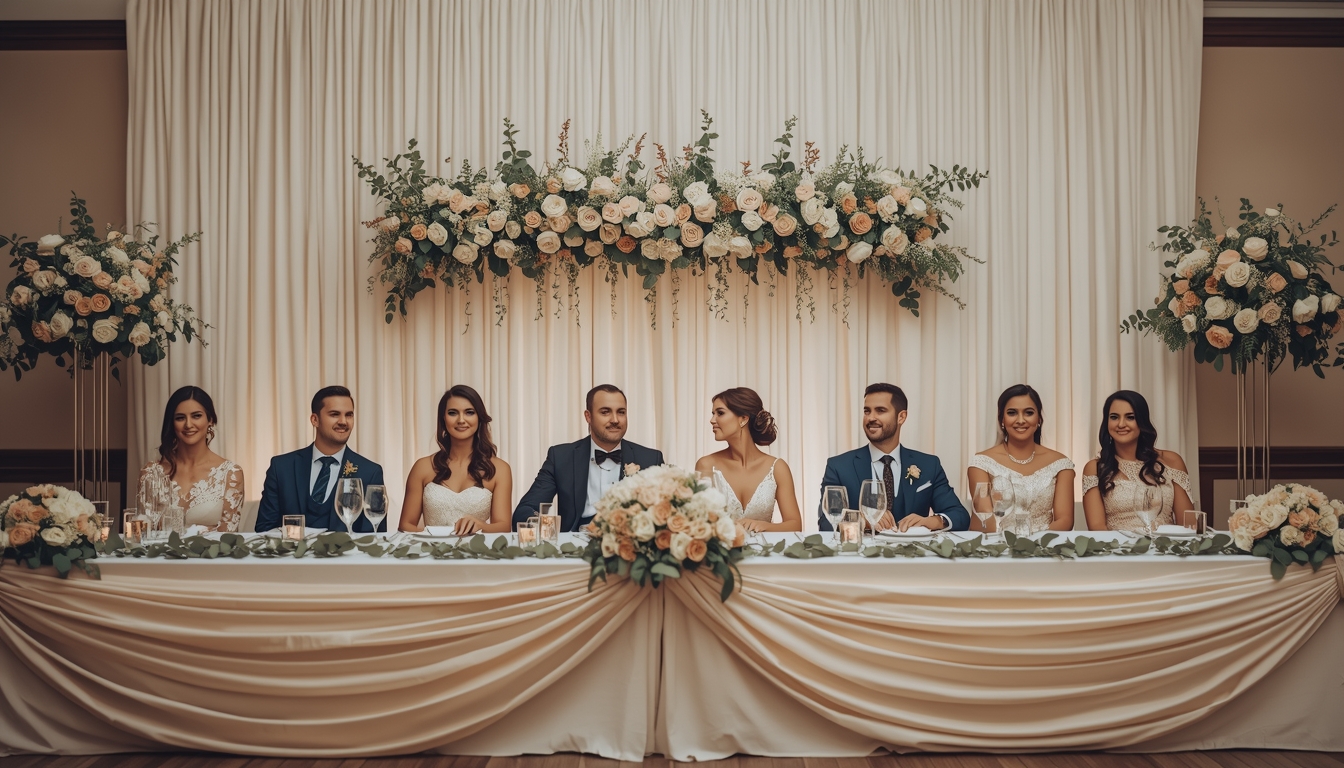
A head table is a long rectangular table at the front of the room where the couple sits with their wedding party. Guests are seated on one side only, facing the room, so everyone can see them and they can see everyone.
The traditional seating order
The couple sits in the center. From there, the traditional arrangement alternates:
- Maid of honor sits next to the groom
- Best man sits next to the bride
- Remaining bridesmaids and groomsmen alternate outward from the center
Some couples reverse this and place the maid of honor next to the bride, which is perfectly fine. The alternating pattern is a tradition, not a rule.
What about partners of the wedding party?
This is where head tables get complicated. If your best man has a girlfriend and your bridesmaid has a husband, do their partners sit at the head table too?
You have three approaches:
- Include partners at the head table. The table gets longer, but nobody is separated from their date. Partners sit next to their respective wedding party member.
- Partners sit at a nearby VIP table. The head table stays wedding-party-only, and partners are seated together at the closest guest table. This works if the partners know each other.
- Partners sit at their own friend tables. If the partners already know other guests, they sit with their own friends. This only works if no one ends up at a table of strangers.
Separating wedding party members from their partners for the entire dinner is one of the most common seating chart mistakes. If you can't fit partners at the head table, make sure they're seated somewhere comfortable, not stranded.
What Is a Sweetheart Table?
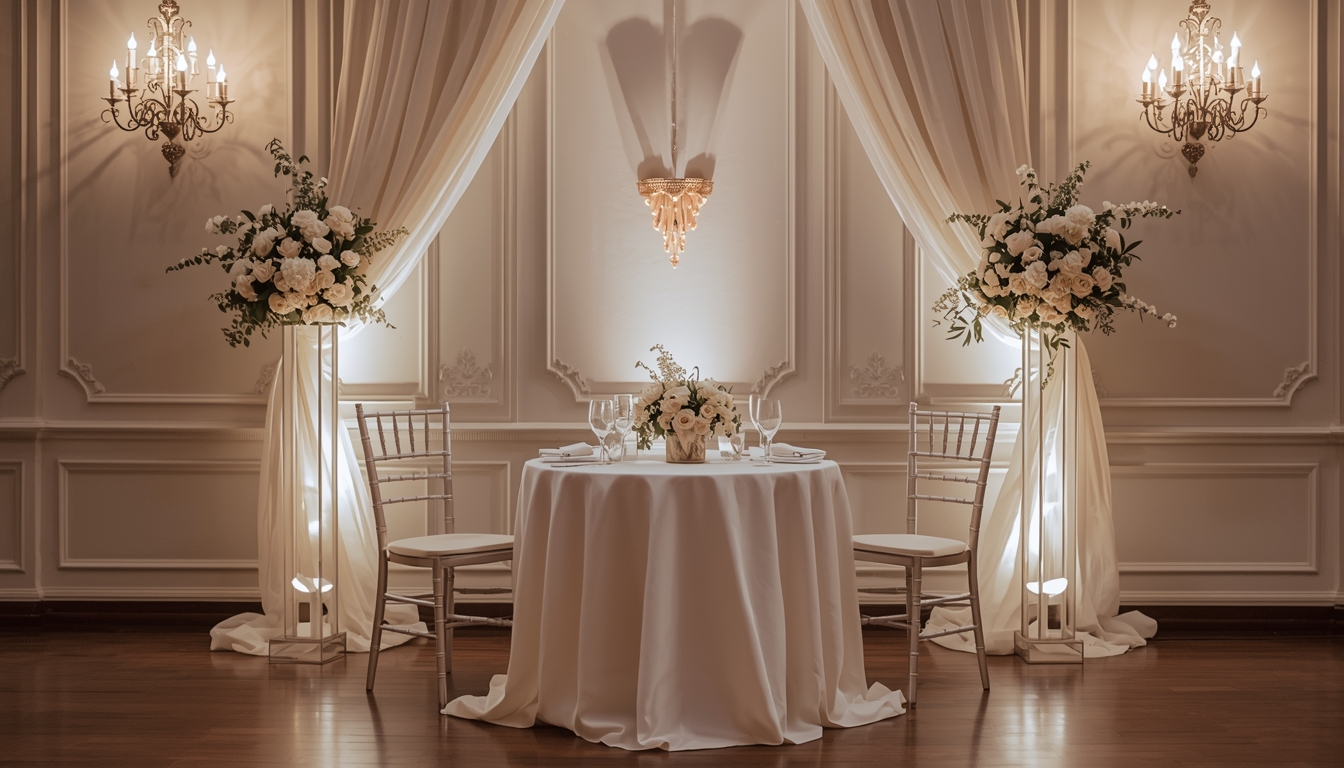
A sweetheart table is a small table for just the couple, usually a round or square table for two, placed at the front of the room. Your wedding party sits at regular guest tables with their own friends and partners.
It's simpler to set up, avoids the partner dilemma entirely, and gives the couple a moment of privacy during what is otherwise a very public day.
Head Table vs Sweetheart Table: Side by Side
| Head Table | Sweetheart Table | |
|---|---|---|
| Who sits there | Couple + wedding party (6–14 people) | Couple only (2 people) |
| Table shape | Long rectangular | Small round or square |
| Seating direction | One side, facing the room | Both sides, facing each other |
| Wedding party partners | Need to be accommodated somehow | Not an issue, they sit with their date |
| Formality | Traditional, formal | Romantic, modern |
| Space needed | Large, needs 3–5 meters of room width | Minimal |
| Planning complexity | Higher (partner logistics, seating order) | Lower (just a table for two) |
Pros and Cons of a Head Table
Pros
- The wedding party is together. For photos, toasts, and the overall look, having your closest people beside you at the front of the room is meaningful.
- Traditional feel. If a formal or classic reception is your goal, a head table anchors the room and gives it structure.
- Easy toasts. The best man and maid of honor are already standing right there. No awkward walk across the room.
- Clear focal point. Every guest knows where to look. The head table becomes the visual center of the reception.
Cons
- Partner separation. Unless you make the table very long, wedding party partners end up elsewhere. This can create resentment, especially for longer receptions.
- One-sided seating is awkward. Sitting in a row and all facing the same direction isn't natural for conversation. The couple ends up talking mostly to the two people beside them.
- Uneven wedding parties. If you have 5 bridesmaids and 3 groomsmen, the table looks lopsided. You can add partners to balance it, but that adds more logistics.
- Space requirements. A head table for 10–14 people takes up a lot of room. In smaller venues, it can dominate the space.
Pros and Cons of a Sweetheart Table
Pros
- No partner logistics. Your wedding party sits with their dates at regular tables. Nobody is separated, nobody is stranded.
- Private moment for the couple. In the middle of a chaotic day, you get to sit together, eat together, and actually talk. Many couples say this was their favorite part of the reception.
- Works with any wedding party size. Uneven numbers, large parties, no party at all, it doesn't matter because they're not at your table.
- Saves space. A table for two takes up almost no room compared to a 4-meter head table.
- Simpler to plan. One less complicated table to arrange.
Cons
- Can feel isolating. Some couples find sitting alone at a table for two makes them feel disconnected from the party, especially during a long dinner.
- Less traditional. If your family expects a formal head table, a sweetheart table might raise eyebrows. This is cultural and generational, so know your audience.
- The wedding party might feel excluded. Some bridesmaids and groomsmen expect to sit with the couple. If this matters to your group, talk to them about it beforehand.
- Toasts require a walk. The best man and maid of honor will need to stand and walk to the couple's table or to a microphone. Minor, but worth considering for the flow.
Other Options Worth Considering
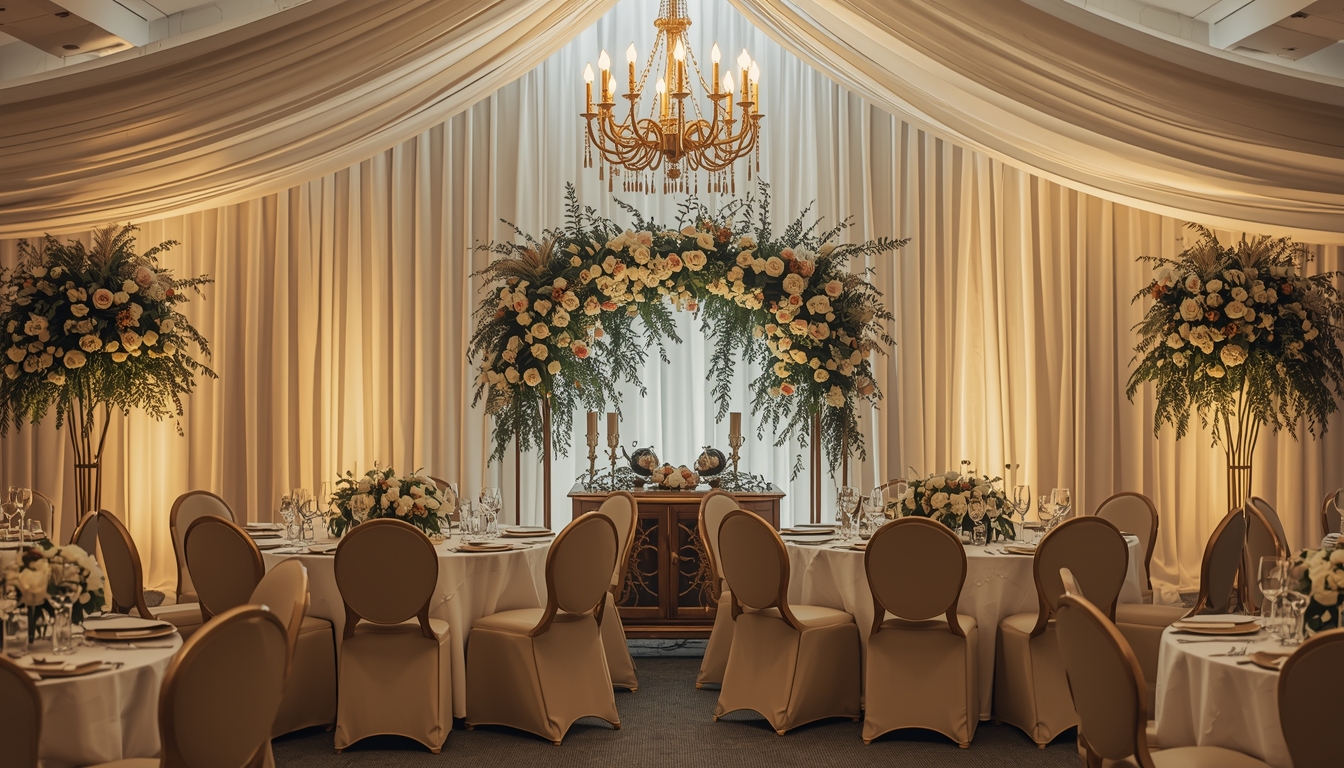
It's not strictly head table or sweetheart table. There are hybrid approaches:
King's table
A long table where the couple sits in the center with their wedding party and their partners. Everyone faces inward (both sides of the table are used). This solves the partner separation problem and feels less formal than a one-sided head table. It works well for wedding parties of 8–16 people including partners.
VIP round table
The couple sits at a round table with their 6–8 closest people, whether that's wedding party members, best friends, or siblings. No formal arrangement, just the couple's inner circle. This feels intimate and social without the rigidity of a traditional head table.
Family head table
Instead of sitting with the wedding party, the couple sits with their parents and grandparents. The wedding party sits at their own tables with their partners. This is common in some cultures and works well when honoring family is a priority.
How to Decide
Ask yourself these questions:
- How large is your wedding party? If it's 4 people total, a head table is easy. If it's 14 with partners, it's a logistics nightmare.
- Do wedding party members have partners attending? If most of them do, a sweetheart table avoids the separation problem entirely.
- How formal is your wedding? A black-tie ballroom reception pairs naturally with a head table. A garden party or barn wedding suits a sweetheart table.
- What does your venue look like? A narrow room might not have wall space for a long head table. A very large room might make a sweetheart table feel lost.
- What do you actually want? Forget what's traditional. Do you want your wedding party beside you, or do you want a quiet dinner for two in the middle of the celebration?
If you're still unsure, try both layouts in a floor planner and see which one feels right. Sometimes seeing it visually makes the decision obvious. MySeatPlan lets you place and rearrange tables in seconds, so you can test a head table layout, switch to a sweetheart table, and compare without starting over.
Whichever You Choose, Plan the Surrounding Tables
Your table choice affects the rest of the room. A few things to keep in mind:
- With a head table: seat parents at the two closest guest tables, one on each side. This keeps family near the front without crowding the head table.
- With a sweetheart table: place your parents' tables and wedding party tables closest to you. They should be the first ring around your table, not scattered across the room.
- With divorced parents: both setups work, but a sweetheart table makes it easier since neither parent is "at the head table" and neither feels excluded. For detailed guidance on this, see our divorced parents seating guide.
For the correct number of guests per table and spacing requirements, check our table sizing guide. And for a full walkthrough of the seating chart process, see our step-by-step guide.
Frequently asked questions
-
A head table seats the couple with their wedding party at a long table facing guests, while a sweetheart table is a small table for just the couple. The main difference is that a head table is more traditional and social, while a sweetheart table is more private and flexible.
Plan your perfect event seating arrangement
MySeatPlan gives you everything you need to organize your big day — all in one place.
- Drag-and-drop seating chart
- Guest list with RSVP tracking
- Export seating charts as images & PDF
- Share your plan with others via shareable link
- Design your invitation card
- Guest photo & video uploads