10 Wedding Seating Chart Mistakes (and How to Avoid Them)
 MySeatPlan
·
MySeatPlan
·
The most common seating chart mistakes that lead to awkward dinners, last-minute panic, and unhappy guests. Each mistake comes with a simple fix you can apply right away.
Ready to create your own event seating chart?
Try our free drag-and-drop seating chart builder.
Get Started →Most wedding seating chart problems aren't caused by bad luck. They're caused by the same handful of mistakes that couples keep making, usually because no one told them what to watch out for.
Here are the ten most common ones, why they cause problems, and how to avoid each one.
1. Starting the Seating Chart Too Early
The mistake: You start assigning seats three months before the wedding, before most RSVPs are in. You build a beautiful chart. Then guests start canceling, new plus-ones appear, and you have to redo the whole thing. Twice.
How to avoid it: Don't start building your seating chart until you have at least 80% of your RSVPs back. Before that, you're just guessing. Focus on your guest list and tracking responses first, then move to seating once you know who's actually coming.
For a full walkthrough of when to start and how to approach the process, see our step-by-step seating chart guide.
2. Doing It Alone
The mistake: One person takes on the entire seating chart by themselves, usually the bride. They spend hours agonizing over table assignments, second-guessing every choice, and end up exhausted and frustrated.
How to avoid it: Do it with your partner. Two people know the guest dynamics better than one. Your partner will catch things you miss, like the fact that Uncle David and Uncle Mark haven't spoken in five years. Use a tool that lets you share your seating chart so you can both work on it without emailing spreadsheets back and forth.
3. Overcrowding Tables
The mistake: A table seats 8 comfortably, but you squeeze in 10 because you can't figure out where else to put those last two guests. Now everyone at that table is elbow-to-elbow, there's not enough room for plates, and nobody is having a good time.
How to avoid it: Respect the table capacity your venue gives you. If a table seats 8, seat 8. If you have extra guests who don't fit, it's better to add another table than to cram people in. Ask your venue if they can fit one more table before you start overloading the ones you have.
4. Splitting Up Couples
The mistake: You separate a couple across two different tables because it makes the numbers work out perfectly. The couple spends the evening craning their necks across the room, and both feel like an afterthought.
How to avoid it: Never separate a couple or a guest from their plus-one. This is one of the firmest etiquette rules and one of the easiest to accidentally break when you're focused on making the math work. If a table is full, move the couple together to a different table. We cover this and other etiquette rules in our seating chart etiquette guide.
5. Seating People by Category Instead of Connection
The mistake: You create a "work friends" table, a "college friends" table, a "family friends" table, and a "neighbors" table. The problem is that people within these categories might have nothing in common with each other beyond how they know you.
How to avoid it: Seat people based on who they'll actually enjoy talking to. Your two coworkers who are close friends should sit together, but that doesn't mean every coworker needs to be at the same table. Mix groups when it makes sense. A table of 8 people who all have something in common is better than a table of 8 people who all came from the same category of your life.
6. Forgetting About the Room Layout
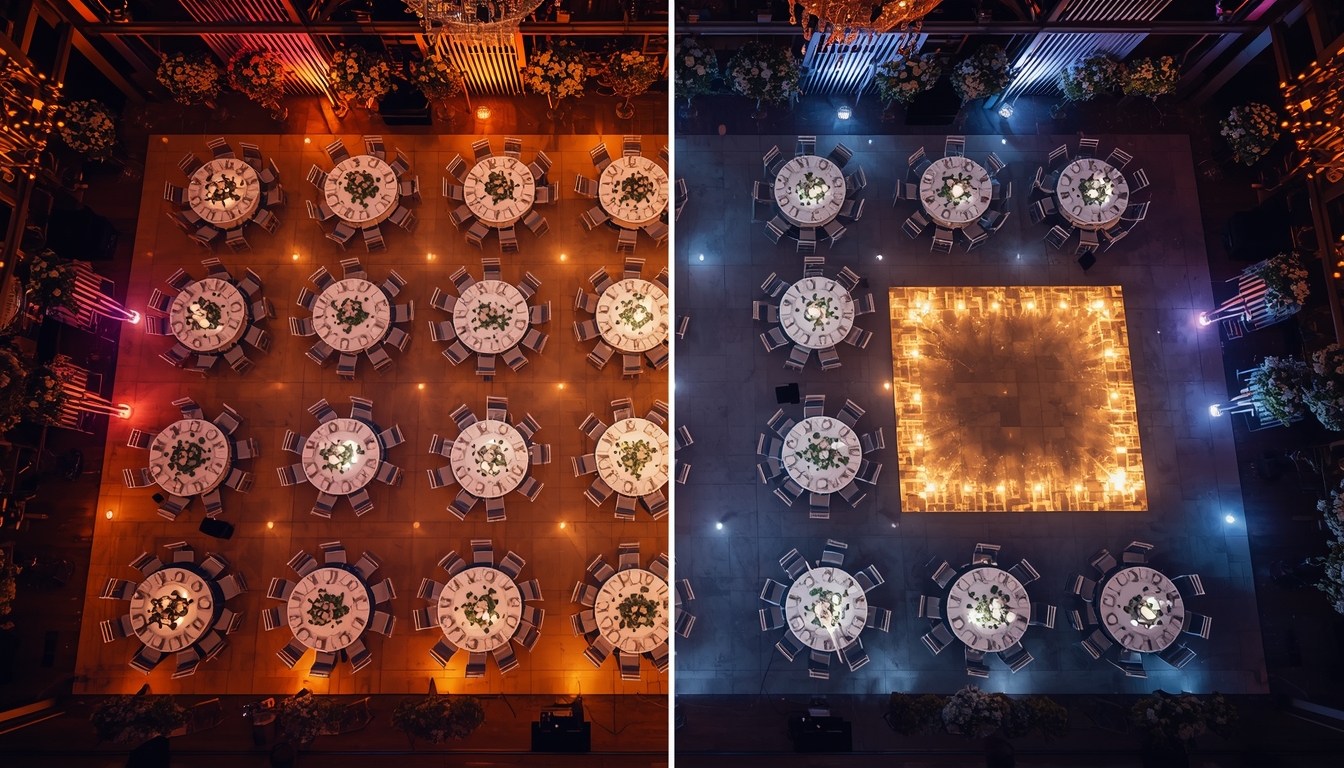
The mistake: You assign all your tables without thinking about where they are in the room. Grandma ends up next to the speakers. Your parents are behind a pillar. The kids' table is right next to the bar.
How to avoid it: Get your venue's floor plan before you start assigning seats, and think about what's around each table:
- Near speakers or the dance floor — seat younger guests who won't mind the noise
- Near exits and restrooms — seat elderly guests and families with young children
- Front and center — reserve for parents, grandparents, and VIPs
- Behind pillars or in corners — avoid seating anyone important here, or skip these spots entirely
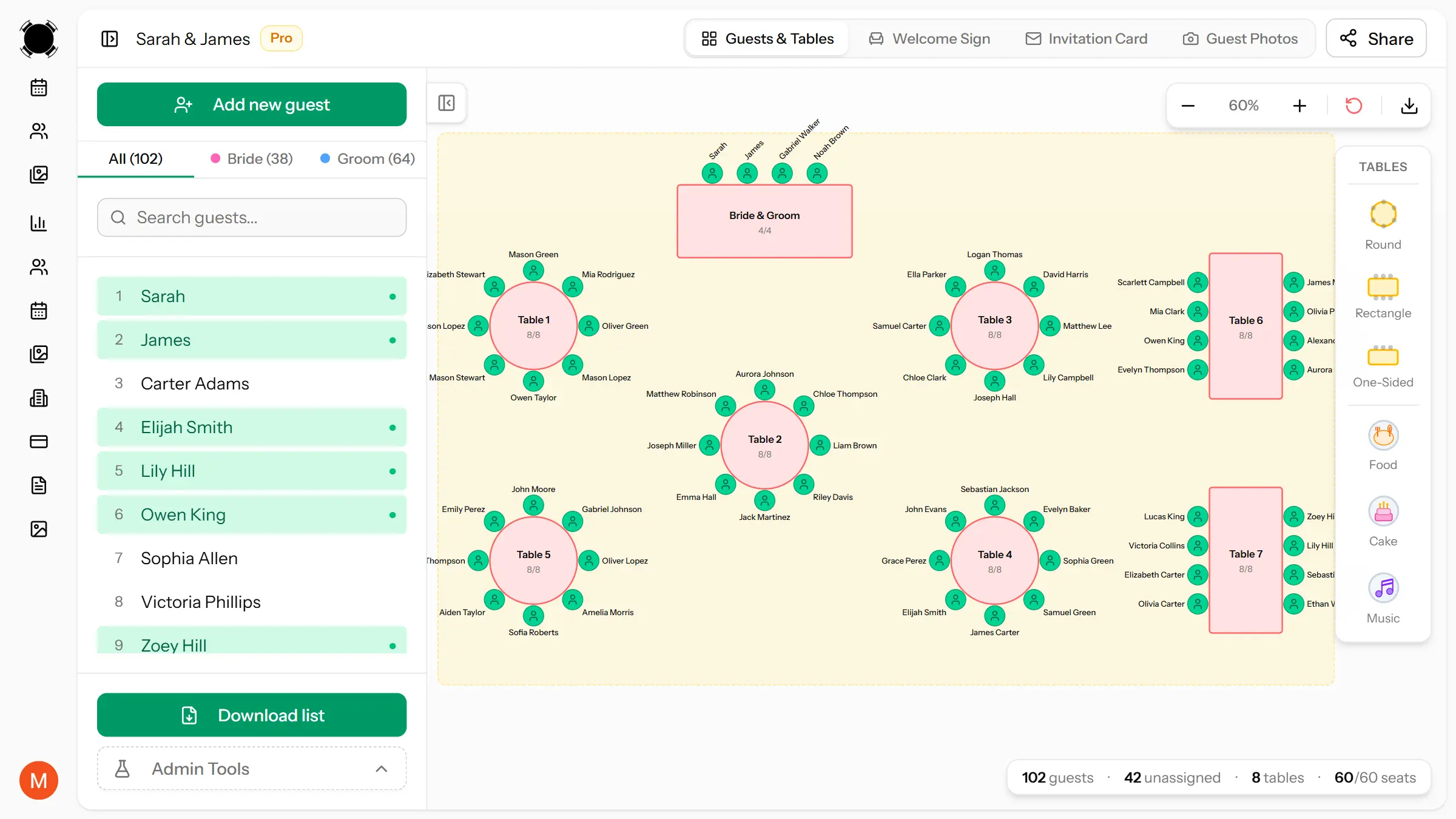
A visual floor planner makes this much easier to manage than a spreadsheet, since you can see exactly where each table sits in the room.
7. Ignoring Guest Conflicts
The mistake: You know your Aunt Lisa and Aunt Karen don't get along, but you seat them at the same table because they're both on your mom's side. You tell yourself it'll be fine. It won't be fine.
How to avoid it: Make a list of known conflicts before you start your chart. Divorced parents, ex-partners, family feuds, friend group drama. Then make sure those people are separated by at least two tables, not just on opposite sides of the same one. Your wedding is not the place for a reconciliation attempt.
8. Leaving Solo Guests Stranded
The mistake: You scatter single guests or people who don't know anyone across random tables to fill empty seats. Each of them spends the evening as the odd one out at a table where everyone else already knows each other.
How to avoid it: Group solo guests together, or seat them with your most outgoing, welcoming friends. A table of strangers who are all in the same boat almost always has a better time than one awkward outsider at a table of close friends. If you know something about the solo guests (similar age, shared interests), use that to create better matches.
9. Making the Chart on Paper
The mistake: You use paper, sticky notes, or a whiteboard. It works at first, but then you need to move five people and suddenly you're erasing, resticking, and losing track of who was where. When last-minute changes come in the week before the wedding, you're back to square one.
How to avoid it: Use a digital tool from the start. Moving a guest between tables should be a drag, not an erasing-and-rewriting exercise. A free online seating chart maker saves you hours of rework and makes last-minute changes painless.
10. Perfectionism and Endless Tweaking
The mistake: Your chart is done. Everyone has a seat, no obvious conflicts, couples are together. But you keep moving people around, trying to find the "perfect" arrangement. You spend another three hours making changes that don't meaningfully improve anything.
How to avoid it: Run through this checklist. If every answer is yes, you're done:
- Does every guest know at least one person at their table?
- Are all couples and plus-ones seated together?
- Are known conflicts separated by at least two tables?
- Are elderly and mobility-impaired guests in accessible spots?
- Are parents and VIPs at prominent tables?
If those boxes are checked, stop. Your guests will have a great time. The difference between a good seating chart and a "perfect" one is invisible to everyone except you.
Quick Reference
- Don't start until you have 80% of RSVPs
- Do it with your partner, not alone
- Respect table capacity, don't overcrowd
- Never split up couples or plus-ones
- Seat by connection, not category
- Account for the physical room layout
- Separate known conflicts by at least two tables
- Group solo guests together or with welcoming hosts
- Use a digital tool, not paper
- Stop tweaking once the checklist passes
If you're ready to build your seating chart and want to avoid all of these mistakes from the start, try MySeatPlan for free.
Frequently asked questions
-
The most common wedding seating chart mistakes include starting too early, overcrowding tables, splitting up couples, ignoring guest conflicts, and not considering the room layout. These issues often lead to uncomfortable seating and last-minute stress, but they can be avoided with better planning and the right tools.
Plan your perfect event seating arrangement
MySeatPlan gives you everything you need to organize your big day — all in one place.
- Drag-and-drop seating chart
- Guest list with RSVP tracking
- Export seating charts as images & PDF
- Share your plan with others via shareable link
- Design your invitation card
- Guest photo & video uploads