Wedding Reception Floor Plan Ideas for Every Venue Size
 MySeatPlan
·
MySeatPlan
·
How to plan your wedding reception floor layout based on your venue size and guest count. Practical layout ideas for small, medium, and large weddings with tips on table spacing and room flow.
Ready to create your own event seating chart?
Try our free drag-and-drop seating chart builder.
Get Started →Your floor plan is the backbone of your wedding reception. It determines how the room feels, how easily guests move around, and whether the evening flows smoothly or turns into a bottleneck at the buffet.
The right layout depends on two things: how many guests you have and the shape of your venue. This guide covers practical floor plan ideas for every common wedding size, along with the spacing and flow considerations that make a layout actually work.
Before You Start: Know Your Venue
Before choosing a layout, get these details from your venue coordinator:
- Room dimensions, including any alcoves, pillars, or irregular shapes
- Fixed elements you can't move, like a built-in bar, stage, or fireplace
- Table inventory, what shapes and sizes the venue provides (round, rectangular, both)
- Maximum capacity, the legal limit may be lower than what physically fits
- Power and AV locations, these dictate where the DJ or band can set up
- Entry and exit points, guests will naturally flow from these, so don't block them with tables
If your venue can provide a scaled floor plan or diagram, that's ideal. If not, take measurements yourself or ask for approximate dimensions. You'll need them to plan realistic table spacing.
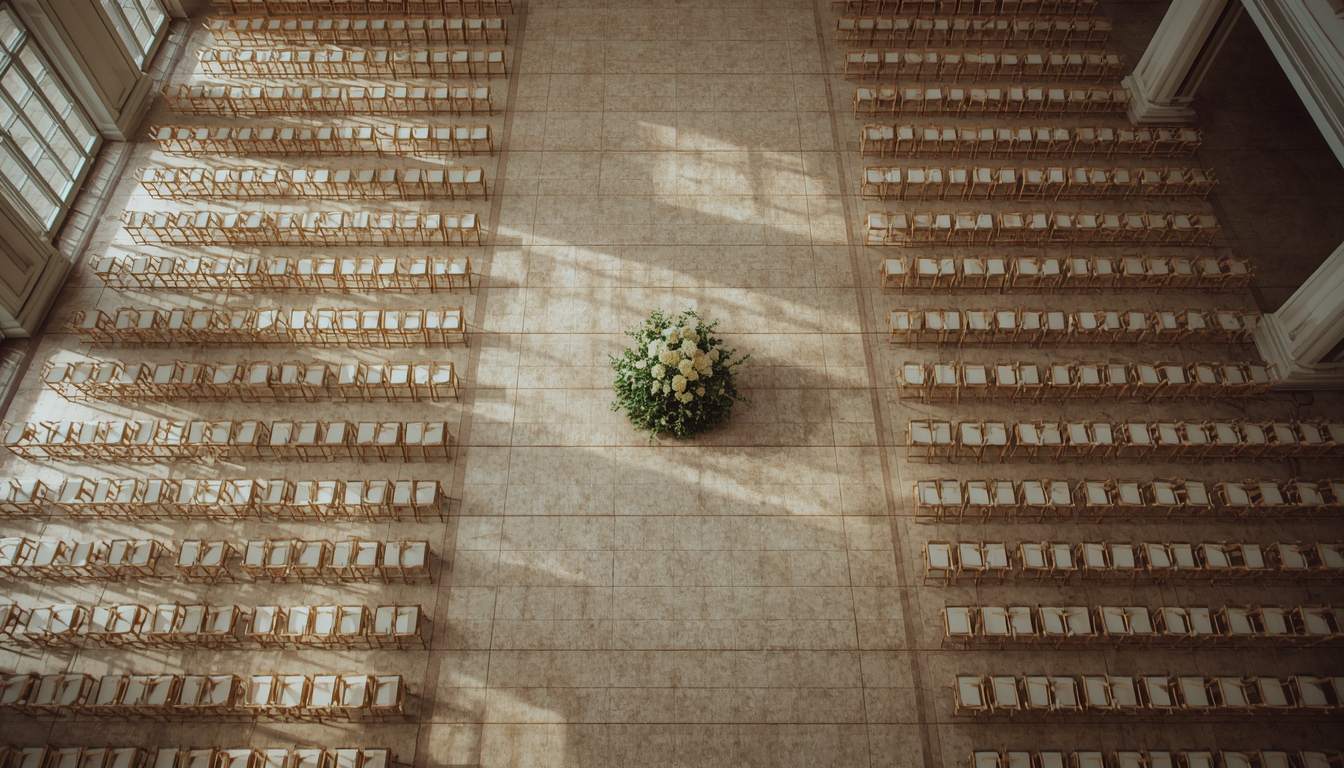
Table Spacing: The Numbers That Matter
Before looking at specific layouts, here are the spacing guidelines that apply to every wedding size:
- Between tables: at least 150 cm (5 feet) between table edges, so guests can push back their chairs and servers can pass behind them
- From walls: at least 90 cm (3 feet) from any wall, so the outside seats aren't pinned against it
- Dance floor: roughly 0.4 square meters (4.5 square feet) per guest who will dance, typically about half your total guest count
- Buffet access: at least 180 cm (6 feet) of clearance on the approach side of a buffet table for queuing
- Head table or sweetheart table: extra space in front, since everyone in the room will be looking at it
These numbers feel generous on paper, but once you add chairs, centerpieces, and moving people, they fill up fast. When in doubt, err on the side of more space.
Small Weddings: 30–50 Guests
Small weddings give you the most flexibility. With fewer tables to place, you can get creative with arrangements that wouldn't work at scale.
Best layouts for small weddings
One long table (family style): If your guest count is under 30, one long rectangular table creates an intimate, dinner-party feel. Everyone is part of the same conversation (or at least feels like it). This works especially well in narrow venues, private dining rooms, or outdoor settings.
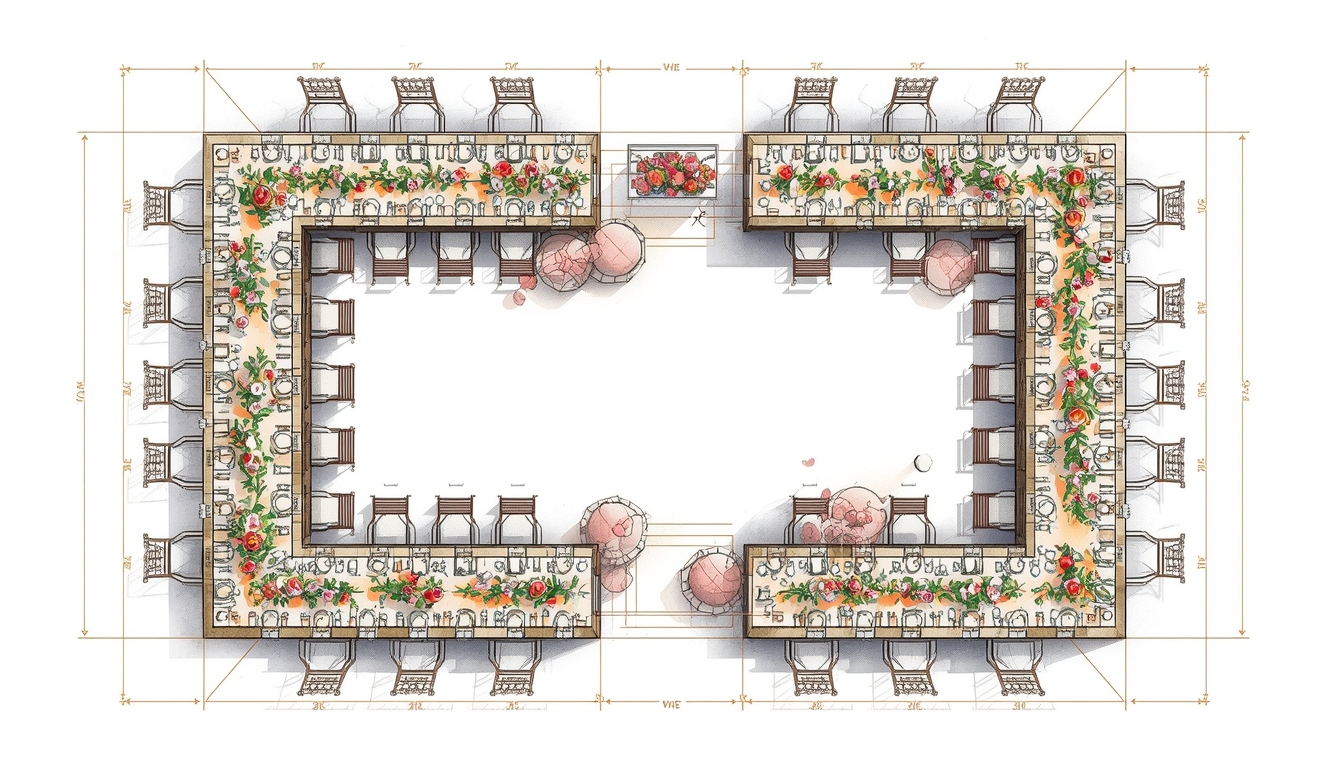
U-shape or L-shape: For 30–40 guests, arrange rectangular tables in a U or L shape. The couple sits at the center of the U. This gives an intimate feel while accommodating more people than a single straight table.
4–5 round tables: The classic approach. For 40–50 guests with 8–10 per table, this keeps things simple and social. Place the couple's table (sweetheart or small head table) at the focal point of the room.
Tips for small venues
- Skip the dance floor or keep it very small, you can clear tables after dinner instead
- Use a single table for both the cake and gifts to save space
- Consider a plated dinner instead of a buffet, as buffet stations take up room you don't have
- If the venue is tight, rectangular tables are more space-efficient than round ones
Medium Weddings: 50–100 Guests
This is the most common wedding size, and the one with the most layout options. You have enough guests to fill a room but not so many that you're constrained to one configuration.
Best layouts for medium weddings
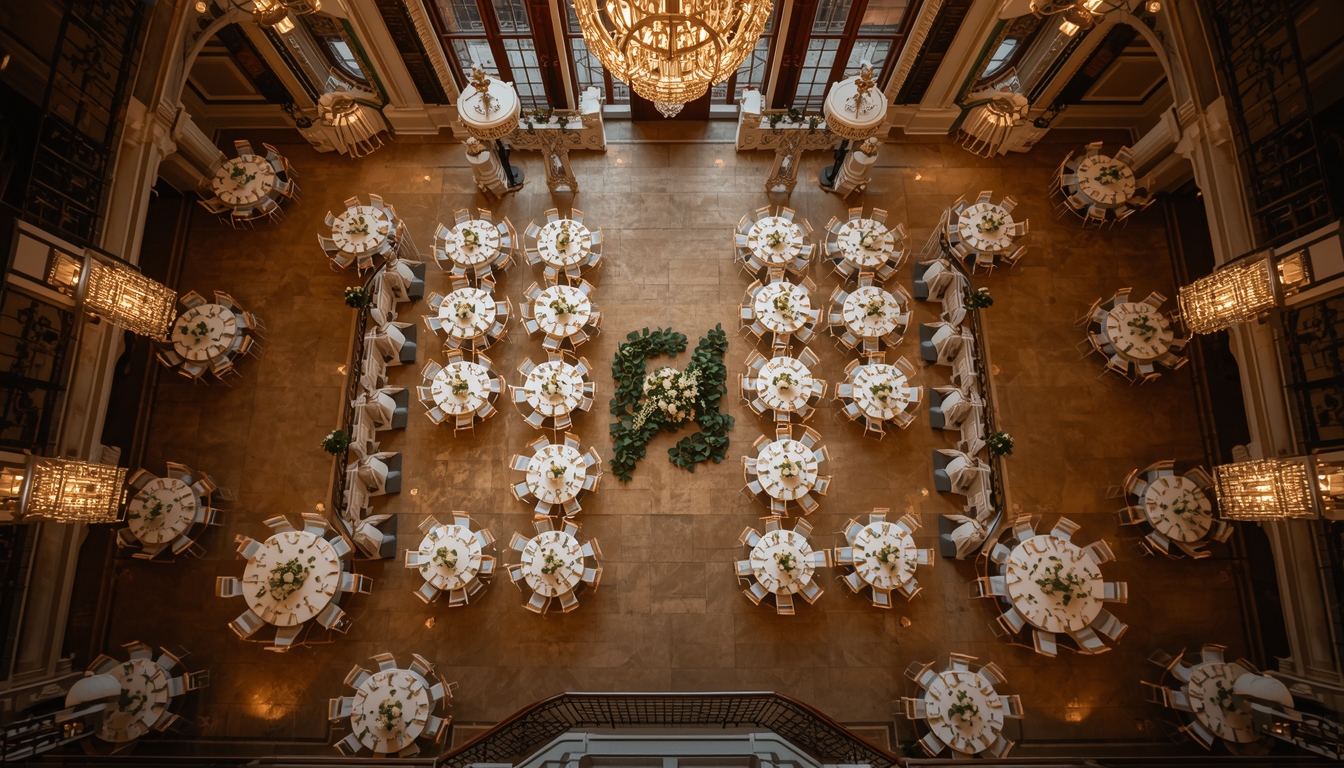
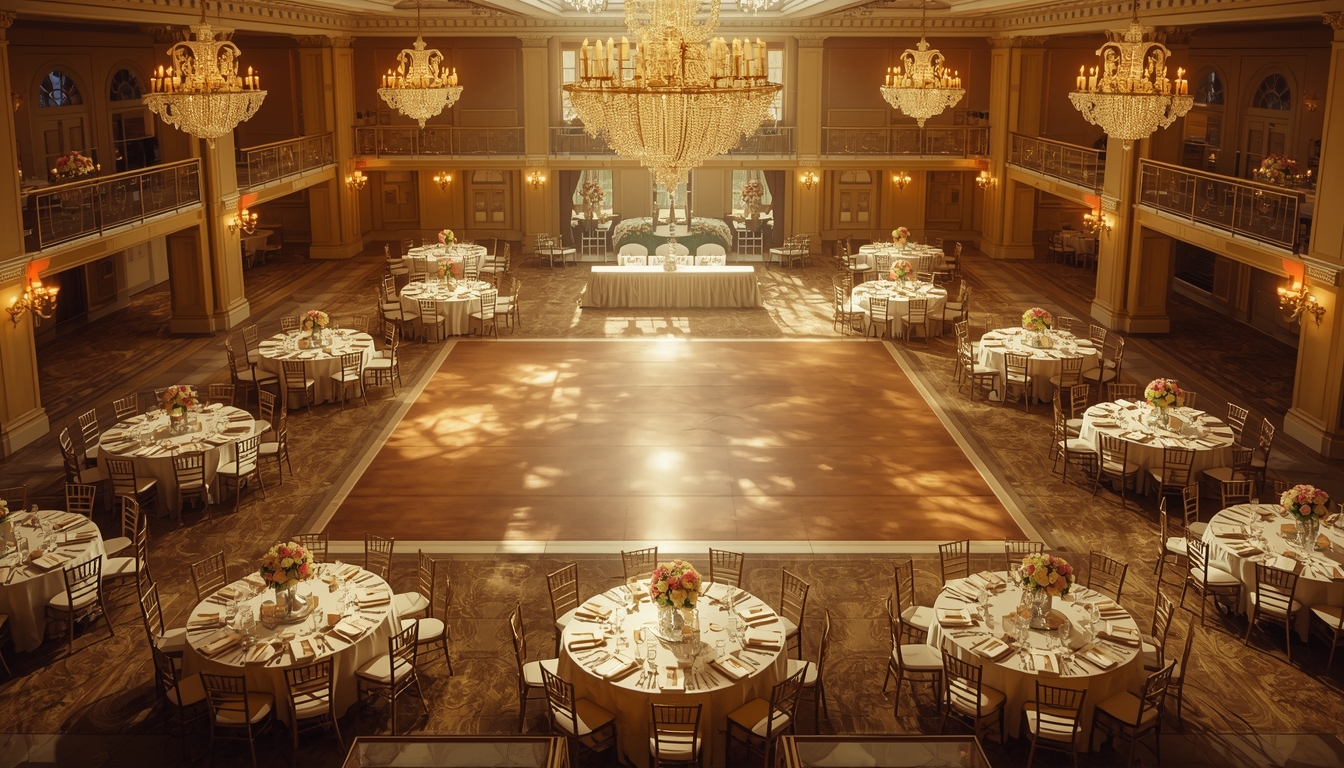
8–12 round tables: The standard approach for 80–100 guests. Arrange tables in a grid or staggered pattern, leaving a clear aisle from the entrance to the couple's table and space for a dance floor. This works in almost any venue shape.
Mix of round and rectangular: Use a long head table or a few long tables for the wedding party and family, with round tables for other guests. The mix adds visual interest and helps distinguish VIP seating from general seating.
Rows of long tables: For a rustic or banquet feel, parallel long tables work well with 60–80 guests. Leave a center aisle wide enough for servers and guests to move through. This layout suits barn venues, outdoor tents, and long narrow spaces.
Tips for medium venues
- Place the dance floor between the couple's table and the guest tables, so the couple is visible from everywhere
- Put the bar away from the entrance to distribute foot traffic, not right where everyone walks in
- If using a DJ, place them near the dance floor but against a wall, not in the middle of the room
- Keep the buffet or food stations on the edges to avoid creating a traffic jam in the center
Large Weddings: 100–150 Guests
With 100+ guests, your layout options narrow. Round tables become almost a necessity because they're the most space-efficient way to seat large numbers while keeping conversations comfortable.
Best layouts for large weddings
12–18 round tables: The go-to layout. Arrange them in a wide arc or staggered rows facing the couple's table. Avoid a strict grid, as staggering the rows gives more tables a good sightline to the front.
Sections with aisles: For 130+ guests, divide the room into two or three sections separated by aisles. This prevents the room from feeling like a cafeteria and gives guests a sense of neighborhood within the larger space. Each section can have 5–6 tables.
Tips for large venues
- Number your tables clearly, as guests will need help finding their seats in a large room
- Consider two bar stations on opposite sides of the room to prevent long lines
- Place a seating chart display near the entrance so guests can find their table number before entering
- Leave wider aisles than you think you need, as 150+ people moving around creates a lot of traffic
- If the venue is very large, use lighting or draping to make the space feel more intimate
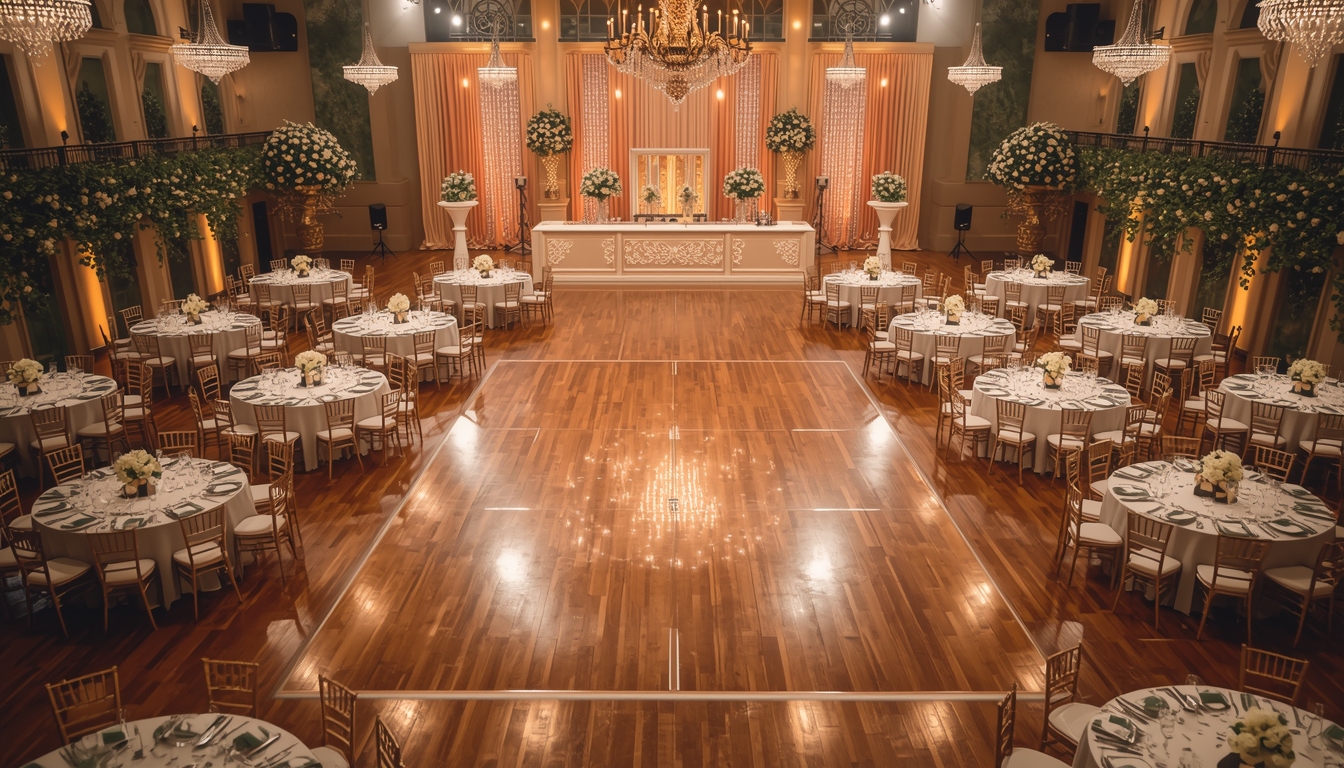
Extra-Large Weddings: 200+ Guests
Weddings this size are essentially events, and they need event-level planning. If you're seating 200+ people, you're likely working with a wedding planner or venue coordinator who can help with the layout. But here are the key principles:
- Round tables only. At this scale, long tables create too many logistical problems with service and sightlines.
- Multiple food stations instead of one buffet line. A single buffet for 200 people means a 30-minute wait.
- Two or three bar locations spread around the room.
- A raised head table or stage so the couple is visible. In a room of 200+, a floor-level sweetheart table disappears.
- Dedicated cocktail area separate from the dining room if possible, so guests aren't standing around empty tables during cocktail hour.
Room Flow: How Guests Move Through the Space
A good floor plan isn't just about where tables go. It's about how people move between them. Think about the guest experience from arrival to departure:
- Arrival: Guests enter and look for the seating chart. Place it near the entrance, visible and accessible without creating a bottleneck at the door.
- Finding their table: There should be a clear path from the entrance to any table. No guest should have to squeeze between chairs to get to their seat.
- Getting food and drinks: The route to the bar and buffet should not cross the dance floor or require passing behind the head table.
- Dancing: The dance floor should be accessible from all sections of the room without navigating an obstacle course of chairs.
- Restrooms: Keep the path to restrooms clear. If it runs along one side of the room, don't pack tables tightly on that side.
Walk through your floor plan mentally as a guest. If any part of the journey feels like it would involve squeezing, waiting, or backtracking, adjust the layout.
Common Floor Plan Mistakes
- Blocking sightlines to the couple. Every table should have a reasonable view of the head table or sweetheart table. If a pillar or a tall centerpiece blocks the view, adjust.
- Putting the bar next to the entrance. This creates a traffic jam right where guests are arriving. Move it to the side or back of the room.
- Forgetting about service access. Servers need to reach every table. If a table is hemmed in on all sides, service will be slow and disruptive.
- Underestimating the dance floor. A dance floor that's too small pushes dancers into nearby tables. A floor that's too large makes the room feel empty when only a few people are dancing.
- Ignoring noise zones. Tables near the band or DJ will be loud. Don't put elderly guests or families with small children there.
For more common mistakes and how to avoid them, see our seating chart mistakes guide.
Putting Your Floor Plan Together
Once you've chosen a layout style, the next step is building it out with your actual guest list. This is where a visual tool saves hours compared to drawing on paper or working from a spreadsheet.
With MySeatPlan, you can place tables on a digital floor plan, resize them, and drag guests directly onto seats. When something doesn't work, you rearrange in seconds instead of starting over.
If you're new to the process, our step-by-step guide walks you through everything from grouping your guests to making final adjustments. And if you want to make sure your seating assignments follow proper etiquette, check our etiquette guide.
Frequently asked questions
-
To plan a wedding reception floor plan, start by mapping your venue layout, including fixed elements like the dance floor, bar, and entrances. Then place tables based on guest count, ensuring proper spacing and clear pathways for movement. A visual tool like MySeatPlan helps you design and adjust your layout more efficiently.
Plan your perfect event seating arrangement
MySeatPlan gives you everything you need to organize your big day — all in one place.
- Drag-and-drop seating chart
- Guest list with RSVP tracking
- Export seating charts as images & PDF
- Share your plan with others via shareable link
- Design your invitation card
- Guest photo & video uploads