Wedding Seating Chart Etiquette: 12 Rules You Need to Know
 MySeatPlan
·
MySeatPlan
·
The unwritten rules of wedding seating, from where parents sit to how to handle divorced families, single guests, and VIPs. A practical etiquette guide for every tricky situation.
Ready to create your own event seating chart?
Try our free drag-and-drop seating chart builder.
Get Started →Wedding seating chart etiquette isn't about being formal or old-fashioned. It's about making sure your guests are comfortable, that nobody feels snubbed, and that predictable conflicts are avoided before they happen.
Most of these rules are common sense once you hear them, but it's easy to overlook them when you're deep in spreadsheets trying to make the numbers work. Here are the etiquette guidelines that actually matter.
1. Parents of the Couple Get Priority Seating
Both sets of parents should be seated at prominent tables near the front of the room, close to the couple. This is non-negotiable in most cultures. They've been planning and paying for this too, and their placement signals respect.
If you're using a traditional head table, parents sometimes sit at the head table itself. If you're using a sweetheart table (just the couple), seat each set of parents at their own table with close family and their closest friends.
The general hierarchy for table prominence:
- Parents and grandparents
- Siblings and their partners
- Wedding party
- Close family (aunts, uncles)
- Close friends
- Extended family and other guests
2. Divorced Parents Should Never Share a Table
This is one of the most common etiquette questions, and the answer is simple: separate tables, always. Even if your divorced parents get along fine, seating them together puts pressure on both of them and makes other guests uncomfortable.
Give each parent their own table with their side of the family or their own friends. If one or both have remarried, their new partner sits with them. Don't relegate the new partner to a back table, that creates more drama than it prevents.
Place both parents' tables at a similar distance from the couple. Putting one parent front and center and the other in the back of the room sends a message, even if you didn't intend one.
3. The Head Table Has a Specific Order
If you're using a traditional head table, the seating order matters:
- The couple sits in the center
- The best man sits next to the bride
- The maid of honor sits next to the groom
- The remaining wedding party alternates on either side
- Partners of the wedding party may or may not be included (see rule #4)
If this feels too rigid, a sweetheart table for just the two of you avoids the whole issue. Your wedding party sits at regular tables with their own friends and partners, which many people prefer anyway. We cover both options in detail in our complete seating chart guide.
4. Don't Separate Wedding Party Members From Their Partners
If your best man's girlfriend has to sit alone at a table of strangers while he's at the head table, that's a problem. You have two choices:
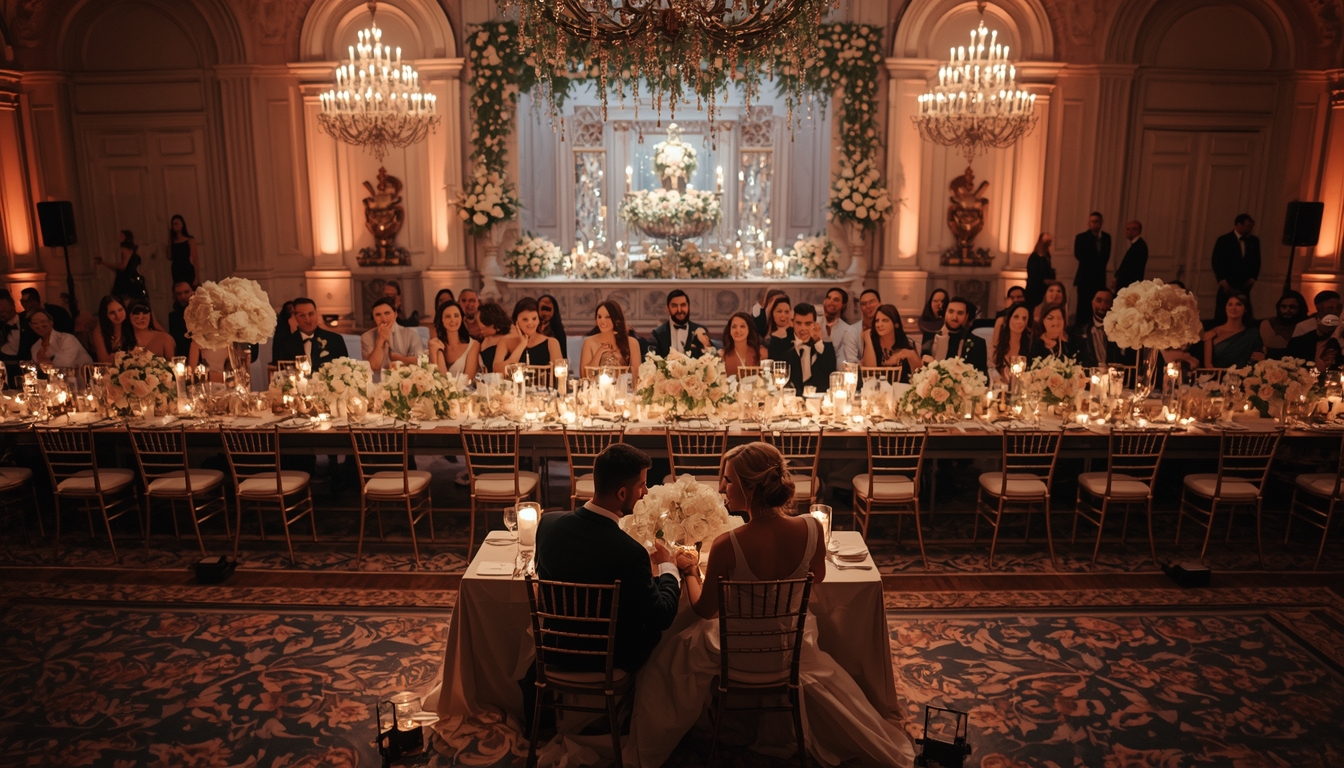
- Include partners at the head table. This makes it longer but keeps couples together.
- Skip the traditional head table. Use a sweetheart table and seat the wedding party with their partners at regular tables.
What you should never do is separate a couple for the entire reception. If someone brought a date, that date sits with them.
5. Never Split Up a Couple or a Guest From Their Plus-One
This applies to all guests, not just the wedding party. If someone RSVPed with a partner or was given a plus-one, those two people sit together at the same table, next to each other. No exceptions.
Splitting couples to "make the numbers work" is one of the fastest ways to upset your guests. If a table is full, move the couple together to a different table rather than seating them apart.
6. Elderly and Mobility-Impaired Guests Need Accessible Seats
Seat elderly guests and anyone with mobility challenges:
- Near exits and restrooms, so they don't have to navigate a crowded room
- Away from speakers and the dance floor, where it will be loud
- At round tables if possible, as they're easier to get in and out of than long benches
- With people they know, ideally family members who can help if needed
This is both etiquette and basic consideration. Don't stick grandma in the back corner next to the DJ.
7. Guests Who Don't Know Anyone Need Extra Thought
If you've invited colleagues, distant relatives, or solo guests who won't know many people, don't scatter them randomly across tables of established friend groups. They'll spend the night feeling like outsiders.
Instead, seat them with:
- Other guests in a similar situation (fellow solo attendees)
- Your most outgoing, welcoming friends who will naturally include them in conversation
- People in a similar age range or with shared interests if you know of any
A table of friendly strangers who are all in the same boat often becomes the loudest, most fun table at the reception.
8. Children Should Sit With Their Parents (Usually)
Young children (under 8 or so) should always sit with their parents. Separating a five-year-old from their family to sit at a "kids' table" across the room is stressful for everyone.
For older kids and teenagers, a dedicated kids' table can actually work well, as long as:
- The kids are old enough to be independent (roughly 8+)
- The table is near their parents, not in a different section
- There are enough kids to fill the table, so no one feels isolated
If you only have two or three children attending, skip the kids' table and seat them with their families.
9. VIPs and Hosts Get Prominent Tables
Anyone who contributed significantly to the wedding, whether financially or organizationally, should be seated prominently. This includes:
- Parents and stepparents (as covered in rule #1)
- Grandparents
- Anyone who hosted or co-hosted the wedding
- The officiant (if they're attending the reception)
Prominent doesn't necessarily mean the closest table to the couple, but it should be a good table with a clear view, not tucked behind a pillar or next to the kitchen entrance.
10. Don't Seat Guests by Obligation
One of the most common mistakes is seating people together just because of a perceived obligation. Your mom's coworker doesn't need to sit with your dad's golf buddy just because they're both "parent guests." They have nothing in common and will have a miserable evening.
Seat people based on who they'll actually enjoy talking to, not based on how they know you. A table where everyone has a connection, even a loose one, is always better than a table assembled by category.
11. Keep Known Conflicts Separated
If two guests don't get along, separate them by at least two tables. Not opposite sides of the same table, that's still close enough for tension. Put them in different sections of the room if the conflict is serious.
Common conflicts to watch for:
- Divorced parents and their extended families
- Ex-partners who are both attending
- Family members with unresolved disputes
- Friends who had a falling out
You don't need to solve their problems, just make sure your wedding isn't where those problems surface. When in doubt, more distance is better.
12. Vendors Need Seats Too
This is the most commonly forgotten etiquette point. If your photographer, videographer, wedding planner, or band members are eating a meal, they need a seat. Check with your venue coordinator about vendor meals and seating.
Vendors are typically seated at a table near the back or side of the room, out of the way but with access to the main space. Don't seat them with your guests unless you have a personal relationship with them.
When It's OK to Break the Rules
Etiquette is guidance, not law. There are situations where breaking a rule makes sense:
- Your divorced parents genuinely want to sit together. If they're best friends post-divorce, honor that.
- Your family doesn't follow traditional hierarchies. Not every culture puts parents at the front. Do what feels right for your family.
- A guest specifically requests something unusual. If your cousin asks to sit with friends instead of family, that's fine.
- Your wedding is very small and informal. At a 30-person dinner, strict seating etiquette can feel forced.
The underlying principle behind all of these rules is the same: make your guests comfortable and avoid putting anyone in an awkward position. If breaking a rule achieves that better than following it, break it.
Putting It All Together
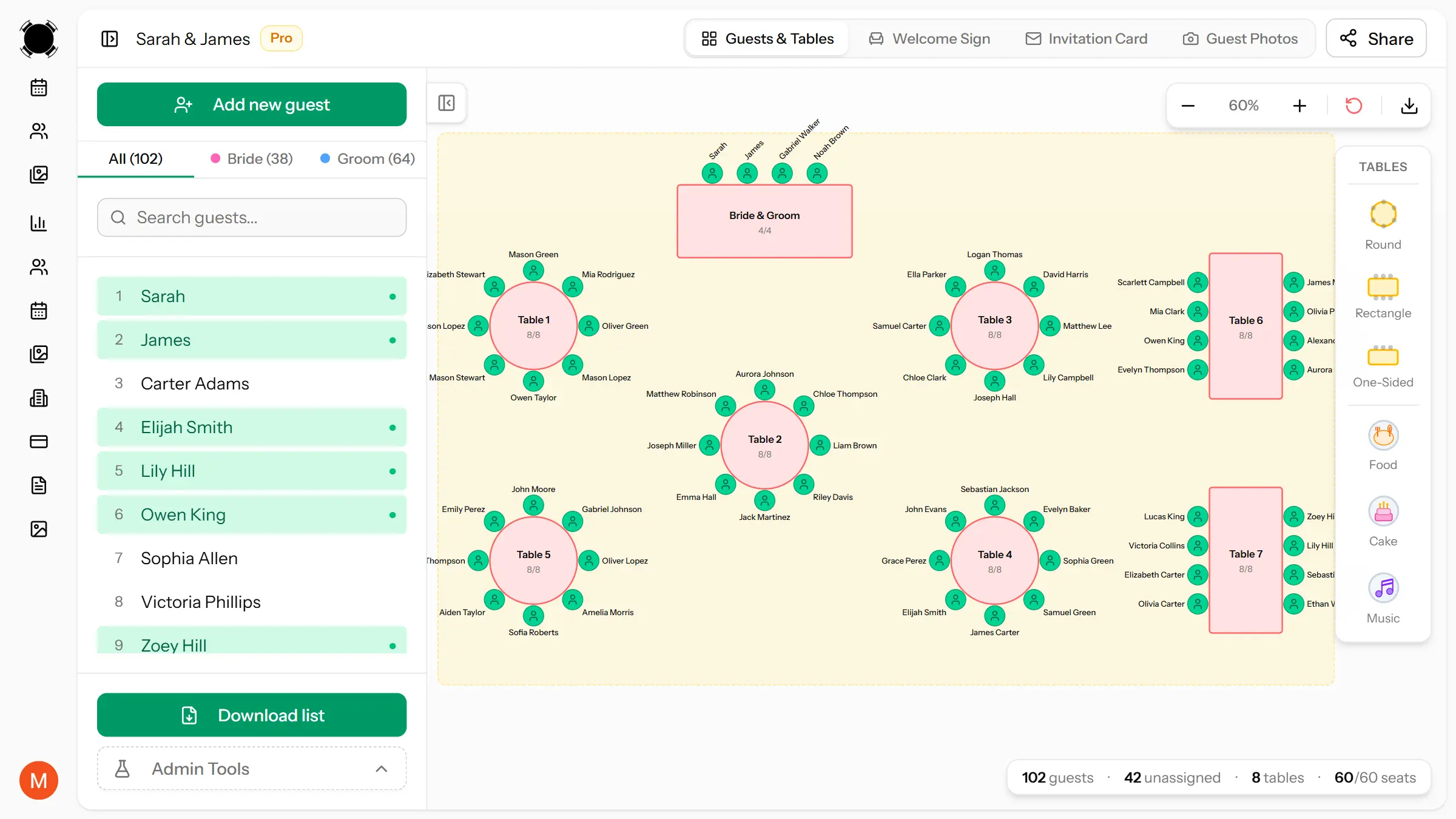
Keeping track of all these considerations is exactly why a visual seating chart tool helps. Being able to see your entire floor plan and drag guests between tables makes it much easier to spot problems, like a conflict at table 5 or grandma seated next to the speakers.
If you're ready to start building your layout, try MySeatPlan for free. And if you want a full walkthrough of the seating chart process from start to finish, check out our step-by-step guide.
Frequently asked questions
-
Wedding seating chart etiquette is about placing guests in a way that maximizes comfort and avoids conflict. Key rules include seating couples together, giving parents prominent placement, and separating guests who don’t get along. The goal is to create a smooth, enjoyable experience for everyone.
Plan your perfect event seating arrangement
MySeatPlan gives you everything you need to organize your big day — all in one place.
- Drag-and-drop seating chart
- Guest list with RSVP tracking
- Export seating charts as images & PDF
- Share your plan with others via shareable link
- Design your invitation card
- Guest photo & video uploads